
To mix milk with cold brew effectively, start by selecting the type of milk that matches your flavor preference, like whole for richness or plant-based for a lighter taste. Pour the milk slowly over the cold brew to create a smooth blend, or froth it for a velvety texture. Experiment with temperature and layering techniques to enhance visual appeal and flavor. Keep exploring these tips to perfect your cold brew experience and discover more ways to personalize it.
Key Takeaways
- Use cold milk for layering or serving; warm milk enhances flavor integration without diluting cold brew.
- Froth milk to create a creamy foam, adding texture and visual appeal to the cold brew.
- Experiment with different milk types (whole, skim, plant-based) to customize flavor and richness.
- Add flavor syrups or spices before combining to enhance complexity and personal taste preferences.
- Pour milk slowly into cold brew to control layering and achieve a balanced, appealing presentation.
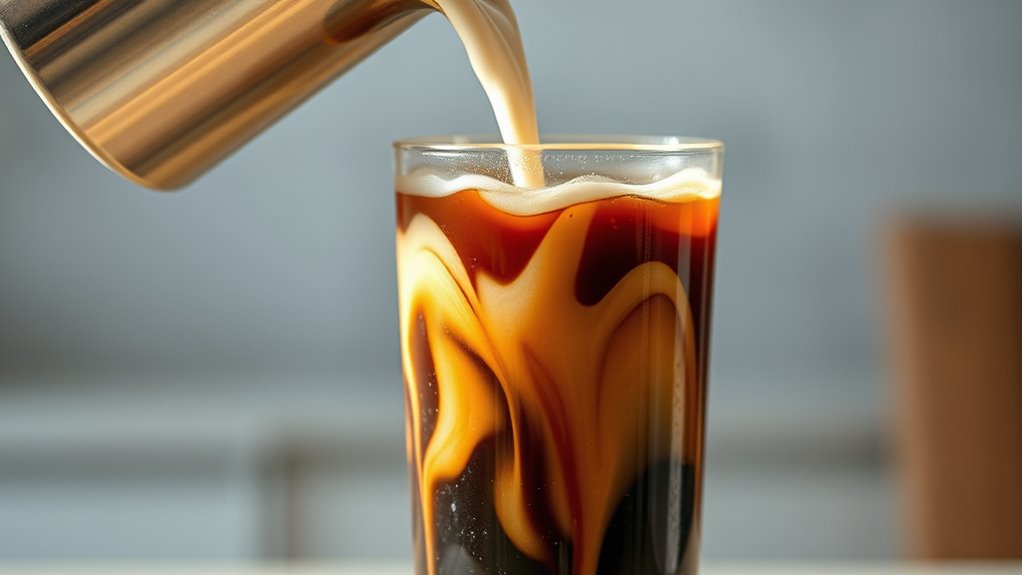
Cold brew coffee has become a popular way to enjoy a smooth, invigorating caffeine boost, and adding milk takes it to the next level. When you’re mixing milk with cold brew, understanding flavor pairings and serving techniques can make all the difference in creating a beverage that’s both satisfying and balanced. The key is to experiment with different milk types and flavors to find what complements the rich, mellow profile of cold brew.
Start by considering the flavor pairings. Different milks will bring out distinct notes in your cold brew. A creamier, subtly sweet profile, whole milk or half-and-half works beautifully. They enhance the natural chocolate and caramel undertones of the coffee without overpowering them. If you prefer a lighter touch, skim milk or plant-based options like almond or oat milk can add a delicate layer of flavor and texture. For a more indulgent twist, try flavored milks—vanilla or caramel-infused varieties can amplify the coffee’s sweetness and deepen its complexity, making each sip more delightful.
Choose milk options like whole, half-and-half, or plant-based for rich, balanced cold brew flavors.
When it comes to serving techniques, temperature is essential. Cold brew is typically served chilled, and adding milk at the right temperature helps maintain its smoothness. You can pour cold milk directly into your cold brew, but for a more cohesive blend, try warming the milk slightly before mixing. This prevents the cold brew from becoming overly diluted and allows the flavors to meld more seamlessly. Alternatively, frothing your milk creates a luxurious texture that elevates the drinking experience, especially if you enjoy your cold brew as a more decadent treat. Using a milk frother or a simple whisk, you can create a velvety foam that sits atop the coffee, adding visual appeal and a creamy mouthfeel.
Another effective serving technique is to layer your drink for visual interest and flavor contrast. Fill a glass halfway with cold brew, add your milk or milk foam on top, and watch how the layers form. This not only looks impressive but also lets you control the intensity of milk with each sip. If you’re serving cold brew for a group, consider offering different milk options alongside flavor syrups or spices like cinnamon or vanilla extract. This allows everyone to customize their drink to their liking.
Additionally, understanding the types of milk available can help you tailor your cold brew experience. Whole milk provides richness, while plant-based alternatives can add unique flavors and dietary options. Ultimately, mixing milk with cold brew hinges on your personal preferences. By paying attention to flavor pairings and utilizing thoughtful serving techniques, you’ll craft a cold brew experience that’s perfectly tailored to your taste, making every cup a revitalizing, satisfying delight.
Frequently Asked Questions
Can I Mix Milk and Cold Brew in Advance for Later Use?
Yes, you can mix milk and cold brew in advance, but keep in mind it may affect flavor enhancement and shelf life. Store the mixture in an airtight container in the fridge, ideally for no more than 24-48 hours. After that, the flavor may degrade, and bacteria could develop, reducing shelf life. For the best taste and safety, prepare fresh cold brew and milk when you’re ready to enjoy it.
What Are the Best Milk Alternatives for Cold Brew?
Imagine the perfect cold brew blend waiting to enchant your taste buds—what milk alternative should you choose? Dairy-free options like oat, almond, or coconut milk bring rich, creamy textures that enhance flavor and add a unique twist. These choices not only cater to dietary needs but also elevate your coffee experience with subtle flavor enhancements. Pick the right one, and your cold brew becomes irresistibly smooth and flavorful.
How Does Temperature Affect the Mixing Process?
Temperature affects the mixing process by impacting temperature stability and mixing consistency. When your cold brew and milk are too cold or too warm, they may not blend smoothly, causing separation or uneven flavor. To guarantee a seamless mix, maintain a consistent temperature that’s not too cold or warm, ideally around refrigeration temperature. This promotes better temperature stability and results in a more uniform, enjoyable drink.
Are There Specific Ratios for Different Flavor Profiles?
You should adjust ratios based on the flavor profile you want to achieve. For a balanced, smooth taste, try a 1:4 milk to cold brew ratio. If you prefer a stronger coffee flavor, increase the cold brew to a 1:3 ratio. Experiment with ratio adjustments to find the perfect flavor balance for your preference. Remember, small changes can profoundly impact the overall taste.
How Long Can Mixed Milk and Cold Brew Be Stored Safely?
You should store mixed milk and cold brew for up to 24 hours in the refrigerator to guarantee safety. After this, spoilage prevention becomes essential, as bacteria can grow quickly, risking your health. Keep the mixture in an airtight container, and always smell or taste it before drinking if it’s been longer. Proper storage duration and careful spoilage prevention help maintain freshness and reduce the risk of foodborne illness.
Conclusion
Now that you know the best practices for mixing milk and cold brew, you’re ready to craft a perfect sip every time. Think of it as painting a masterpiece—balance and patience create beauty. With a little attention to detail, your cold brew will flow smoothly like a well-conducted orchestra, delivering a harmonious blend of flavors. So go ahead, experiment, and enjoy the delicious symphony you create with each cup. Cheers to your next coffee masterpiece!