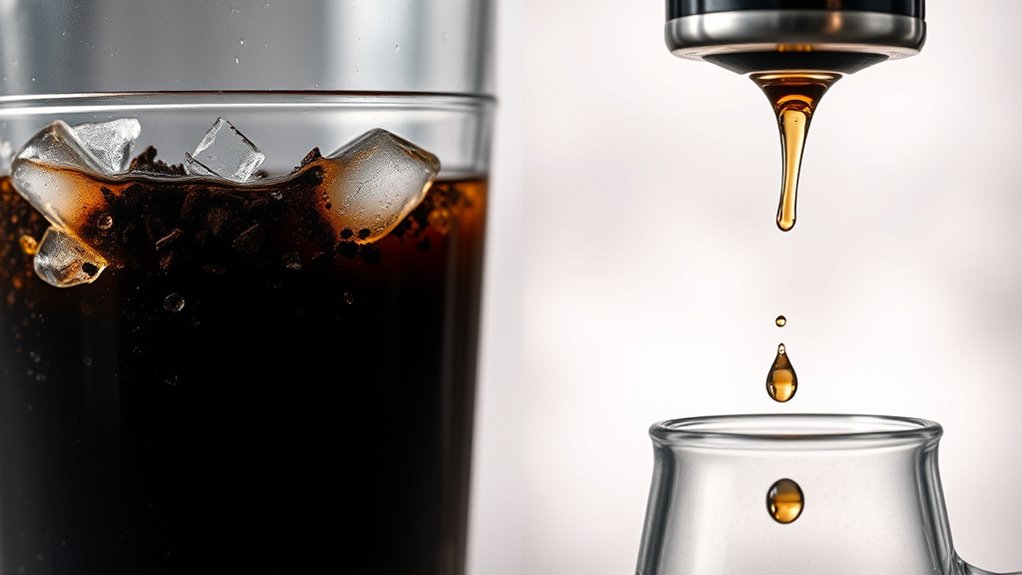
If you’re choosing between immersion and slow drip cold brew, consider how you like your coffee. Immersion brewing involves soaking grounds directly in water for 12-24 hours, resulting in a rich, full-bodied flavor that’s easy to make at home. Slow drip, however, passes water slowly through the grounds for a cleaner, more nuanced taste. Each method offers unique benefits; explore further to find which suits your flavor preference and brewing style best.
Key Takeaways
- Immersion brews involve steeping coffee grounds directly in cold water for 12-24 hours, producing a rich, full-bodied flavor.
- Slow drip uses a controlled, slow flow of water through grounds, resulting in a cleaner, more nuanced, and consistent cup.
- Immersion is simpler and more accessible, ideal for home brewing with minimal equipment; slow drip offers precision and repeatability.
- Immersion can vary in flavor due to steeping time and grind size; slow drip provides more control over extraction and flavor clarity.
- Choose immersion for richness and ease; select slow drip if you prioritize consistency, subtlety, and refined flavor profiles.
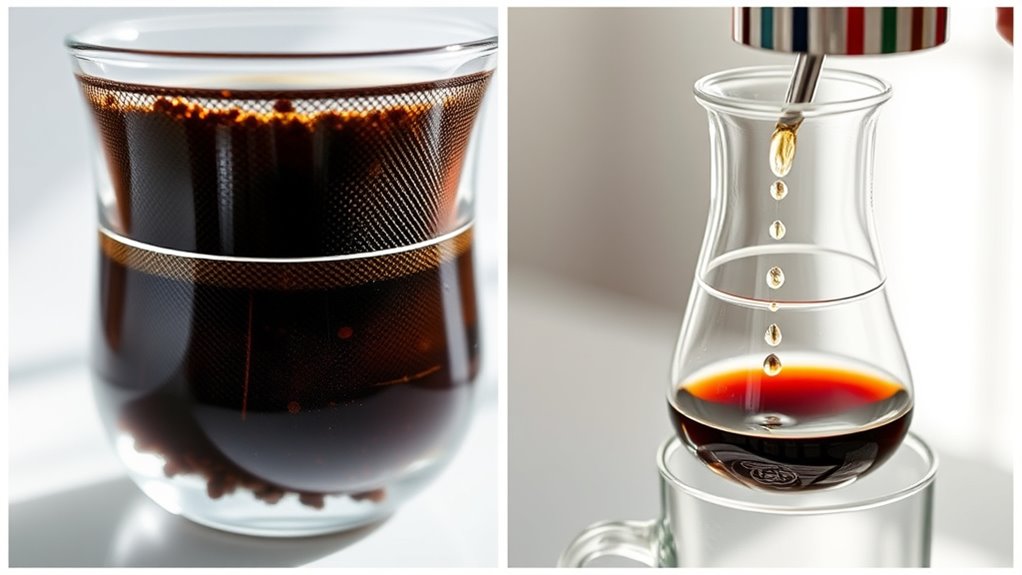
When it comes to making cold brew coffee, choosing between immersion and slow drip methods can substantially impact the flavor and quality of your brew. Each approach influences how flavor extraction occurs and how consistent your results turn out. With immersion brewing, you submerge coffee grounds directly into cold water, letting them steep for an extended period—usually 12 to 24 hours. This method promotes thorough flavor extraction because the grounds are in constant contact with water, allowing the coffee’s oils, acids, and other compounds to dissolve gradually. As a result, immersion produces a rich, full-bodied brew with a smooth, balanced profile. However, because the process depends on timing and contact duration, it can sometimes lead to variability in brewing consistency if not monitored carefully. Slight differences in steeping time or grind size can alter the final flavor, so precision is key to achieving uniform results.
In contrast, slow drip cold brew involves passing cold water slowly through coffee grounds, often using a specialized drip tower or a pour-over setup. This method offers a different extraction dynamic—flavor compounds are extracted more gradually and evenly as the water interacts with the coffee in a controlled, steady manner. The slow drip process tends to produce a cleaner, more refined flavor profile, emphasizing clarity and subtle nuances that might get lost in immersion brewing. Because of the controlled flow rate, slow drip methods tend to yield more consistent results, making it easier to replicate your preferred flavor profile each time. If you value brewing consistency and a more delicate taste, slow drip could be your preferred approach.
Both methods have their strengths and drawbacks. Immersion brewing is generally simpler and more forgiving, making it a popular choice for home brewers who want a rich, satisfying cold brew with minimal equipment. Still, you need to pay attention to steeping time and grind size to avoid over- or under-extracting, which can lead to bitterness or weak flavor. On the other hand, slow drip requires more specialized equipment and patience but rewards you with a cleaner, more consistent cup. If you’re after a nuanced and precise flavor profile, slow drip can give you that control. Additionally, using a high-quality projector for home cinema can enhance your overall experience when enjoying your meticulously brewed cold brew. Ultimately, your choice depends on your taste preferences and how much effort you’re willing to invest in brewing. Both techniques, when executed well, can produce exceptional cold brew, but understanding how each influences flavor extraction and brewing consistency will help you pick the method that best suits your coffee experience.
cold brew coffee maker immersion
As an affiliate, we earn on qualifying purchases.
As an affiliate, we earn on qualifying purchases.
Frequently Asked Questions
Which Method Is More Environmentally Friendly?
You’ll find immersion cold brew more environmentally friendly because it generally uses less energy, reducing its sustainability impact. Slow drip methods often require continuous water flow and longer brewing times, increasing energy consumption. By choosing immersion, you minimize energy use and waste, making it a more eco-conscious option. Plus, fewer equipment needs and shorter brewing times help lower your overall environmental footprint.
How Do Brewing Times Affect Flavor Profiles?
Think of brewing times as a journey through a flavor landscape. Longer brewing duration lets flavor extraction deepen, revealing richer, more complex notes. Shorter times keep the profile light and bright, like a clear mountain stream. As you extend brewing, you risk over-extraction, which can introduce bitterness. So, balance your brewing duration to craft the perfect flavor profile that matches your taste preference.
Can These Methods Be Used With Different Coffee Bean Types?
Yes, you can use different coffee bean types with both methods, and your choice will influence bean flavor and bean origin. Light roasts highlight bright, fruity notes, perfect for slow drip, while darker roasts bring bold, chocolatey flavors, ideal for immersion. Experimenting with various beans allows you to tailor your cold brew to your taste preferences, revealing unique characteristics based on bean origin and roasting style.
What Equipment Is Necessary for Each Method?
Ever wondered what equipment you need for cold brew? For immersion, you’ll need a large jar or pitcher and a fine mesh filter or coffee sock to help with filtration techniques. Slow drip requires a specialized cold brew tower with a filtration system and a drip apparatus to control brewing temperature and flow rate. Both methods prioritize proper filtration, so investing in quality filters guarantees smooth, flavorful coffee.
How Do They Compare in Terms of Cost?
You’ll find that immersion cold brew generally costs less upfront, making it more cost-efficient if you’re on a budget. Its investment cost is lower, mainly just needing a jar or French press. Slow drip systems tend to have a higher initial investment, with specialized equipment that can be pricey. However, slow drip may save you money long-term by producing a more consistent, high-quality brew, reducing waste and re-brewing costs.
Conclusion
Whether you prefer immersion or slow drip, both methods deliver unique flavors and experiences. Immersion brewing typically results in a richer, bolder taste, while slow drip offers a smoother, more refined profile. Curiously, studies show that cold brew coffee has 67% less acidity than hot brewed coffee, making it gentler on your stomach. So, try both methods to find your perfect cup—diving into the process might just lead you to your new favorite brew.