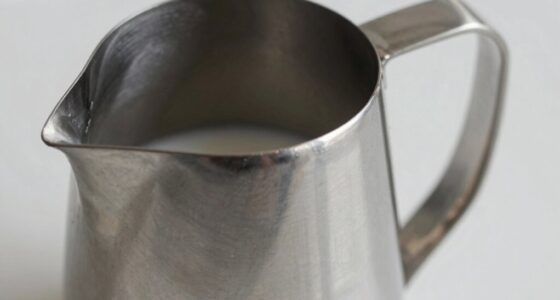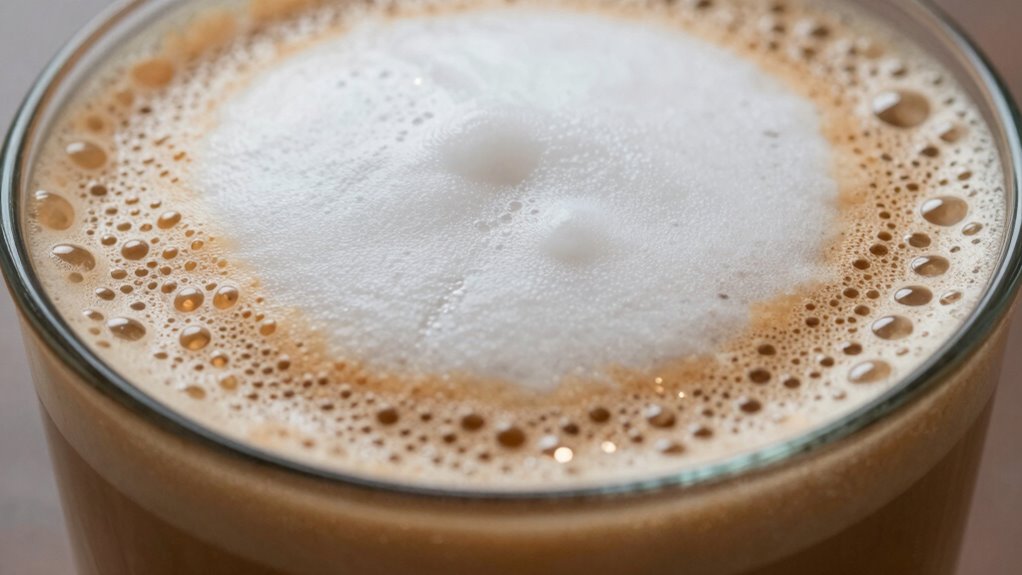

To get silky microfoam without giant bubbles, start with cold, fresh whole milk and fill your pitcher only a third full. Position your steam wand just below the surface to introduce gentle air, then submerge it deeper once heating begins for even temperature. Keep the milk rotating in the pitcher to break large bubbles and aim for 140°F–150°F. Tap and swirl the milk afterward to smooth the texture. Master these steps, and you’ll discover how to create perfect microfoam every time.
Key Takeaways
- Position the steam wand just below the milk surface to gently introduce air and create tiny bubbles.
- Keep the milk moving steadily to prevent large bubbles from forming and ensure a smooth microfoam.
- Maintain the milk temperature between 140°F and 150°F for optimal silky microfoam.
- Tap and swirl the pitcher after steaming to burst large bubbles and achieve a velvety texture.
- Use a cold pitcher and proper steaming technique to produce glossy, fine, and seamless microfoam.

Ever wondered what makes a perfect latte or cappuccino? It all comes down to the milk texture and how you craft your microfoam. Achieving that silky, smooth foam without giant bubbles is an art, but once you get the hang of it, you’ll see how much it elevates your coffee experience. The secret lies in understanding the right brewing techniques and paying attention to the milk’s consistency as you steam.
Mastering milk texture and microfoam craft elevates your coffee to professional perfection.
First, start with fresh, cold milk—whole milk is ideal because of its fat content, which helps create richer microfoam. Pour it into a clean, cold pitcher, filling it only up to about a third. This leaves room for the milk to expand as it heats and foams. When you turn on your steam wand, position it just below the surface of the milk, aiming to introduce air gently at first. You’re looking to create tiny bubbles, so don’t rush this step. As you hear a slight hissing sound, keep the wand near the surface, but don’t let it break through the top. This technique, often called “stretching,” helps incorporate air gradually, contributing to that smooth milk texture you’re after.
Once the milk begins to heat up—around 140°F to 150°F—you’ll want to submerge the wand deeper to continue heating without adding more air. Keep the pitcher at an angle to create a whirlpool effect, which helps break down larger bubbles and blends the foam into a velvety consistency. The key is to keep the milk moving constantly, ensuring even heat and preventing the formation of large bubbles. When the pitcher becomes slightly too hot to hold comfortably, it’s time to turn off the steam.
A good understanding of milk texture and how it impacts microfoam is essential for baristas aiming for professional-quality drinks. Now, give the milk a gentle tap on a flat surface and swirl it around. This step helps burst any remaining larger bubbles and smooths out the microfoam even further. A well-textured milk should be glossy, with fine, velvety bubbles that disappear into a seamless, silky foam. With practice, you’ll notice how your milk’s texture transforms, making your espresso drinks look professional and inviting. Remember, mastering these brewing techniques and paying close attention to milk texture is what separates good coffee from great coffee. With patience and precision, you’ll be pouring latte art and serving drinks with microfoam that’s truly impressive.

Milk Frothing Pitcher 350ml/600ml/900ml/1500ml (12oz/20oz/32oz/50oz) Steaming Pitchers Stainless Steel Milk/Coffee/Cappuccino/Latte Art Barista Steam Pitchers Milk Jug Cup with Art Pen,12oz
Perfect Combination Of Milk Frothing Pitcher And Latte Art Pen: The milk frother jug can be used in…
As an affiliate, we earn on qualifying purchases.
As an affiliate, we earn on qualifying purchases.
Frequently Asked Questions
Can I Make Microfoam With Non-Dairy Milk?
Yes, you can make microfoam with non-dairy milk. Plant-based alternatives like almond, soy, or oat milk often foam well if you use proper foaming techniques. To get silky microfoam, guarantee your milk is cold and use a steam wand or frother, creating a whirlpool motion to break down bubbles into a fine, velvety texture. Experiment with different brands and types to find the perfect microfoam for your coffee.
Does the Type of Milk Affect Foam Quality?
Think of milk as a symphony where each component plays a crucial role. The type of milk you choose definitely affects foam quality because milk composition influences foam stability. Whole milk creates richer, creamier foam, while skim milk produces lighter, more stable bubbles. Non-dairy options vary widely, impacting both texture and stability. So, selecting the right milk helps you craft microfoam that’s silky, stable, and perfect for your coffee art.
How Can I Prevent Large Bubbles Forming?
To prevent large bubbles from forming, focus on your milk temperature and steam wand technique. Keep the milk around 140-150°F, avoiding overheating. Use a gentle, steady motion with the steam wand, positioning it just below the surface to incorporate air smoothly. Submerge the wand fully to avoid splattering. Consistently practicing these steps helps create a fine, silky microfoam without giant bubbles.
Is There a Difference Between Steaming and Frothing?
Steaming and frothing differ mainly in purpose and technique. Steaming techniques involve heating milk with steam to create a smooth, velvety texture, ideal for lattes. Frothing, on the other hand, focuses on adding air to create microfoam, perfect for cappuccinos. When you steam correctly, you get silky milk, while frothing introduces tiny bubbles for a creamy foam. Master both to enhance your coffee drinks.
Can I Reuse Leftover Microfoam for Other Drinks?
You can reuse leftover microfoam for other drinks, but be mindful of microfoam storage. Reusing foam works best if it’s fresh and still silky, not dried out or bubbly. Gently reheat it to preserve its texture, but don’t expect it to be as perfect as fresh microfoam. Keep in mind, reusing foam may alter the flavor and consistency, so it’s usually better to make new microfoam for a premium drink experience.

Rancilio Silvia (V1/V2) Steam Wand
Rancilio Silvia (V1/V2) Steam Wand
As an affiliate, we earn on qualifying purchases.
As an affiliate, we earn on qualifying purchases.
Conclusion
Now that you know the secrets to creating microfoam, imagine pouring that silky, cloud-like foam into your cup, each tiny bubble whispering of perfection. As you master the technique, your latte becomes a smooth, velvety masterpiece, inviting you to savor every sip. With patience and practice, you’ll transform simple milk into a luxurious froth that elevates every coffee moment. So, keep frothing and enjoy the beautiful, creamy artistry you’re crafting with every pour.
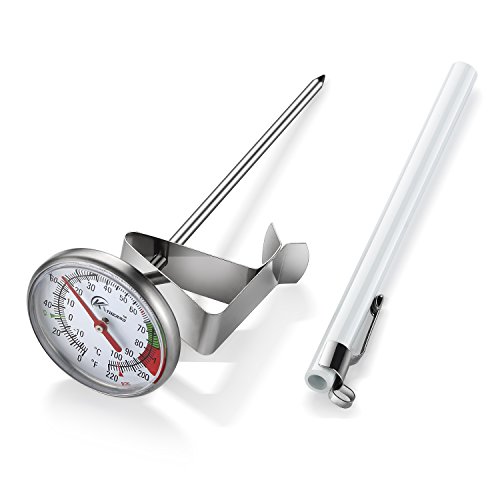
KT THERMO Instand Read 2-Inch Dial Thermometer,Best for The Coffee Drinks,Chocolate Milk Foam
DESIGN:Multi-stage design of the fixed clip, adjust the thermometer read the location of the disk surface to facilitate…
As an affiliate, we earn on qualifying purchases.
As an affiliate, we earn on qualifying purchases.
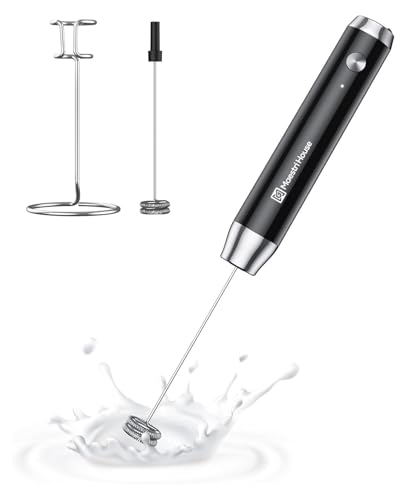
Maestri House Rechargeable Milk Frother with Stand, LunaFro Handheld Electric Foam Maker Waterproof Detachable Stainless Steel Whisk Drink Mixer Foamer for Lattes, Cappuccino
One-button Operated Design: One press to start the whisking and another press to stop frothing. Just place the…
As an affiliate, we earn on qualifying purchases.
As an affiliate, we earn on qualifying purchases.