Self-cleaning features in super automatic coffee machines may seem like they eliminate maintenance, but they still rely on your active involvement. You need to regularly descale, clean components, replace water filters, and follow manufacturer instructions to keep the appliance running smoothly. Automation can’t replace manual tasks that prevent buildup and mechanical issues. To keep your machine performing at its best, it’s important to stay on top of these routine care tasks—there’s more to learn if you keep going.
Key Takeaways
- Self-cleaning features reduce manual effort but still require regular maintenance like descaling and component cleaning.
- Routine tasks such as refilling water filters and emptying waste containers remain necessary for optimal performance.
- Proper upkeep of filters, brew groups, and sensors prevents clogs, mold, and mechanical failures.
- Neglecting manual care can impair self-cleaning effectiveness and shorten the appliance’s lifespan.
- Regular manual intervention ensures advanced appliances function efficiently and maintain quality over time.
Have you ever believed that certain surfaces can clean themselves without any effort? It’s a common misconception, especially with modern appliances that boast self-cleaning features. While these innovations can reduce the frequency of manual cleaning, they don’t eliminate the need for your involvement. Even the most advanced self-cleaning systems rely on proper maintenance routines and your active user responsibilities to function effectively and last longer.
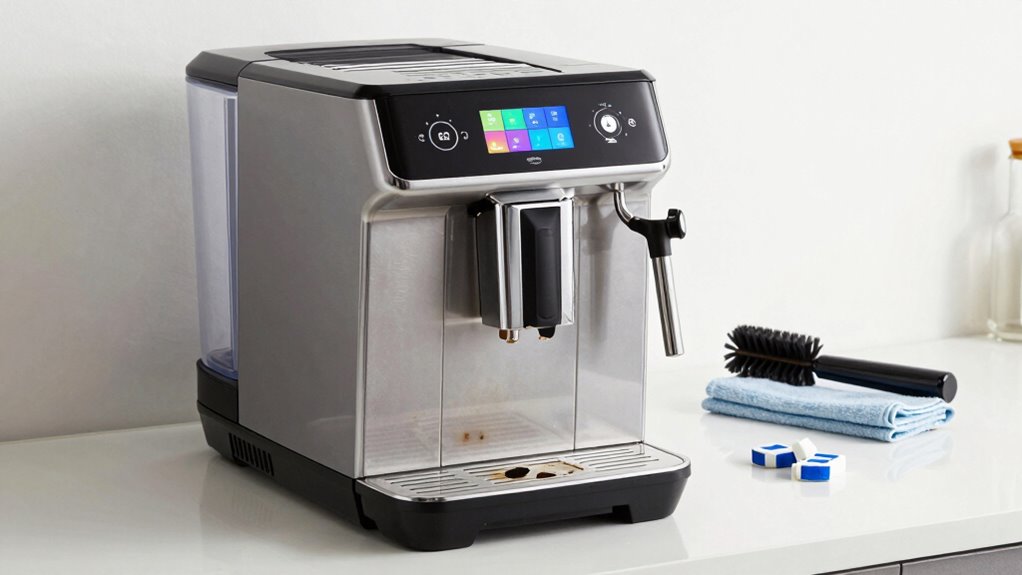
Think of these appliances as sophisticated tools that require your oversight. For example, a super automatic espresso machine might automatically purge and rinse itself after use, but it still needs regular descaling, cleaning of brew groups, and refilling of water filters. Skipping these maintenance routines can lead to clogs, mold growth, and mechanical issues. It’s easy to assume that pushing a button means everything is handled, but in reality, your role is vital to keep the machine performing at its best.
Even advanced appliances need regular maintenance to perform their best.
Your user responsibilities extend beyond just pressing buttons. You need to read and follow the manufacturer’s instructions for cleaning schedules, use recommended cleaning agents, and keep track of parts that require replacement. Overlooking these steps might seem minor, but the cumulative effect can severely impair your appliance’s efficiency and longevity. For example, neglecting to regularly clean the drip tray or empty the waste container can cause overflow or bad odors, which negate the convenience promised by automation.
Furthermore, staying vigilant about basic upkeep ensures that the self-cleaning functions can do their job properly. Some appliances have filters or sensors that need periodic checks and replacements to function at their best. If these components aren’t maintained, the self-cleaning cycle may be incomplete or ineffective, leading to buildup or breakdowns. It’s important to remember that even with advanced self-cleaning features, consistent manual care is essential to prevent issues and maintain optimal performance.
Frequently Asked Questions
Do Super Automatic Machines Truly Require No Maintenance?
Super automatic machines don’t require no maintenance, but they do need regular maintenance routines. You should follow cleaning schedules, like descaling and rinsing, to keep them functioning properly. Neglecting these tasks can lead to clogs or poor coffee quality. While they handle many processes themselves, your involvement guarantees your machine stays in top shape and produces great-tasting coffee every time.
How Often Should I Manually Descale My Super Automatic Coffee Maker?
Time and tide wait for no one, so don’t neglect your machine’s needs. You should descale your super automatic coffee maker every 2-3 months, depending on your water hardness. Stick to a consistent maintenance schedule, and you’ll keep it running smoothly. Regular descaling prevents buildup, extends its lifespan, and ensures great-tasting coffee. Keep an eye on the machine’s indicators, and don’t let maintenance fall by the wayside.
Are There Specific Cleaning Products Recommended for These Machines?
You should use manufacturer approved cleaners for your super automatic coffee machine. These cleaning product recommendations are designed specifically for your machine’s components, ensuring safe and effective cleaning. Avoid generic or harsh chemicals, as they may damage internal parts. Always follow the manufacturer’s instructions when using these cleaners, and consider pairing them with regular descaling routines to keep your machine in peak condition and prolong its lifespan.
Can Improper Cleaning Damage My Espresso Machine?
Yes, improper cleaning can damage your espresso machine. If you neglect to clean the milk frothing wand or leave residue in the bean hopper, it can clog components or cause mold growth. Regularly rinsing the frothing system and keeping the bean hopper clean prevents buildup, ensuring smooth operation. Using the right cleaning products and following manufacturer instructions helps protect your machine from costly damage.
What Signs Indicate My Machine Needs Professional Servicing?
You’ll notice your machine needs professional servicing if it’s brewing weak coffee despite proper cleaning, or if it’s unusually noisy—because even high-tech machines show signs when neglected. Don’t ignore your machine’s signals; poor cleaning frequency can harm its longevity. Watch for leaks, error messages, or inconsistent performance. These signs mean it’s time for a pro tune-up, ensuring your machine keeps serving great coffee for years to come.
Conclusion
Don’t fall for the self-cleaning myth. Your super automatic coffee machine needs your attention, your care, and your cleaning. It needs you to empty the grounds, descale when necessary, and wipe down surfaces. It needs your consistency, your effort, and your commitment. Because a well-maintained machine delivers better coffee, lasts longer, and saves you money. So, stay vigilant, stay proactive, and keep your machine in top shape—because your perfect cup depends on it.