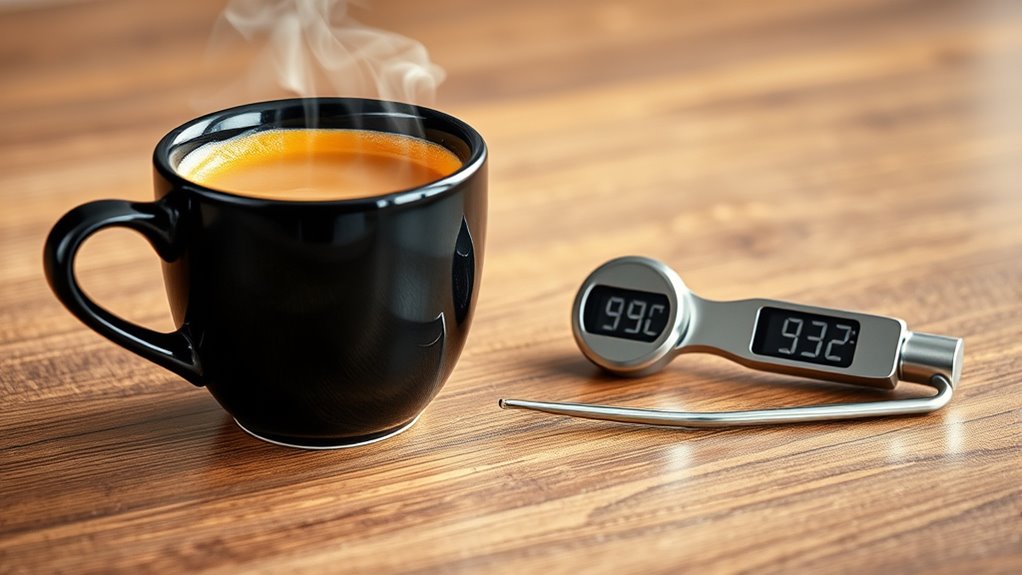

To make a great espresso, you should aim for a water temperature between 92°C and 96°C (197°F to 205°F). Staying within this range helps you extract balanced flavors while preventing bitterness or sourness. Too hot, and the shot becomes over-extracted and harsh; too cold, and it may be under-extracted with a flat or sour profile. Mastering temperature control is key to consistent, delicious espresso—continue exploring to learn how equipment and techniques influence this perfect range.

Get coffee and tea gear delivered free with Prime
- Fast, free delivery on millions of items
- Prime Video, Amazon Music and more included
- Member-only deals all year
Key Takeaways
- The optimal water temperature for espresso is between 92°C and 96°C (197°F to 205°F).
- Maintaining precise temperature ensures balanced extraction, highlighting flavors and preventing bitterness or sourness.
- Modern equipment with PID controls helps stabilize water temperature for consistent espresso quality.
- Higher temperatures can cause over-extraction and bitterness, while lower temperatures may lead to under-extraction and sour flavors.
- Adjusting grind size and brew time is essential to optimize extraction within the ideal temperature range.
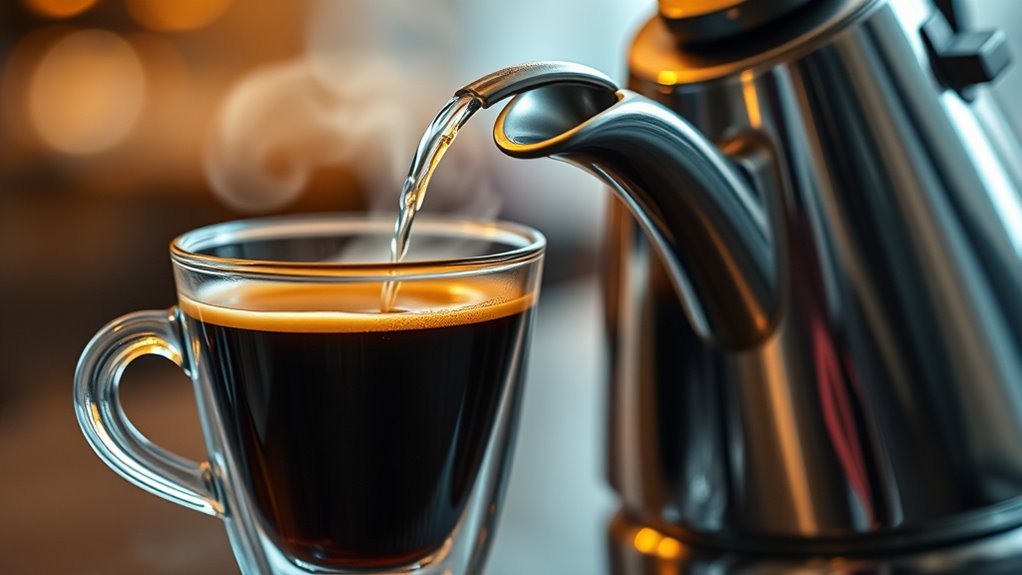
Achieving the perfect espresso depends heavily on water temperature, as even slight variations can considerably impact flavor. The brew temperature plays a critical role in extraction, influencing how soluble compounds like sugars, lipids,, and acids dissolve into your cup. Most experts agree that the ideal water temperature for espresso ranges between 92°C and 96°C (197°F and 205°F). Staying within this temperature range ensures a balanced extraction, highlighting the nuanced flavors of specialty coffee while avoiding undesirable bitterness or sourness.
When your brew temperature is too high, your espresso risks over-extraction, pulling out excessive bitter compounds and creating a harsh, unbalanced taste. Conversely, if the temperature drops below the optimal range, you’ll likely under-extract, resulting in a sour, flat, or overly bright flavor profile. Maintaining a consistent temperature is vital, and modern espresso machines equipped with PID controls help you do just that. These digital systems precisely regulate water temperature, ensuring stable extraction and flavor consistency shot after shot.
Your grind size also interacts with water temperature to influence extraction. A finer grind increases surface area, speeding up extraction, which means you might need to slightly lower the brew temperature to prevent over-extraction. Conversely, a coarser grind may require a higher temperature or a longer brew time.
The brew ratio, or the amount of coffee to water used, further impacts how temperature affects flavor. A typical espresso shot uses a specific brew ratio to achieve a balanced taste, but adjusting this ratio can influence how sensitive your espresso is to temperature variations.
The brew time, which is the duration water interacts with the coffee grounds, is also affected by temperature. Higher temperatures often shorten brew time due to faster extraction, but rushing this process can lead to uneven flavor development. Similarly, lower temperatures may require a longer brew time to extract enough soluble compounds, but too long can cause sourness.
Ultimately, understanding the temperature range suited for your espresso machine and your preferred flavor profile helps you craft consistently excellent shots. For specialty coffee, where subtle nuances matter, precise control over brew temperature makes all the difference. Additionally, temperature stability during extraction is essential for consistent quality and flavor profile.
espresso machine with PID temperature control
As an affiliate, we earn on qualifying purchases.
As an affiliate, we earn on qualifying purchases.
Frequently Asked Questions
What Temperature Should the Water Be for Espresso?
You should aim for a water temperature between 92°C and 96°C (197°F and 205°F) for ideal espresso extraction. Staying within this range helps you avoid sour, under-extracted flavors or burnt, bitter notes.
Use a precise temperature control system like a PID to keep things consistent.
Adjust the temperature slightly based on the roast level or your flavor preferences to perfect your espresso shot every time.
What Temperature Is Too High for Espresso Brew?
You’re wondering what’s too high for brewing espresso. If you use water above 96°C (205°F), you risk burning the coffee oils, which leads to bitter, harsh flavors.
Higher temperatures cause over-extraction, reducing sweetness and body while increasing bitterness. They also create uneven extraction due to rapid pressure changes.
To keep your espresso balanced and flavorful, stick to temperatures below 96°C.
What Is the Temperature Impact for Espresso?
You’re asking about how temperature impacts your espresso. When you increase the brew temperature, you’ll notice more body, sweetness, and bitterness in your shot. However, going too high—above 96°C—can burn oils and produce a harsh, overly bitter taste.
Cooler temperatures highlight acidity and brightness. A well-balanced range between 92°C and 96°C offers ideal flavor. Adjust gradually to find your preferred flavor profile without sacrificing quality.
What Is the Rule of Thumb for Espresso?
The rule of thumb for brewing is to keep the water temperature between 92°C and 96°C (197°F and 205°F). Staying within this range helps you extract the best flavors without risking bitterness or sourness.
Adjust the temperature slightly based on your roast type—higher for light roasts, lower for dark roasts.
Using precise controls like a PID helps you maintain consistent results and perfect flavor balance.
Conclusion
Understanding the right water temperature for your espresso is key to revealing its full flavor. Keep your water between 195°F and 205°F for ideal extraction, and avoid drastic temperature fluctuations. By paying attention to your machine’s settings and water quality, you’ll enjoy richer, more balanced espresso shots every time. Remember, a small adjustment can make a big difference in your coffee experience. So, stay attentive, experiment, and savor the perfect brew.
Halloween Picks
halloween
As an affiliate, we earn on qualifying purchases.