
The most essential maintenance step to prevent 90% of espresso machine problems is regular descaling. Hard water minerals can build up inside your machine, causing clogs, leaks, and poor performance. By scheduling routine descaling every 1 to 3 months, you remove mineral deposits and keep your machine running smoothly. Proper water quality and maintenance go a long way. If you want to learn more about maintaining your espresso machine effectively, keep exploring these tips.
Key Takeaways
- Regularly descale your espresso machine to remove mineral buildup and prevent clogs.
- Use filtered or soft water to reduce mineral content and slow down scaling.
- Follow manufacturer guidelines for descaling frequency based on water hardness and usage.
- Promptly address signs like longer brewing times or weak pressure to prevent damage.
- Maintain a consistent cleaning routine to prolong machine lifespan and ensure optimal performance.
Regular maintenance is vital to prevent common issues with your espresso machine and guarantee it always brews at its best. The most effective step you can take is maintaining proper water quality and adhering to the correct descaling frequency. Over time, mineral buildup from water creates deposits inside the machine’s boiler and pipes, which can cause clogs, reduce efficiency, and eventually lead to costly repairs. By paying close attention to water quality, you reduce the risk of these deposits forming, ensuring your machine runs smoothly and lasts longer.
Regular water quality and descaling maintenance prevent clogs, improve efficiency, and extend your espresso machine’s lifespan.
The first thing you should do is use filtered or soft water whenever possible. Tap water often contains minerals like calcium and magnesium that accelerate scaling. Using filtered water minimizes these minerals, slowing down the accumulation process. You don’t have to invest heavily—simple pitcher filters or water softening solutions can make a significant difference. Additionally, regularly checking your water’s hardness level helps you determine how often you need to descale. Hard water requires more frequent descaling, while softer water allows for longer intervals between maintenance.
Descaling frequency is essential in preventing issues. Most manufacturers recommend descaling your espresso machine every 1 to 3 months, depending on water hardness and usage. If you notice a decline in performance—such as longer brewing times, weak pressure, or strange tastes—that’s a sign you should descale sooner. Regularly following the descaling process prevents mineral buildup from hard water from hardening into stubborn deposits that are difficult to remove later. It’s a simple routine: use a descaling solution or vinegar, follow the machine’s instructions, and ensure all parts that come into contact with water are thoroughly cleaned.
Neglecting water quality and descaling can lead to more than just poor coffee. Mineral buildup can cause overheating, leaks, or damage to internal components, which might result in expensive repairs or replacement. Proper water quality management and consistent descaling are crucial for maintaining your machine’s health. By sticking to a consistent descaling schedule and using the right type of water, you keep your machine running efficiently and extend its lifespan. Remember, prevention is always better—and cheaper—than repair. Regularly clean and descale, keep an eye on your water quality, and you’ll avoid 90% of common espresso machine problems. This simple maintenance step ensures your espresso machine performs reliably, making every cup as delicious as the first.
Frequently Asked Questions
How Often Should I Perform This Maintenance Step?
You should perform descaling every 2 to 3 months, depending on your water hardness. Following a regular cleaning schedule helps prevent buildup and keeps your machine running smoothly. If you notice slower water flow or a change in taste, it’s time to descale sooner. Consistent maintenance guarantees your espresso tastes great and extends your machine’s lifespan, so stay vigilant and stick to your descaling frequency.
Can Neglecting This Step Damage My Espresso Machine?
Ignoring descaling importance and cleaning frequency can indeed damage your espresso machine. Neglecting this step is like opening a can of worms—you’ll face clogs, stale flavors, and costly repairs. Regularly descale and clean your machine to prevent mineral buildup, which keeps it running smoothly. By staying on top of maintenance, you’ll extend your machine’s lifespan and enjoy consistently delicious espresso, avoiding costly fixes down the road.
Is This Maintenance Suitable for All Espresso Machine Models?
This maintenance step is suitable for most espresso machine models, but you should verify your machine’s model compatibility first. Regular maintenance frequency depends on how often you use your machine; daily use may require weekly upkeep, while less frequent use might need monthly attention. Always refer to your manufacturer’s guidelines to ensure you’re following the correct maintenance schedule and using compatible parts for your specific model.
What Specific Tools Are Needed for This Maintenance?
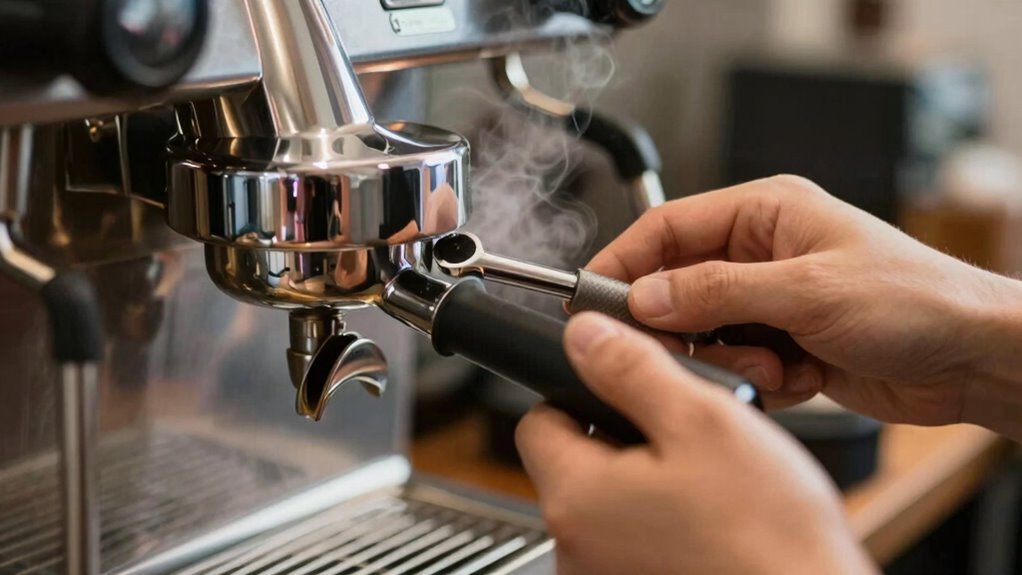
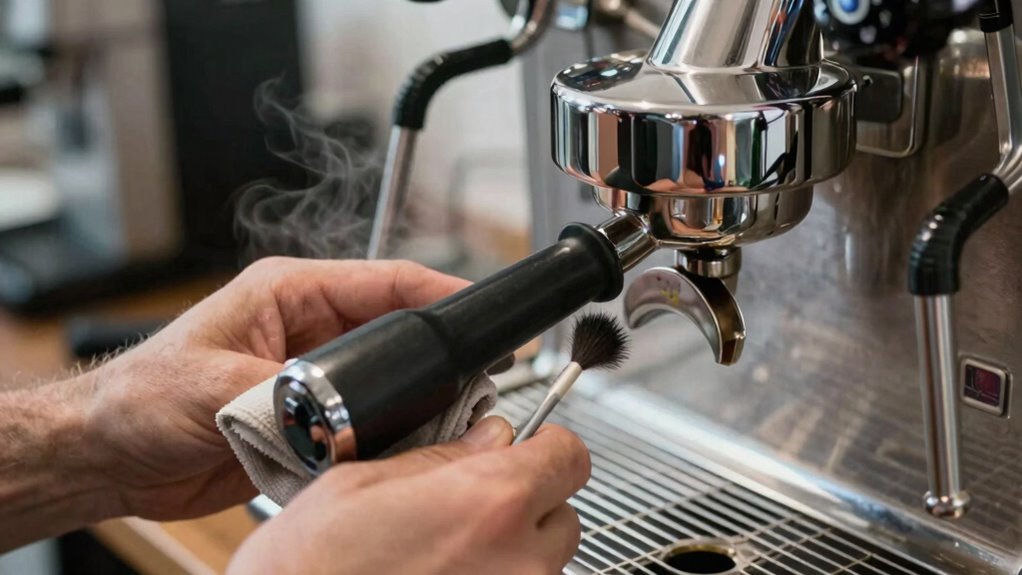
Think of your espresso machine as a well-tuned orchestra—you need the right tools to keep it harmonious. You’ll need basic cleaning tools like a soft brush or cloth to wipe down parts, and descaling equipment such as a descaling solution and a brush or sponge to remove mineral buildup. These tools guarantee your machine stays in perfect pitch, preventing issues and keeping your coffee tasting great every time.
Are There Any Safety Precautions to Consider During Maintenance?
You should always wear safety gear like gloves and eye protection to avoid burns or splashes during maintenance. Make sure to unplug the machine to prioritize electrical safety before starting any work. Keep the area dry and work in a well-lit space to prevent accidents. By following these precautions, you safeguard yourself from potential hazards and ensure a safe, effective maintenance process.
Conclusion
By regularly performing this simple maintenance step, you’ll keep your espresso machine running smoothly and avoid most common issues. Just remember, an ounce of prevention is worth a pound of cure. Staying proactive guarantees you enjoy perfect espresso every time, without the hassle of repairs. So don’t wait until problems arise—take care of your machine now, and it’ll serve you well for years to come. After all, a little upkeep goes a long way.