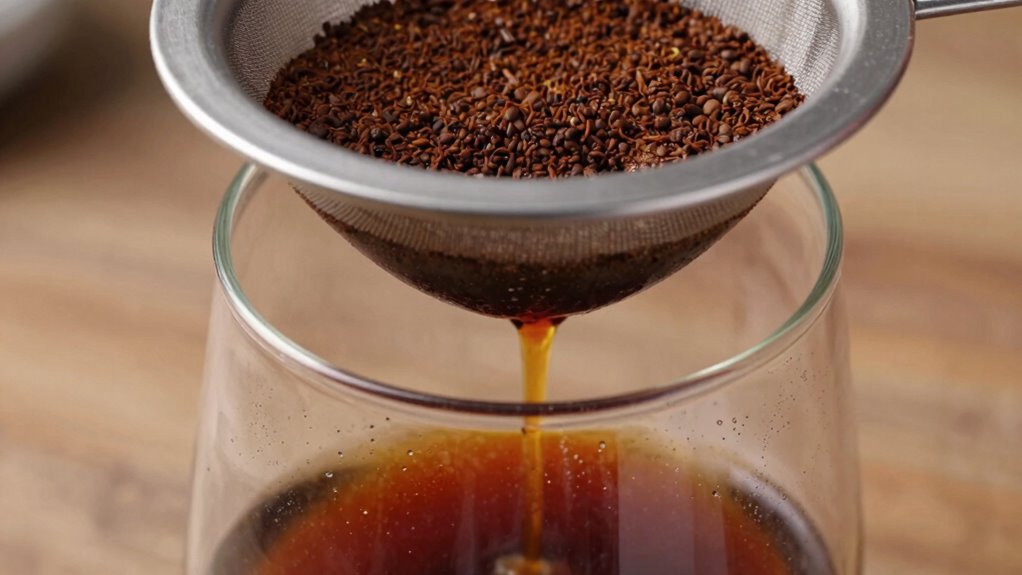
The main reason your cold brew tastes chalky is often due to poor filtering techniques. Using the wrong filters, skipping pre-rinse steps, or apply excessive pressure can cause residue and grit to pass through, creating that undesirable texture. Dirty equipment or improper storage also contribute to impurities that affect flavor. If you want to avoid this chalky taste and improve your cold brew, there are simple steps you can follow—more tips are just ahead.
Key Takeaways
- Using incorrect or worn filters can fail to remove fine solids, resulting in a chalky taste.
- Failing to pre-rinse filters leaves residues that impart a gritty or chalky flavor.
- Over-filtering or under-filtering can cause cloudiness and undesirable mouthfeel.
- Applying excessive pressure during filtering may channel solids, increasing sediment in the brew.
- Neglecting regular filter replacement reduces filtration effectiveness, leading to chalky residues.
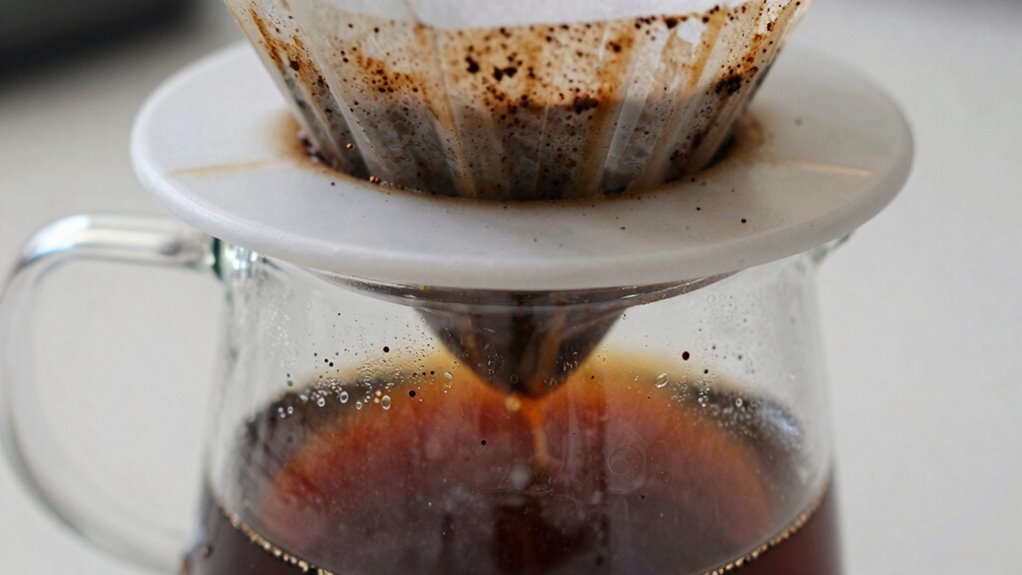
Making mistakes while filtering cold brew can lead to a less-than-ideal cup, even if your brewing process is spot-on. The way you handle your brewing equipment and storage techniques directly impacts the final flavor. Improper filtering often results in a chalky taste, which is a common complaint among cold brew enthusiasts. The key lies in understanding how to use your equipment correctly and store your coffee properly. Additionally, paying attention to filtering techniques can significantly improve the clarity and mouthfeel of your cold brew.

Fermus Cold Brew Coffee Filter for 64oz / 2Quart Wide Mouth Mason Jar Infuser 304 Stainless Steel Strainer with Seal Ring Design for Grounds Tea Fruit Coffee Filter
- Compatible with 64 oz Mason Jar: Fits 64 oz wide mouth jars for brewing
- Fine Mesh Stainless Steel Filter: Ensures smooth, rich cold brew coffee
- Dimensions: Bottom diameter 2 inches, top 3 1/4 inches, height 8 1/2 inches
As an affiliate, we earn on qualifying purchases.
As an affiliate, we earn on qualifying purchases.
Frequently Asked Questions
How Does Water Temperature Affect Cold Brew Filtration?
Water temperature directly impacts cold brew filtration by affecting water clarity and mineral content. When you use warmer water, minerals dissolve more readily, which can lead to cloudy water and a chalky taste. Cooler water preserves clarity and minimizes mineral extraction, resulting in a cleaner, smoother brew. To avoid chalkiness, make sure your water is cold and pure, enhancing the filtration process and improving overall flavor.
What Types of Filters Prevent Chalky Tastes?
Think of your filter as a sieve for fine sand; selecting the right material and pore size makes all the difference. Metal mesh filters or fine cloth filters prevent chalky tastes by effectively trapping fine grounds, unlike coarser filters that let grit slip through. Opt for filters with small pore sizes to guarantee clarity and smoothness, keeping your cold brew tasting pure and free of unwanted chalky residue.
Can Filtration Method Impact Caffeine Content?
Yes, your filtration method can impact caffeine content. High-quality filters effectively remove impurities, but they don’t substantially alter caffeine levels. However, poor filter quality or improper water mineralization can affect extraction efficiency, leading to variations in caffeine content. Using filters that clarify water and control mineralization ensures consistent caffeine levels and better-tasting cold brew. Always choose good filters to maintain both flavor and caffeine consistency.
How Long Should Cold Brew Be Filtered for Optimal Taste?
You should filter your cold brew for about 12-24 hours for the best taste. Imagine pouring a batch that’s been filtering too quickly—sediment remains, causing a chalky flavor. By adjusting your filtering speed and ensuring thorough sediment removal, you get a smooth, rich flavor. A proper filtration time balances clarity and flavor, preventing chalkiness and highlighting your cold brew’s true essence.
Are There Specific Grind Sizes Ideal for Cold Brew Filtering?
You should use a coarse grind size for cold brew filtering, ensuring grind consistency to prevent fine particles from slipping through filters. This consistency helps avoid chalky tastes caused by over-extraction or fine sediments. Also, choose filter materials like stainless steel or heavy-duty filters that can handle coarse grounds without clogging. Proper grind size and quality filter materials work together to produce smooth, clean cold brew with the best flavor.
Conclusion
If you want your cold brew to taste smooth and rich, avoid common filtering mistakes like using the wrong filter or rushing the process. Did you know that 60% of home baristas report flavor issues due to improper filtering? Taking the time to filter properly can make all the difference in your brew’s flavor. So, next time, pay attention to your filtering method—you’ll enjoy a much better, chalk-free cold brew every time.