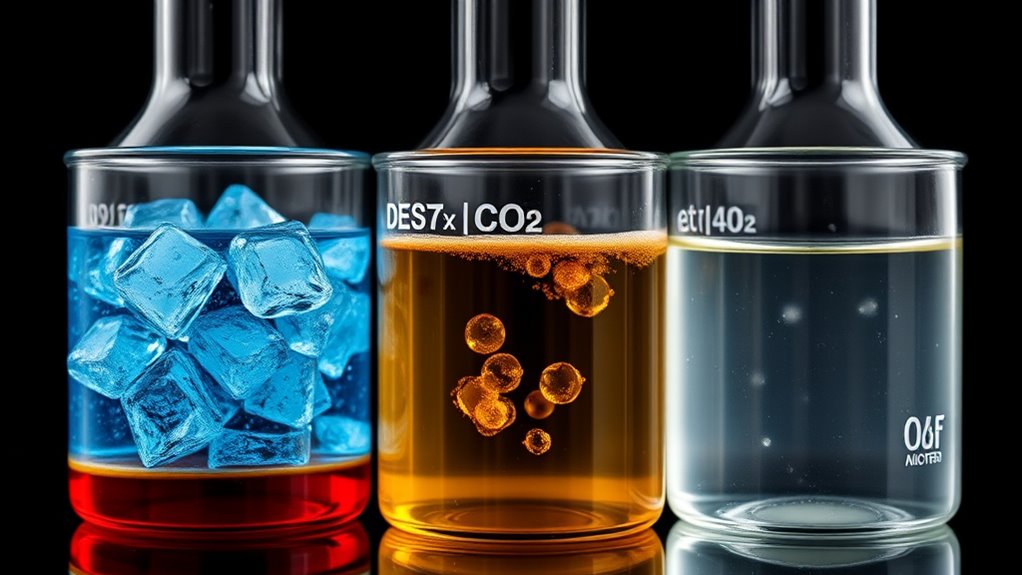

Decaf coffee is produced using methods like Swiss Water, CO2, or ethyl acetate, which remove caffeine while affecting flavor and aroma. The Swiss Water process uses only water and filters, keeping natural flavors intact. CO2 extraction uses pressurized carbon dioxide to selectively remove caffeine and preserve taste, while ethyl acetate involves a chemical solvent that may influence flavor slightly. Each method offers different benefits; explore further to see which suits your preferences best.

Get coffee and tea gear delivered free with Prime
- Fast, free delivery on millions of items
- Prime Video, Amazon Music and more included
- Member-only deals all year
Key Takeaways
- Swiss Water process uses water and filtration, avoiding chemicals, and preserves most of the coffee’s original flavor.
- CO2 decaffeination employs supercritical CO2, offering an environmentally friendly method that maintains aroma and taste.
- Ethyl acetate is a chemical solvent method that selectively dissolves caffeine, potentially affecting flavor slightly.
- Chemical solvent methods, including ethyl acetate, are faster but may raise concerns about chemical residues.
- The choice of decaffeination method impacts flavor preservation, safety, environmental impact, and whether chemicals are used.

Ever wonder how decaffeinated coffee is made? It’s a fascinating process that involves carefully removing caffeine while preserving the beans’ flavor. One popular method is the water process, also known as the Swiss Water Process. With this technique, green coffee beans are soaked in hot water, which extracts caffeine along with other soluble compounds like oils and flavors. The water then passes through a specialized carbon filter that traps caffeine molecules but allows the flavor-rich oils to return to the beans. This process is repeated until caffeine levels drop to acceptable limits. The water process is appealing because it relies solely on water and filtration, avoiding the use of chemical solvents. It’s considered one of the most natural decaffeination methods, maintaining much of the original coffee profile without introducing potentially harmful chemicals.
In contrast, some methods use chemical solvents, which can be faster and more cost-effective but raise questions about residue and safety. These solvents, typically methylene chloride or ethyl acetate, are applied to the beans to dissolve caffeine. The beans are soaked in the solvent, which selectively bonds with caffeine molecules. Once caffeine is extracted, the beans are thoroughly rinsed to remove any remaining traces of solvent. While the FDA regulates these processes to ensure safety, some consumers prefer to avoid chemical solvents altogether, leaning toward more natural options like the water process. The use of chemical solvents can sometimes alter the beans’ taste or aroma slightly, although modern procedures aim to minimize any differences. Additionally, each decaffeination process can influence the beans’ flavor profile and aroma, impacting the final cup.
Another popular method involves the use of supercritical carbon dioxide (CO2). In this process, CO2 is pressurized until it becomes a supercritical fluid—neither liquid nor gas—that can selectively bond with caffeine molecules. The beans are placed in a chamber where supercritical CO2 is circulated, extracting caffeine efficiently without harming other flavor compounds. After caffeine removal, the CO2 is depressurized and recycled, leaving behind decaffeinated beans with their original flavor largely intact. This method is prized for being chemical-free, environmentally friendly, and effective at preserving the bean’s nuanced taste profile.
Each decaffeination process offers a different experience, from the natural purity of the water process to the efficiency of chemical solvents and the precision of CO2 extraction. Your choice might depend on your health preferences, taste priorities, or environmental concerns. Regardless of the method, the goal remains the same: to deliver a rich, flavorful cup of decaf coffee that satisfies your craving without the jitters of caffeine.
Swiss Water decaffeinated coffee beans
As an affiliate, we earn on qualifying purchases.
As an affiliate, we earn on qualifying purchases.
Frequently Asked Questions
How Does Decaf Coffee Taste Compare to Regular Coffee?
You’ll notice decaf coffee generally has a milder flavor compared to regular coffee, with subtle differences in aroma and taste. The caffeine impact is minimal, so you won’t get the same jolt but still enjoy a rich coffee experience. Some find decaf slightly less bold or complex, but quality decaf can closely match the flavor differences of regular coffee, offering a satisfying sip without the caffeine kick.
Are Decaffeination Processes Safe for Consumers?
You can rest assured that decaffeination processes are generally safe for you. These methods are carefully regulated to address health concerns, ensuring minimal chemical residues. While some may worry about traces of chemicals, reputable decaf coffee undergoes strict testing, so it’s unlikely to pose any health risks. Enjoy your cup knowing that safety standards are in place, making decaf a worry-free choice for your daily routine.
Which Decaf Method Preserves the Most Antioxidants?
You’ll find that the Swiss Water process preserves the most antioxidants, maintaining more of the coffee’s natural health benefits. This method uses water and osmosis to decaffeinate without chemicals, helping retain valuable antioxidants. As a result, you’re getting a decaf that offers better antioxidant retention, supporting your health benefits. If maximizing antioxidants is your goal, choosing coffee processed by the Swiss Water method is the way to go.
How Long Does Each Decaf Process Take?
You’ll find that the decaf process duration varies by method. The Swiss Water process usually takes about 8 to 12 hours, making it the longest. The CO2 method typically takes 4 to 6 hours, while the ethyl acetate process is quicker, often completed within 2 to 4 hours. Understanding these decaf method timelines helps you choose the process that fits your preferences for flavor and antioxidants preservation.
Can Decaf Coffee Be Brewed Using the Same Methods as Regular Coffee?
You can definitely brew decaf coffee the same way as regular coffee, but keep in mind that decaf brewing compatibility affects flavor consistency. While methods like drip, French press, or espresso work perfectly, decaf may taste slightly different due to its processing. Experiment with grind size and brewing time to achieve the best flavor, ensuring your decaf remains rich and satisfying without losing that familiar coffee experience.
Conclusion
Now that you know about Swiss Water, CO2, and ethyl acetate decaffeination methods, you can make an informed choice when selecting your coffee. Imagine visiting a café where you enjoy a cup of decaf, knowing it was carefully processed to retain flavor without caffeine. For example, a health-conscious traveler might choose Swiss Water decaf, savoring rich taste with peace of mind. Whichever method you prefer, you’re enjoying a flavorful, caffeine-free brew tailored to your lifestyle.
Fall Picks
fall essentials
As an affiliate, we earn on qualifying purchases.