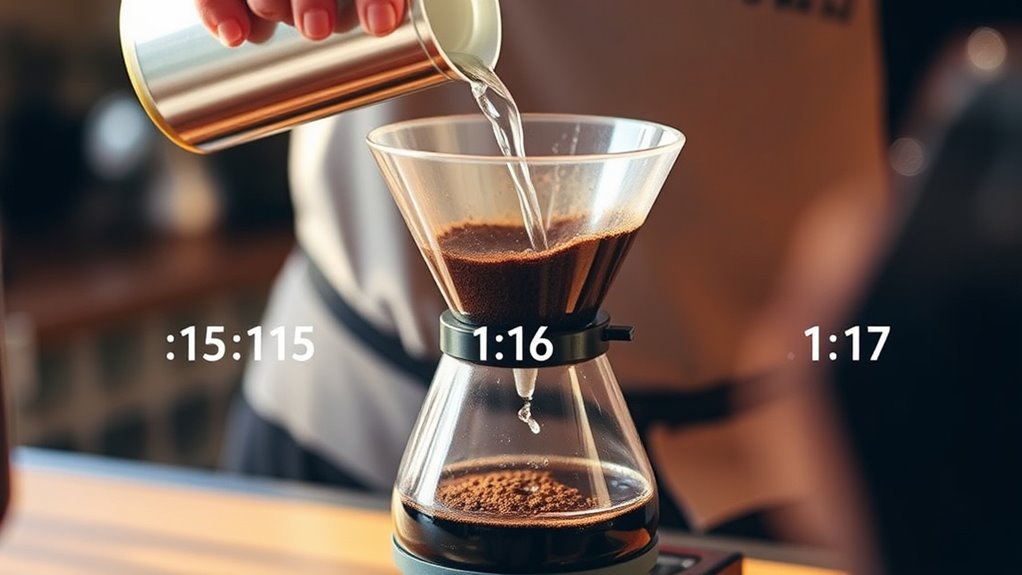

Brew ratios like 1:15, 1:16, and 1:17 affect your coffee’s strength and flavor. A smaller ratio, like 1:15, makes a more concentrated and bold brew, while larger ratios like 1:17 produce lighter, more delicate cups. Adjusting these ratios, along with grind size and extraction time, helps you customize your perfect brew. Understanding how each element interacts will guide you to better results—if you want to know more, keep exploring these variables.

Get coffee and tea gear delivered free with Prime
- Fast, free delivery on millions of items
- Prime Video, Amazon Music and more included
- Member-only deals all year
Key Takeaways
- Brew ratios like 1:15, 1:16, and 1:17 indicate water-to-coffee weight, affecting brew strength and flavor.
- Lower ratios (1:15) create stronger, more concentrated coffee; higher ratios (1:17) produce lighter, more delicate brews.
- Adjust grind size and extraction time to optimize flavor based on the chosen ratio—finer grind for stronger brews, coarser for lighter.
- Shorter extraction times suit tighter ratios (1:15) to prevent over-extraction; longer times help with higher ratios (1:17).
- Balancing brew ratio, grind size, and extraction time ensures desired flavor profile and prevents bitterness or weakness.

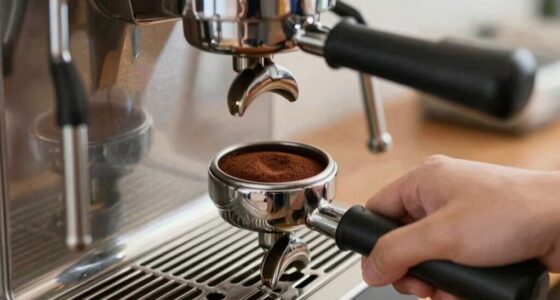
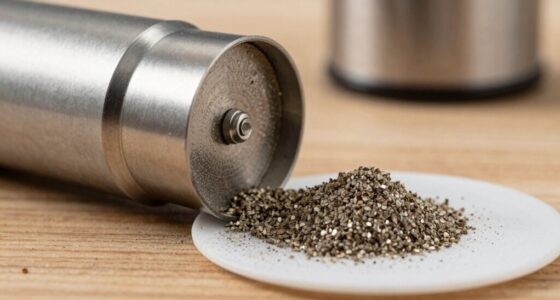
Ever wondered how baristas achieve that perfect cup of coffee? It all comes down to understanding brew ratios, but equally vital is how you manage the coffee grind size and extraction time. These factors work together to produce a balanced flavor profile. When you’re experimenting with brew ratios like 1:15, 1:16, or 1:17, you’re essentially adjusting the amount of water relative to your coffee grounds, but don’t forget that the grind size influences how water interacts with the coffee. A finer grind increases the surface area, which can speed up extraction, whereas a coarser grind slows it down. If you use a grind that’s too fine for a 1:15 ratio, you might over-extract, resulting in a bitter taste because the water spends too long in contact with the coffee. Conversely, a coarser grind for the same ratio could lead to under-extraction, making your brew sour or weak.
Extraction time is vital here; it’s the window during which water pulls flavors from the coffee. For a 1:15 ratio, which is more concentrated, you’ll want a relatively shorter extraction time to avoid over-extraction. If your grind is too fine and extraction takes longer, the coffee can become bitter and overly intense. On the other hand, with a coarser grind, you might need to extend the brewing time slightly to ensure the water fully interacts with the grounds, but be careful not to go too long or you risk over-extraction. When you adjust to a 1:16 or 1:17 ratio, the coffee becomes lighter and more delicate. These ratios typically require slightly longer extraction times because there’s more water diluting the coffee’s strength. Using a coarser grind here can help prevent over-extraction while maintaining clarity and balance, but again, timing is key.
Balancing these elements—brew ratio, grind size, and extraction time—lets you craft a brew tailored to your taste. If you prefer a stronger, more robust cup, go for a tighter ratio like 1:15 with a finer grind and shorter extraction. For a lighter, more nuanced flavor, lean toward 1:17 with a coarser grind and a slightly longer brew time. Ultimately, understanding how each variable interacts helps you optimize your brewing process, leading to a consistently excellent cup of coffee every time.
As an affiliate, we earn on qualifying purchases.
Frequently Asked Questions
How Do Brew Ratios Affect Coffee Flavor Profiles?
You’ll notice that brew ratios directly influence coffee’s flavor profile by affecting acidity and flavor extraction. A lower ratio, like 1:15, produces a bolder, more acidic cup with intense flavor, while higher ratios, such as 1:17, yield a milder, smoother taste with less acidity. Adjusting ratios helps you tailor the coffee’s brightness and richness, giving you control over how sharp or balanced your final brew feels.
Can I Adjust Brew Ratios for Different Brewing Methods?
Yes, you can adjust brew ratios for different brewing methods. While maintaining ratio consistency and brewing precision is essential for a balanced flavor, each method benefits from tailored ratios. For example, espresso often uses a 1:2 ratio for intensity, while pour-over might lean toward 1:16 for clarity. Experimenting helps you discover what works best, giving each brew its unique character without sacrificing control.
What’s the Best Ratio for a Balanced Espresso Shot?
For a balanced espresso shot, aim for a brew ratio around 1:2 or 1:2.5, which helps manage coffee acidity and body. Adjust the ratio if you notice excessive acidity or bitterness. Keep your brew temperature steady—around 195-205°F—to extract flavors smoothly. This combination guarantees a harmonious blend of brightness, sweetness, and richness, giving you a well-rounded espresso shot every time.
How Do Brew Ratios Influence Caffeine Content?
You’ll find that brew ratios directly influence caffeine extraction and brew strength. A higher ratio, like 1:17, uses more water, leading to a lighter, less caffeinated shot, while a lower ratio, like 1:15, concentrates flavors and caffeine. As you adjust ratios, you control how much caffeine gets extracted. Smaller ratios enhance caffeine content, but be cautious—over-extraction can cause bitterness, affecting overall brew strength.
Are Certain Ratios Better for Specific Coffee Bean Types?
A stitch in time saves nine, and choosing the right brew ratio depends on your coffee bean origin. Light roasts from certain regions may benefit from a slightly higher ratio, while darker beans might need a different approach. Adjust your grind size accordingly to optimize extraction. So, yes, some ratios are better suited for specific beans, helping you uncover their unique flavors and achieve a balanced brew.
Conclusion
Now, as you experiment with different brew ratios, you might find that a slight change can unexpectedly unleash new flavors in your coffee. It’s almost like the universe nudging you toward that perfect cup. So, stay curious and keep tweaking your ratios—you never know when a small adjustment will lead to your best brew yet. Sometimes, the best discoveries happen when you least expect them, turning routine mornings into delightful surprises.
Halloween Picks
halloween
As an affiliate, we earn on qualifying purchases.