
A common mistake that causes weak coffee is not maintaining the proper coffee-to-water ratio when adjusting your dose and beverage weight. If you use too little coffee or don’t account for how much water you brew, your cup can turn out underwhelming in flavor. Precise measurement and understanding this balance are key to a richer, more flavorful brew. Keep going, and you’ll discover how mastering these ratios can transform your coffee experience.

Get coffee and tea gear delivered free with Prime
- Fast, free delivery on millions of items
- Prime Video, Amazon Music and more included
- Member-only deals all year
Key Takeaways
- An incorrect coffee-to-water ratio can lead to weak, under-extracted coffee despite using the right dose.
- Too little coffee with too much water results in a diluted, bland flavor.
- Overdosing coffee without adjusting brew parameters can cause bitterness, but not necessarily stronger taste.
- Precise measurement of both coffee dose and beverage weight ensures proper extraction and flavor balance.
- Mastering the ratio helps prevent weak cups caused by misjudged coffee-to-water proportion.
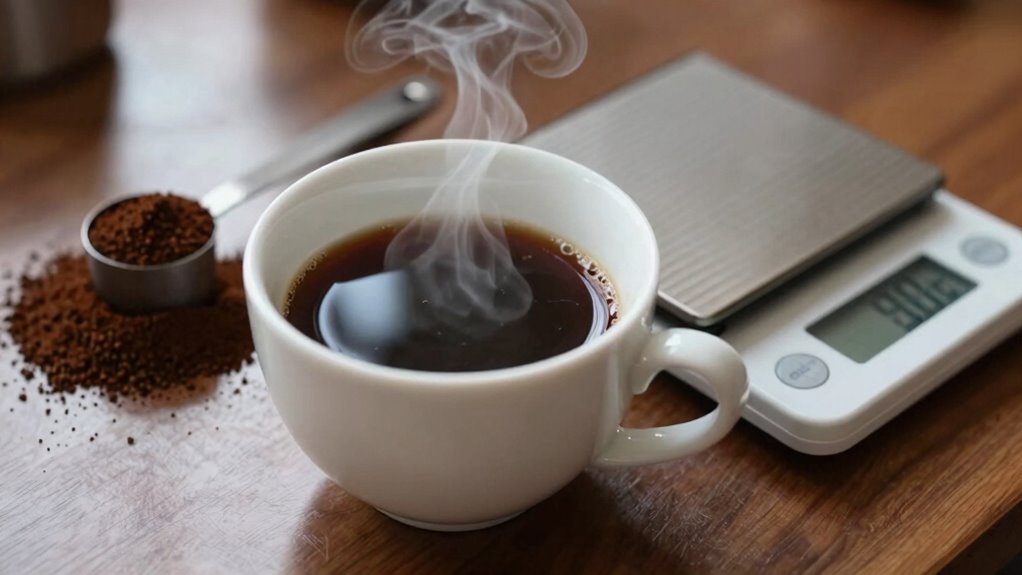
When brewing coffee, understanding the difference between coffee dose and beverage weight is essential for achieving your desired flavor and strength. If you don’t get this ratio right, your coffee can end up weak, flat, or overly bitter. Coffee dose refers to the amount of coffee you use before brewing, usually measured in grams. Beverage weight, on the other hand, is the final weight of the brewed coffee in your cup. Many people mistakenly assume that increasing the coffee dose will automatically make a stronger cup, but that’s not always true. The key lies in balancing this dose with the water you use and focusing on flavor extraction.
If your goal is a consistent, flavorful brew, understanding how coffee dose influences flavor extraction is crucial. When you use too little coffee, the extraction process is underwhelming, resulting in a weak, underdeveloped taste. Conversely, if you use too much, the coffee could become overly intense or bitter, especially if the brew time isn’t adjusted accordingly. The ratio of coffee dose to water impacts how well flavors are extracted from the beans. When properly balanced, this ratio ensures you achieve optimal flavor extraction, bringing out the nuanced notes in your coffee and avoiding a bland or overly harsh profile.
Brew consistency depends heavily on maintaining accurate measurements of coffee dose relative to water. Even small variations can lead to significant differences in taste, making your coffee either too weak or too strong from one brew to the next. When you measure your coffee dose precisely, you can replicate the same flavor profile consistently. This consistency is key whether you’re brewing for yourself or serving multiple cups to guests. The beverage weight, which reflects how much brewed coffee ends up in your cup, helps you gauge whether your ratio is on point. If you notice your cups are too watery or too concentrated, adjusting the dose or brew parameters will help you hit that perfect balance.
Additionally, understanding the relationship between coffee dose and beverage weight allows you to fine-tune your brewing process for better control over flavor extraction and strength. Proper measurement techniques are essential because flavor extraction depends heavily on the ratio of coffee to water and the brewing time. Precise measurements not only enhance the quality of your brew but also help you minimize waste and make the most of your coffee beans. Mastering this ratio and measurement precision also minimizes waste and ensures you get the most out of your coffee beans. A good understanding of brewing variables can help you troubleshoot and improve your coffee each time you brew. Ultimately, understanding the relationship between coffee dose and beverage weight empowers you to control flavor extraction and brew consistency. Instead of guessing or relying on intuition alone, precise measurements provide the foundation for a reliably good cup every time. This awareness ensures your coffee isn’t just strong or weak, but balanced and flavorful, reflecting your true brewing intention. When you master this ratio, you unlock the full potential of your beans, making every brew a satisfying experience.
As an affiliate, we earn on qualifying purchases.
Frequently Asked Questions
How Does Grind Size Affect the Coffee-To-Water Ratio?
Grind size directly impacts the coffee-to-water ratio by affecting grind consistency and extraction efficiency. If your grind is too fine, water struggles to flow evenly, leading to over-extraction and weak flavors. Conversely, a coarse grind causes under-extraction. Adjusting grind size guarantees you get a balanced extraction, maximizing flavor without needing more coffee. You control the ratio better when your grind size promotes consistent flow and ideal extraction efficiency.
What Are the Best Tools to Measure Coffee Dose Accurately?
You should use a digital scale, a coffee scoop, or a dosing ring to measure your coffee dose accurately. These tools help maintain consistent extraction and prevent flavor inconsistencies. Store your coffee properly to preserve freshness, which further enhances extraction consistency. By choosing precise measurements, you improve your brewing process, ensuring each cup is balanced, flavorful, and strong—making your coffee routine more reliable and enjoyable every time.
Does Brewing Method Influence Ideal Coffee-To-Water Ratios?
Yes, your brewing method influences the ideal coffee-to-water ratio because it affects extraction consistency and flavor balance. For example, espresso needs a higher concentration for a rich taste, while pour-over benefits from a more delicate balance to highlight nuanced flavors. Adjusting ratios based on your method ensures you achieve perfect extraction, resulting in a well-balanced cup with the desired flavor profile. Always tailor your ratio to match your brewing technique for best results.
How Does Coffee Bean Type Impact Brewing Ratios?
You should consider the coffee bean origin and flavor profile when adjusting brewing ratios. Different origins, like Ethiopian or Colombian beans, have unique characteristics that influence how much coffee to use for ideal extraction. Lighter roasts may need a slightly higher ratio to bring out delicate flavors, while darker roasts might require less. Tailoring ratios to the bean’s origin and flavor profile ensures a balanced, flavorful cup.
Can Adjusting the Ratio Improve the Taste of Weak Coffee?
Adjusting the ratio can considerably improve your coffee’s taste, enhancing flavor consistency and aroma. For example, if your coffee tastes weak, try increasing the coffee-to-water ratio slightly. This boosts extraction, making your brew richer and more aromatic. By fine-tuning the ratio, you guarantee each cup delivers consistent flavor and aroma, preventing weak brews and elevating your overall coffee experience.
Conclusion
Understanding the right coffee dose relative to your beverage weight is essential for a perfect cup. Did you know that many baristas unknowingly use a ratio that results in 30% weaker coffee? That’s like throwing away a third of your flavor and aroma! Next time, pay close attention to your measurements. Small adjustments can transform your weak brew into a rich, satisfying experience. Don’t settle for less—your perfect cup is just a ratio away.
Fall Picks
fall essentials
As an affiliate, we earn on qualifying purchases.