
To keg cold brew, start by cleaning and sanitizing your keg and lines to prevent off-flavors. Transfer your cold brew carefully, then set your CO2 pressure around 30-40 PSI, adjusting gradually until you reach your preferred fizziness. Regularly monitor gauges and keep everything clean to maintain flavor and carbonation. Patience is key as carbonation develops over time. Keep these tips in mind—all you need for a perfect pour is just ahead.
Key Takeaways
- Sanitize and thoroughly clean kegs and lines before transferring cold brew to prevent contamination.
- Match CO2 pressure to desired carbonation levels, starting low and increasing gradually.
- Regularly clean and inspect lines and disconnects to maintain flavor quality and prevent clogs.
- Allow 1-2 days for cold brew to fully carbonate, monitoring pressure gauges for optimal fizziness.
- Use filtered cold brew and proper setup to ensure clarity and prevent debris from affecting taste.
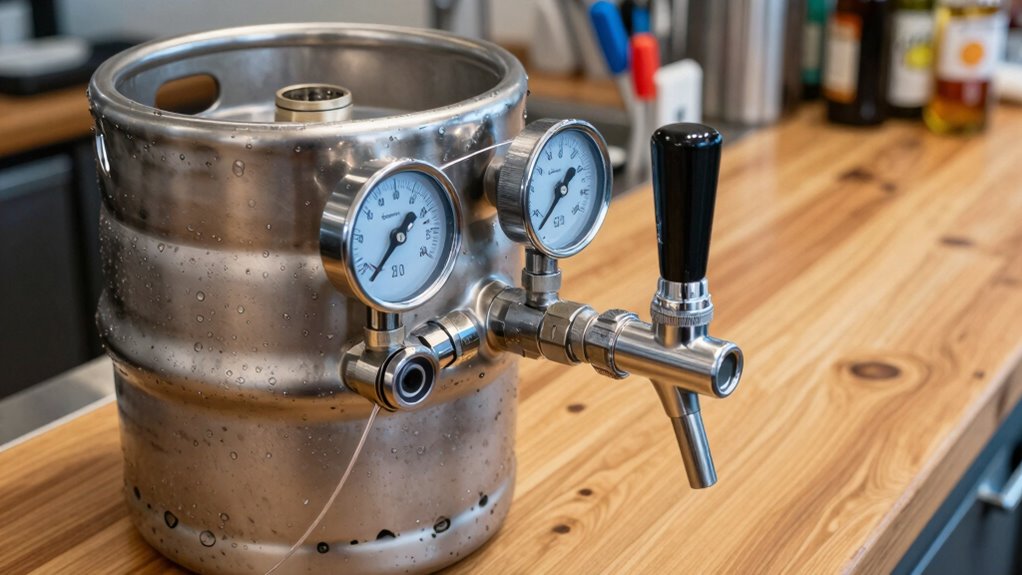
Kegging cold brew is a simple way to enjoy fresh, smooth coffee on demand. Once you’ve prepared your cold brew concentrate, transferring it into a keg allows you to serve it just the way you like—fresh, cold, and ready whenever you are. The key to a perfect pour lies in understanding carbonation techniques and maintaining a clean system. Proper carbonation ensures your cold brew has just the right level of fizziness, enhancing its flavor and mouthfeel. You can achieve this by carefully controlling the pressure in your keg using a CO2 tank, adjusting it to match your preferred carbonation level. Typically, cold brew requires lower pressure settings than beer, around 30-40 PSI, but it’s wise to start lower and increase gradually, tasting as you go. This way, you avoid over-carbonation, which can lead to unwanted foaming or a flat taste.
To get it just right, you might need to experiment with your pressure settings and the amount of CO2 you add. Once you find your ideal carbonation level, maintaining consistent pressure becomes essential to keep your cold brew tasting perfect every time. Remember, the longer your cold brew stays in the keg, the more it can carbonate, so patience is key. If you’re new to kegging, don’t forget that proper keg cleaning tips are essential for preserving flavor and preventing off-tastes. Regularly cleaning your keg and lines with appropriate cleaning agents helps eliminate residual oils, coffee grounds, or bacteria that can spoil your brew. Rinse thoroughly, and sanitize before pouring your cold brew in, especially if you’ve been switching between different beverages or if it’s been sitting idle for a while. Proper cleaning also involves checking for leaks, maintaining seals, and replacing o-rings as needed.
In addition to cleanliness, inspecting your lines regularly for clogs or buildup will ensure consistent flow and carbonation. Using proper disconnects and cleaning tools makes this process easier and more effective. When carbonating your cold brew, remember that patience pays off; it may take a day or two to reach your desired level of fizziness, especially if you’re dialing in your pressure. Keep an eye on your gauges, and don’t be afraid to make small adjustments. Additionally, understanding filtration and proper line setup can help prevent debris from entering your system and affecting the taste. With a little practice, you’ll develop a feel for the right pressure and cleaning routines that keep your cold brew tasting fresh and lively. Ultimately, mastering carbonation techniques and following keg cleaning tips will allow you to enjoy bar-quality cold brew at home, anytime you crave it.
Frequently Asked Questions
How Long Can Cold Brew Stay Fresh in a Keg?
Cold brew can stay fresh in a keg for about 2 to 3 weeks if you maintain proper storage duration and prevent spoilage. Keep the keg refrigerated and make sure it’s sealed tightly to slow down oxidation and microbial growth. Regularly check for any signs of spoilage, like off smells or flavors, and clean your lines to maintain freshness. Proper handling extends your cold brew‘s shelf life and preserves its taste.
What Are the Best Pressure Settings for Different Cold Brew Styles?
Imagine your cold brew flowing smoothly like a gentle river; to achieve this, you need the right pressure adjustment for your cold brew styles. For a light, delicate brew, keep it around 4-6 psi to preserve subtle flavors. If you prefer a richer, creamier style, increase pressure to 8-10 psi for a velvety pour. Adjust these settings based on your preferred cold brew style for the perfect tap experience.
Can I Keg Flavored Cold Brew or Add Ingredients?
Yes, you can keg flavored cold brew or add ingredients for flavor infusion. Simply add your desired ingredients—such as vanilla beans, spices, or fruit—to the keg before sealing it. Make certain you use fresh, clean ingredients to prevent contamination. When ready, gently carbonate and serve. This method allows you to customize flavors and enjoy creative cold brew variations effortlessly. Just remember to clean your keg thoroughly afterward to maintain quality.
How Often Should I Clean the Keg and Lines?
You should sanitize your keg and perform line maintenance every 2 to 4 weeks to keep your cold brew fresh and safe. Regular sanitization prevents bacteria buildup and guarantees good flavor. Make it a habit to clean thoroughly after each use if you’re switching flavors or ingredients. Consistent cleaning not only maintains ideal pressure but also extends the lifespan of your equipment, making your cold brew experience enjoyable and hassle-free.
Is It Necessary to Carbonate Cold Brew in a Keg?
Yes, you should carbonate cold brew in a keg. Carbonation benefits include adding a subtle fizz that enhances mouthfeel and flavor, making your cold brew more invigorating. Proper carbonation also helps release flavors and aromas, improving the overall experience. By carbonating your cold brew, you achieve a smoother, more balanced taste, elevating your drinking experience and ensuring your cold brew is as delicious and enjoyable as possible.
Conclusion
Now that you know the essentials of kegging cold brew—pressure, lines, and cleanliness—you’re ready to craft your perfect batch. With a little practice, you’ll master the art of pouring smooth, invigorating cold brew right from your keg. Imagine the satisfaction of serving it to friends or savoring it yourself, anytime you want. Are you prepared to turn your cold brew dreams into a revitalizing reality? Cheers to your kegging journey!