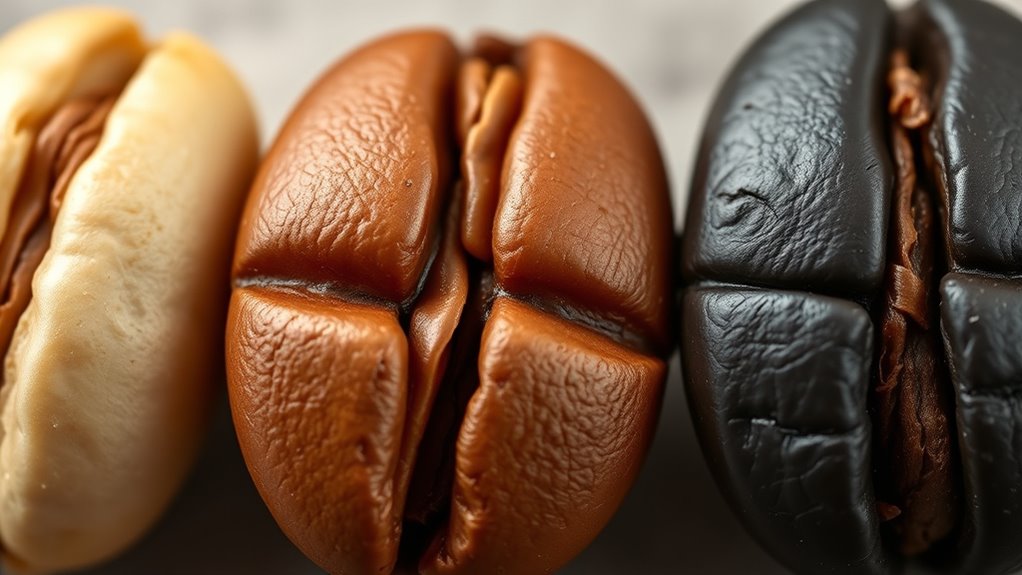

Understanding roast levels—light, medium, and dark—helps you choose the flavor profile you prefer. Light roasts highlight fresh, fruity, and floral notes, perfect for those who enjoy the true origin of beans. Medium roasts balance these with caramel and nutty hints, offering a fuller flavor. Dark roasts bring bold, smoky, and bitter tones for a more robust experience. If you want to explore how each level influences taste, there’s more to uncover below.
Key Takeaways
- Light roasts highlight fruity, floral, and acidic qualities, preserving most original bean flavors with minimal roasting.
- Medium roasts balance origin flavors with roasted notes, offering caramel, nutty, and chocolate undertones.
- Dark roasts develop bold, smoky, and bitter profiles, masking original flavors with intense heat and longer roasting.
- Roast level influences flavor complexity, acidity, body, and aroma, shaped by heat and roasting duration.
- Equipment type impacts flavor profiles: gentle for light, drum roasters for medium, and high-heat capable devices for dark roasts.

Have you ever wondered how the roast level of your coffee affects its flavor? The truth is, the roast level plays a vital role in shaping the coffee’s overall taste experience. When you pick a light, medium, or dark roast, you’re fundamentally choosing how the beans are processed during roasting—the stage that transforms raw green coffee into the rich, aromatic brew you love. Different roasting equipment types, from drum roasters to fluid bed roasters, influence these roast levels by controlling heat application and roast duration. This, in turn, impacts the coffee’s flavor profiles, highlighting specific qualities and masking others.
Light roasts are developed with less heat and shorter roasting times, usually reaching an internal temperature of around 356°F (180°C). This results in a bean that retains much of its original character, emphasizing the coffee’s inherent flavors. You’ll notice bright, vibrant notes like fruity, floral, and acidic qualities that shine through in your cup. Because light roasts preserve more of the beans’ natural acids and volatile compounds, they often showcase the bean’s unique origins—whether it’s a fruity Ethiopian or a bright Colombian. The roasting equipment types used here tend to be precise and gentle, ensuring that the delicate flavors are maintained without overdeveloping the beans.
Light roasts highlight bright, fruity, and floral flavors by preserving the beans’ natural acids and delicate nuances.
Medium roasts are a popular choice because they strike a balance between the origin flavors and the roasted notes. Roasting equipment for medium roasts often involves slightly higher temperatures and longer times, reaching about 370°F to 410°F (188°C to 210°C). The result is a coffee with a more rounded acidity, fuller body, and enhanced aroma. You’ll notice hints of caramel, nutty, and chocolate undertones, which emerge as the beans develop more complex flavor profiles during roasting. Medium roasters, often drum roasters, provide the control needed to achieve this harmony—ensuring neither the bright qualities of a light roast nor the bitter notes of a dark roast dominate.
Dark roasts are roasted at higher temperatures, typically exceeding 430°F (221°C), for longer periods. The roasting equipment types here are designed to generate intense heat, creating a deep, smoky char on the beans’ surface. The flavors in dark roasts tend to be bold, with prominent bitter, roasted, and smoky notes. You’ll notice less of the beans’ original flavors, as the high heat fundamentally transforms them into more uniform, robust profiles. This type of roast often features a fuller body and a lingering, bittersweet finish. The equipment used for dark roasts—like high-capacity drum roasters—ensures even heat distribution, which is critical for achieving consistent, deep flavor profiles.
Understanding how the roast level influences flavor profiles allows you to choose the right coffee for your taste. Whether you lean toward the bright, complex notes of a light roast, the balanced richness of a medium roast, or the bold, smoky notes of a dark roast, knowing how different roasting equipment types impact the process helps you make an informed choice.
Frequently Asked Questions
How Does Roast Level Affect Caffeine Content?
You might think darker roasts have less caffeine, but actually, roast level doesn’t substantially change caffeine content. As you roast, the coffee bean density decreases due to higher roasting temperatures, which can make beans weigh less. However, since you usually brew the same weight of beans, the caffeine amount remains fairly constant across roast levels. So, your preferred roast won’t drastically impact your caffeine intake.
Can Roast Levels Influence Coffee Acidity?
Think of the roasting process as a symphony that shapes your coffee’s personality. Lighter roasts preserve the bean’s natural acidity, giving you that bright, acidic flavor that dances on your palate. Darker roasts, however, mellow the acidity, like a sunset softening the sky, resulting in a smoother, less tangy taste. So, yes, your roast level directly influences the coffee’s acidity, transforming its flavor profile with each turn of the roaster.
Are Darker Roasts More Bitter Than Lighter Ones?
Darker roasts tend to be more bitter than lighter ones because the longer roasting process brings out more roasted, smoky flavors that can enhance bitterness. You might notice a stronger flavor intensity with dark roasts, but it often comes with a bitter edge. If you prefer a smoother, less bitter taste, lighter roasts usually offer a milder profile with less bitterness comparison.
How Do Roast Levels Impact Flavor Profiles?
Imagine a symphony of flavors dancing on your palate; roast levels shape this experience. As you move from light to dark, the flavor complexity shifts, revealing deeper, bolder notes. Lighter roasts highlight bright, fruity aromas, while darker roasts develop richer, smoky scents. Your taste buds will notice the nuanced aroma development and layered flavors, each level offering a unique journey—whether vibrant and lively or intense and mellow.
Is There a Health Difference Between Roast Levels?
You might wonder if roast levels affect health benefits and nutritional differences. Generally, darker roasts have fewer antioxidants but still provide beneficial compounds, while lighter roasts retain more of the original nutrients from the beans. The differences are minor, so your choice should focus on flavor preference rather than health. Ultimately, enjoying coffee in moderation offers the most health benefits, regardless of roast level.
Conclusion
Now that you understand the differences between light, medium, and dark roasts, you can choose the perfect one to match your taste. Did you know that about 80% of coffee consumed worldwide is medium roast? This shows how popular a balanced flavor profile is. So, next time you sip your coffee, remember that your choice reflects not just taste but a tradition enjoyed by millions. Happy brewing!