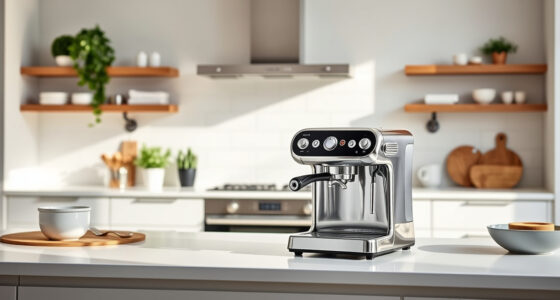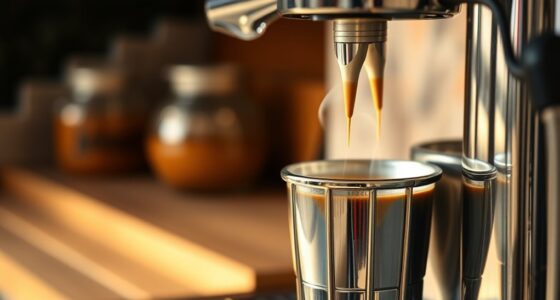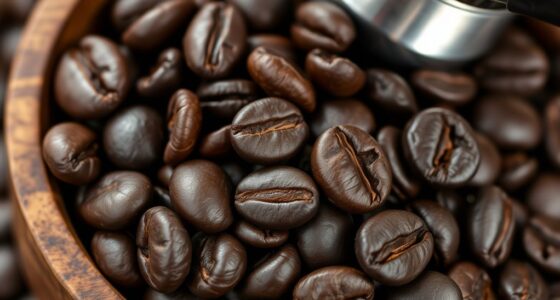

If you choose single dosing, you’ll enjoy precise control over freshness, grind size, and consistent shot quality, but it can slow down your workflow since you need to measure and grind for each shot. Hopper systems offer quick access to larger quantities of beans, boosting speed and efficiency, especially in busy settings, but they may lead to variability and stale beans over time. To find out which method suits your needs best, keep exploring the pros and cons of each approach.

Get coffee and tea gear delivered free with Prime
- Fast, free delivery on millions of items
- Prime Video, Amazon Music and more included
- Member-only deals all year
Key Takeaways
- Single dosing offers precise control over grind size, dosing, and freshness, ensuring consistent flavor.
- Hopper systems enable faster grinding and greater convenience, ideal for high-volume environments.
- Single dosing minimizes exposure to air, maintaining bean freshness and reducing stale coffee risk.
- Hopper setups can lead to variability in grind size and flavor due to bean shifting and stale beans over time.
- The choice depends on prioritizing precision and freshness versus speed and convenience in your workflow.
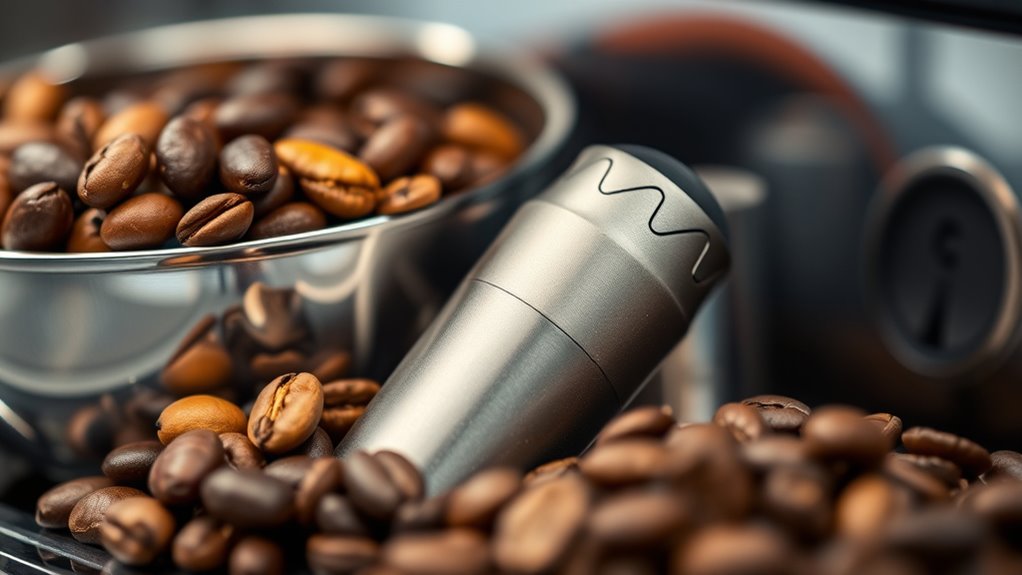
When choosing between single dosing and hopper systems, understanding their differences can considerably impact your efficiency and results. Your choice affects how you manage grind size, dosing accuracy, and overall workflow. Single dosing involves measuring out a specific amount of coffee beans each time you prepare a shot. This method allows you to control grind size more precisely since you’re grinding a known quantity, leading to better consistency. With single dosing, you can tailor the grind size for each batch, optimizing extraction and flavor. Plus, it minimizes the chance of stale coffee, because you’re only grinding what you need. However, it can be slower, especially if you’re making multiple drinks throughout the day, since you need to weigh, grind, and dose each time.
Hopper systems, on the other hand, hold a larger amount of beans, offering convenience and speed. They’re great when you need quick access and want to keep your workflow seamless. Because the beans are stored in a hopper, you can grind larger quantities at once, saving time. But, this convenience can come at a cost. The grind size consistency may fluctuate as the beans near the bottom of the hopper, which can affect dosing accuracy. If the grind size isn’t uniform, your espresso shots might vary, leading to inconsistent taste and extraction. Additionally, over time, beans can become stale or lose their freshness in the hopper, which impacts flavor.
If precision and control are your priorities, single dosing is likely the better fit. It allows you to dial in your grind size with more accuracy, ensuring each shot is as close to perfect as possible. It also helps maintain freshness, since you’re not exposing a large quantity of beans to air. On the flip side, if speed and efficiency matter more, and you’re willing to accept some variability, hopper systems are appealing. They’re especially useful in busy environments where time is limited and consistency is less critical.
Furthermore, understanding cybersecurity vulnerabilities such as hacking incidents like ‘Hack’n Jill’ can make you more aware of the importance of securing your equipment and data in a digital coffee setup. Ultimately, your decision depends on your brewing style and priorities. If you value precision, consistency, and freshness, single dosing offers advantages that can elevate your coffee quality. But if convenience, speed, and ease of use are more important, a hopper system can serve you well, provided you’re mindful of potential inconsistencies. Understanding how each system influences grind size and dosing accuracy helps you make an informed choice, ensuring your setup aligns with your brewing goals.
As an affiliate, we earn on qualifying purchases.
Frequently Asked Questions
How Does Maintenance Differ Between Single Dosing and Hopper Systems?
You’ll find that maintenance differs markedly between single dosing and hopper systems. Single dosing tends to have lower maintenance complexity, making calibration easier and less frequent. Hopper systems, however, require more regular calibration and cleaning due to their larger size and potential for material build-up. You should plan for more routine checks with hopper systems to ensure consistent performance, whereas single dosing units generally need less frequent attention.
Which System Offers Better Consistency in Dosing?
You’ll find single dosing systems offer better consistency in dosing because they provide precise, repeatable measurements, while hopper systems may vary due to inconsistencies in feed rates. When considering accuracy comparison, single dosing delivers more reliable results, and it often proves more cost-efficient in the long run by reducing waste. So, if precision and reliable dosing are your priorities, single dosing systems are the better choice.
Are There Specific Environments Where One System Outperforms the Other?
You’ll find that in environments with harsh conditions, like high humidity or dust, single dosing systems often outperform hoppers because they reduce contamination risks. In industry applications requiring precise, consistent dosing, single dosing works best, especially for small batch production. Conversely, hoppers excel in large-scale operations where continuous, high-volume dispensing is needed. Choose based on your specific environmental conditions and industry demands for ideal results.
What Is the Initial Setup Cost Comparison?
You might think single dosing systems have higher initial setup costs, but a thorough cost analysis shows they often save money long-term. Installation expenses are typically lower because they’re simpler and quicker to install, reducing labor costs. Conversely, hopper systems usually involve more complex setup and higher equipment costs upfront. So, if you’re balancing immediate expenses with future savings, single dosing can be a more cost-effective choice initially.
How Do Single Dosing and Hopper Systems Impact Overall Production Speed?
You’ll find that single dosing systems often slow down production because they handle smaller batch sizes, requiring more frequent refills. In contrast, hopper systems boost overall speed by accommodating larger batch sizes, making them more scalable for high-volume production. If you need rapid output and scalability, hopper systems are advantageous. However, if precision is key, single dosing might be better despite its impact on production speed.
Conclusion
When choosing between single dosing and hopper, consider your workflow and efficiency needs. Single dosing offers precision and reduces waste, making it perfect for small batches, while hoppers are ideal for high-volume, continuous use. Remember, the right choice can transform your brewing experience—it’s not just a minor decision but a game-changer. Pick wisely, and you’ll unseal coffee perfection every single time, turning your mornings into a legendary ritual you’ll never want to end!
Halloween Picks
halloween
As an affiliate, we earn on qualifying purchases.