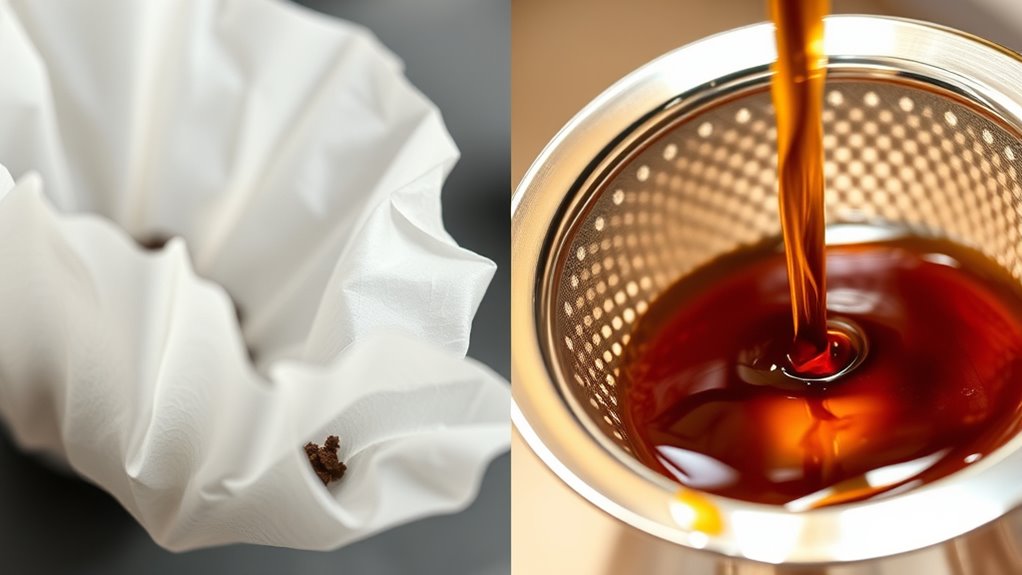

If you choose metal filters, you’ll notice water flows faster, allowing for quicker brewing, and oils and fine particles pass through, enriching the flavor. With paper filters, water moves more slowly, trapping oils and creating a cleaner, milder cup. This makes paper filters ideal for a quick, low-maintenance routine, while metal filters offer a richer taste but require more cleanup. Keep exploring to find out which option best suits your brewing style.
Key Takeaways
- Metal filters allow faster water flow, resulting in quicker brewing compared to paper filters.
- Metal filters pass oils and fine particles, enhancing richer and more complex flavor profiles.
- Paper filters trap oils and residues, producing a cleaner, milder cup with less oil content.
- Longer extraction times with paper filters can influence taste, while metal filters promote fuller flavor extraction.
- Choice of filter impacts brewing speed, flavor richness, and oil retention, aligning with different taste and convenience preferences.
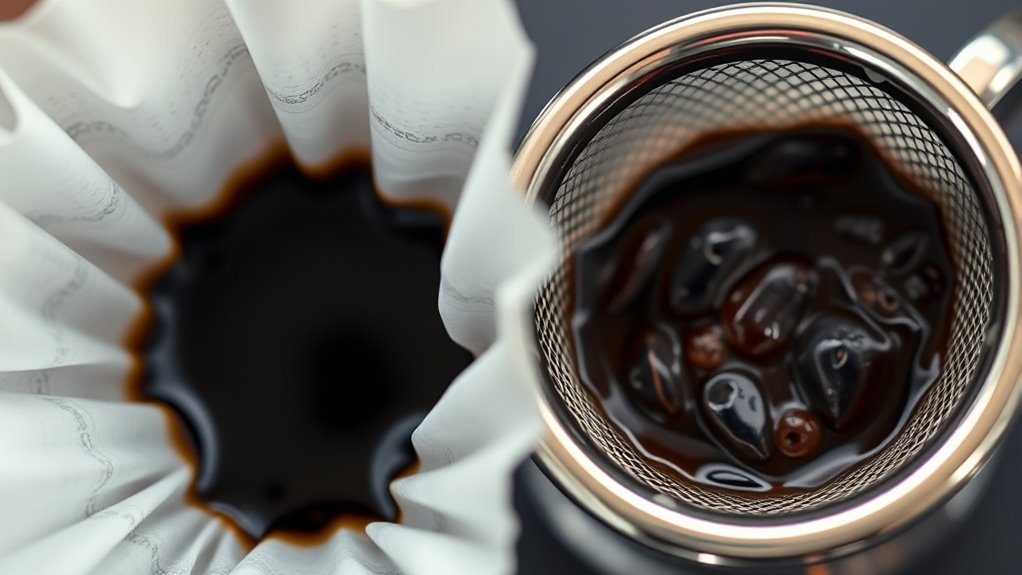
When choosing between paper filters and metal filters for your coffee maker, understanding their differences can considerably impact your brewing experience. One of the most immediate factors to consider is brewing speed. Metal filters generally allow water to flow through more quickly because they don’t trap as many grounds or residues as paper filters do. This means you can expect a faster brewing process with a metal filter, which is ideal if you’re in a hurry or want to make multiple cups in quick succession. Conversely, paper filters tend to slow down the flow somewhat, as they trap fine particles and oils, leading to a slightly longer extraction time. If speed is a priority for your morning routine, a metal filter could save you precious minutes, but if you prefer a more controlled, longer extraction, paper filters might suit you better.
Cleanup simplicity is another significant aspect that influences your choice. With paper filters, cleanup is straightforward—just toss the used filter and grounds in the trash or compost, and you’re done. They’re disposable, requiring minimal effort and no scrubbing. This makes paper filters particularly appealing if you want to keep things simple and avoid the mess of cleaning a reusable filter. Metal filters, on the other hand, demand a bit more attention. After brewing, you need to rinse out the grounds and occasionally scrub the filter to remove any residual oils or buildup. While this process can be quick if you do it regularly, it’s an extra step compared to simply discarding a paper filter. If you prefer a maintenance-free option and don’t mind a little extra cleaning, paper filters offer unmatched convenience. However, if you’re environmentally conscious and prefer to reduce waste, a metal filter might be worth the extra effort, especially since it’s reusable and produces less waste over time.
Ultimately, your choice hinges on what you value most. If you prioritize brewing speed and easy cleanup, paper filters provide a quick, hassle-free solution. But if you’re willing to spend a little more time maintaining your equipment to achieve a richer flavor profile and reduce waste, a metal filter could be the better option. Both have their merits, but understanding these key differences ensures you make an informed decision that aligns with your daily routine and taste preferences.
Frequently Asked Questions
How Does Filter Material Impact Coffee Temperature During Brewing?
The filter material impacts your coffee temperature during brewing through its thermal conductivity and filter insulation. Metal filters usually conduct heat better, helping maintain higher temperatures as water passes through, while paper filters insulate more, causing the coffee to cool slightly faster. This difference affects extraction and flavor, so choose your filter based on whether you want a hotter brew or a more nuanced flavor profile.
Can Filter Type Influence the Caffeine Content in the Final Brew?
Yes, the filter type can influence caffeine retention in your brew. Paper filters, with their higher permeability, trap more oils and fine particles, slightly reducing caffeine extraction. Metal filters, being less permeable, allow more contact between water and coffee grounds, potentially increasing caffeine content. So, if you’re seeking a stronger caffeine kick, metal filters might be your go-to, whereas paper filters offer a milder, cleaner cup with less caffeine retention.
Are There Health Benefits Associated With Using Metal Filters Over Paper?
Using metal filters offers health benefits because they don’t trap oils and beneficial compounds like paper filters do. Metal filters allow more antioxidants and healthy fats to pass into your brew, potentially improving your overall health. Plus, they’re reusable, reducing waste. You may find that metal filters give you a richer flavor and a smoother experience, making them a healthier, eco-friendly choice for your daily coffee routine.
How Do Filters Affect the Brewing Time and Efficiency?
Using a metal filter typically shortens your brew time because it allows water to flow more freely, improving filtration efficiency. This means you get a quicker extraction process compared to paper filters, which tend to slow down the flow due to their finer pores. As a result, you’ll notice a more efficient brew overall, with less clogging and a faster, smoother process that preserves essential oils and flavors.
What Are the Environmental Impacts of Reusable Metal Versus Disposable Paper Filters?
You might not realize it, but choosing between reusable metal and disposable paper filters deeply impacts the environment. Reusable metal filters reduce waste and long-term resource consumption, yet they pose recycling challenges that complicate disposal. Meanwhile, paper filters are convenient but contribute to landfill waste and increased resource use for production. Your choice influences sustainability, so consider both the immediate convenience and the broader environmental footprint behind each option.
Conclusion
When choosing between paper filters and metal, remember that paper filters trap oils, resulting in a cleaner cup, while metal filters allow more oils through for a richer flavor. notably, a recent survey found that 65% of coffee enthusiasts prefer metal filters for their fuller taste. So, consider your flavor preferences and brewing style. Whichever you pick, understanding these differences helps you craft the perfect brew every time.