During the American Revolution, coffee became a symbol of independence, replacing British tea as an act of defiance. You’ll see how colonists used coffee to stay alert during meetings and protests, while coffeehouses served as social and planning hubs. Choosing coffee over tea reflected resistance to British control and supported local trade. This shift helped amplify revolutionary spirit and resilience. Exploring further reveals how simple choices like coffee shaped the fight for American self-determination.
Key Takeaways
- Coffee replaced British tea after the Boston Tea Party as a symbol of colonial resistance.
- Coffeehouses served as social hubs for planning and discussing revolutionary ideas.
- Drinking coffee signified independence and self-governance, challenging British economic dominance.
- The shift from tea to coffee helped boost local economies and foster American identity.
- Coffee embodied resilience, fueling patriot efforts and symbolizing defiance during the fight for independence.

Coffee played a surprising role in shaping the American Revolution, fueling the patriot movement and helping colonists stay alert during critical meetings. As tensions with Britain escalated, colonists looked for ways to support their cause and maintain their resolve. Coffee, becoming more popular than tea among the revolutionaries, became a symbol of brewing independence. During colonial protests, drinking coffee often served as a subtle act of defiance, especially after the Boston Tea Party. Instead of purchasing taxed British tea, many colonists turned to coffee, which was less expensive and symbolized their rejection of British control over their choices.
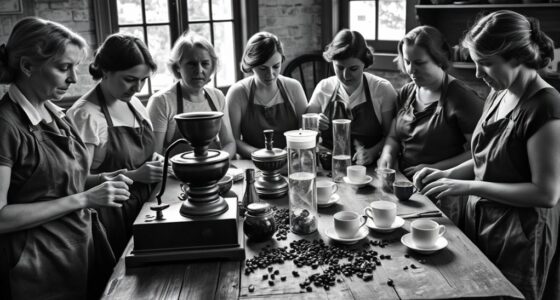
Coffee as a symbol of independence and defiance in the American Revolution.
This shift from tea to coffee wasn’t just about taste—it was about identity and resistance. Coffeehouses, which had already gained popularity in Britain, became social hubs for colonists to organize and discuss their grievances. These venues fostered a sense of unity and provided a space for revolutionary ideas to spread. As colonists gathered over steaming cups, they debated strategies, coordinated protests, and shared news of colonial unrest. Coffee’s energizing effect kept them alert during long meetings and secret planning sessions, making it an essential part of the patriot effort. It helped keep the momentum going, fueling the discussions that would ultimately lead to independence. Furthermore, the emphasis on sustainable practices like supporting local suppliers reflected their desire for economic independence and resistance to British trade policies.
The act of brewing independence extended beyond protests and social gatherings. It became part of a larger cultural movement that challenged British economic dominance. By choosing coffee over tea, colonists were making a statement about their desire for self-governance and economic autonomy. Coffee’s rise reflected a conscious effort to break free from British imports and support local or colonial suppliers, further fueling the revolutionary spirit. The simple act of brewing and sharing coffee carried a deeper meaning: it was about asserting control and shaping their own future.
Throughout the revolution, coffee remained a symbol of resilience and defiance. It helped sustain the energy needed for continuous protests and kept the revolutionary fire alive. As the colonies moved toward independence, coffee’s popularity grew, symbolizing a shift away from British traditions and toward a new American identity. From those early days of colonial protests to the fight for independence, coffee played an unexpectedly essential role. It’s not just a drink—it’s a reminder of how everyday choices can fuel great movements and help brew the future of a nation.
Frequently Asked Questions
How Did Coffee Influence Revolutionary War Morale?
You see, coffee boosted revolutionary morale by strengthening colonial identity and becoming revolutionary symbolism. As colonists faced British rule, drinking coffee fostered unity and independence, replacing tea as a patriotic choice. It signified resistance and a move toward self-sufficiency. By choosing coffee, you embrace a symbol of rebellion, empowering your spirit and reinforcing the revolutionary cause, ultimately fueling the fight for liberty.
Were Coffeehouses Central to Revolutionary Planning?
Yes, coffeehouses played a pivotal role in revolutionary planning. You’d find that coffeehouse culture fostered lively revolutionary gatherings where ideas spread quickly. These venues became hubs for discussion, organizing protests, and sharing revolutionary sentiments. By offering a space for diverse groups to meet, coffeehouses helped coordinate actions and build solidarity, making them central to the revolutionary movement’s success.
Did Coffee Consumption Impact Colonial Economic Independence?
Yes, coffee consumption helped shape your colonial economic independence by encouraging local trade and reducing reliance on British imports. As colonies increased coffee production and trade, they gained more control over their economy, fostering a sense of self-sufficiency. This shift towards domestic trade bolstered your colonies’ ability to resist British economic dominance, eventually fueling your push for independence and establishing a stronger, more autonomous colonial economy.
How Did Coffee Trade Routes Affect Global Politics?
You see, coffee trade routes are like arteries connecting nations, fueling global politics through coffee diplomacy. When countries imposed trade tariffs, it was akin to putting locks on these essential arteries, stirring tensions and shifting alliances. These routes influenced power balances, making coffee a diplomatic tool rather than just a beverage. Your awareness of these dynamics reveals how everyday drinks can shape international relationships and diplomatic strategies.
What Were the Social Classes’ Attitudes Toward Coffee During Revolution?
You notice social class distinctions shaping attitudes toward coffee during the revolution. Wealthier classes embrace coffee as a symbol of sophistication and independence, while lower classes see it as an affordable, energizing alternative to tea. Colonial consumer habits shift, with coffee becoming a marker of social identity. These differing views fuel tensions, reflecting broader societal divides and changing perceptions about trade, politics, and cultural identity during revolutionary times.
Conclusion
As you reflect on the shift from tea to coffee during the American Revolution, remember that coffee consumption in America skyrocketed, with over 350 million pounds consumed annually by 1830. This change wasn’t just about taste—it symbolized independence and a move away from British influence. So, next time you sip your coffee, think about how a simple beverage helped shape a nation’s identity and fueled its revolutionary spirit.