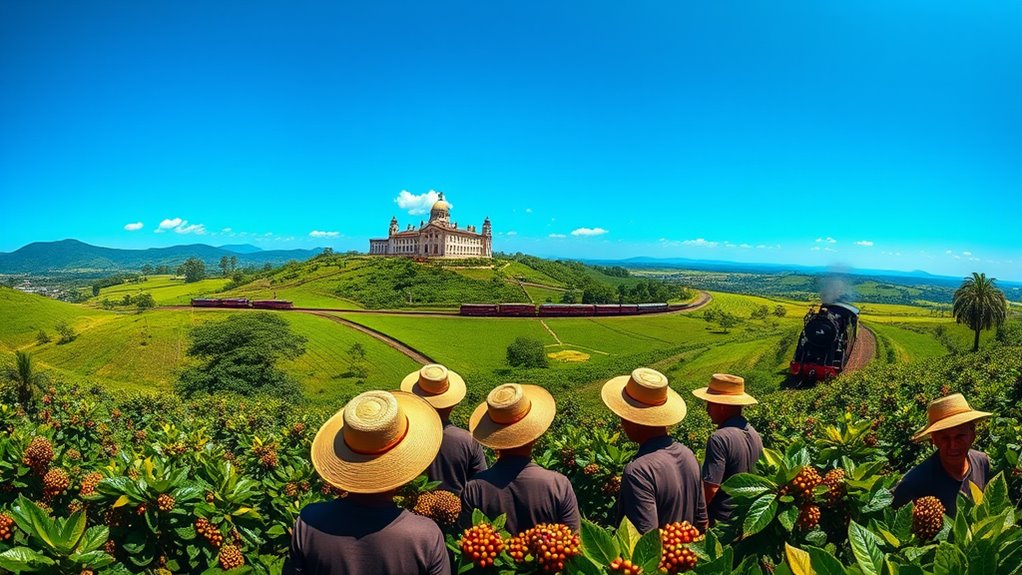

Brazil’s rise as a global power is deeply rooted in its history of empire-building, slavery, and the growth of coffee plantations. You’ll see how Portuguese colonization disrupted indigenous societies, causing cultural and environmental changes. The expansion of coffee farming cleared native forests, pushed indigenous communities off their lands, and transformed ecosystems. These historical forces shaped social inequalities and environmental challenges that still influence Brazil today. If you stay curious, you’ll uncover how these past events continue to impact Brazil’s future.

Get coffee and tea gear delivered free with Prime
- Fast, free delivery on millions of items
- Prime Video, Amazon Music and more included
- Member-only deals all year
Key Takeaways
- Brazil’s rise was driven by colonial empire-building, with indigenous societies disrupted through violence and land dispossession.
- Slavery, primarily of African populations, fueled economic growth in sugar, coffee, and other plantations.
- The expansion of coffee plantations in the 19th century caused deforestation and environmental degradation.
- Coffee’s global demand transformed Brazil into a major economic power, shaping social and land ownership structures.
- Indigenous communities faced marginalization and environmental loss due to colonial and economic exploitation.
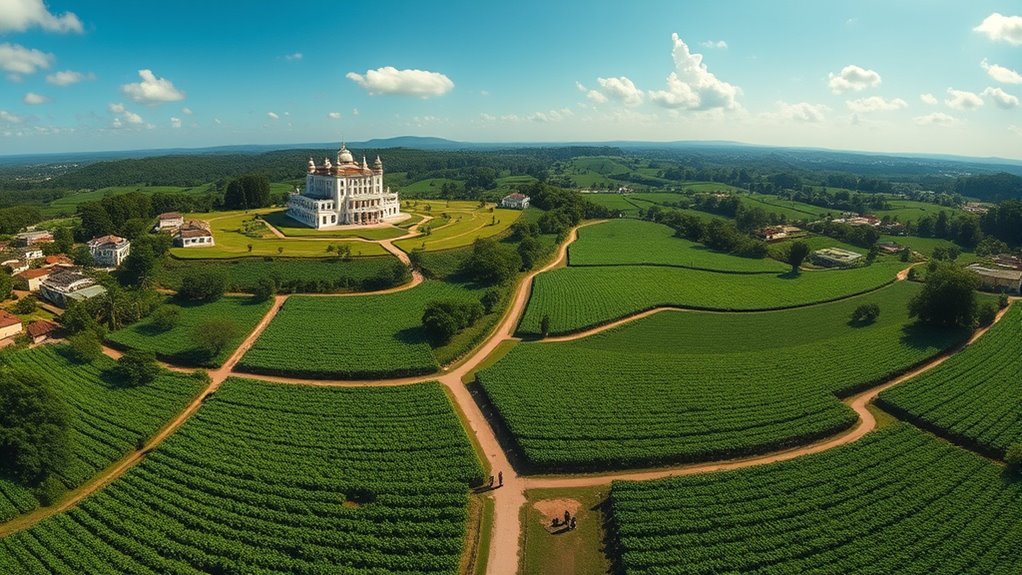
Brazil’s rise as a global economic power is rooted in a complex history of empire, slavery, and the development of coffee as a key commodity. As you explore this history, you’ll see how indigenous communities experienced profound impacts, both culturally and environmentally, during this transformation. The arrival of Portuguese colonizers disrupted indigenous societies, often violently, leading to significant population declines and cultural shifts. These communities, who once thrived in diverse ecosystems, found their lands increasingly exploited for economic gain. The expansion of coffee plantations, in particular, brought sweeping environmental changes, clearing vast areas of native forests to create monoculture farms. This deforestation not only destroyed the habitats of countless species but also altered local climates, affecting water cycles and soil fertility. You might notice how these environmental shifts further marginalized indigenous populations, as their traditional territories shrank and their ways of life became unsustainable.
The development of coffee as a dominant export crop amplified these impacts. To meet the growing global demand, large-scale land clearing took place, often pushing indigenous groups out of their ancestral lands. This pushed many communities into poverty and displacement, severing their connection to the land and disrupting their traditional livelihoods. The environmental change was stark; forests gave way to endless rows of coffee bushes, reducing biodiversity and fragmenting ecosystems. As you consider modern Brazil, you’ll see how these historical processes continue to influence indigenous rights and environmental conservation efforts. The scars of deforestation and land dispossession linger, making it difficult for indigenous communities to reclaim their lands or preserve their cultural heritage.
This history of environmental change isn’t just about the loss of trees or wildlife; it’s intertwined with the social fabric of indigenous communities. Their deep understanding of local ecosystems has often been ignored or undervalued in the pursuit of economic growth. You’ll find that today, many indigenous groups are fighting to protect their remaining lands and to restore environmental health, recognizing that their futures depend on sustainable practices. The environmental transformations driven by colonial and economic expansion have left a lasting legacy—one that underscores the importance of respecting indigenous rights and balancing economic development with ecological preservation. As you reflect on Brazil’s rise as a global power, remember that its history is marked by these complex relationships between indigenous impact and environmental change—an ongoing story of resilience, loss, and hope.
As an affiliate, we earn on qualifying purchases.
Frequently Asked Questions
How Did Indigenous Populations Influence Brazil’s Economic Development?
You can see that indigenous populations played a crucial role in Brazil’s economic development by maintaining extensive trade networks that connected different regions and supplied European settlers with valuable resources. Their cultural resistance helped preserve local traditions and knowledge, which influenced agricultural practices and craftsmanship. These networks and resilient traditions shaped early economic activities, ensuring indigenous influence persisted even as colonial powers expanded their control and introduced new economic systems.
What Role Did Portuguese Colonial Policies Play in Shaping Brazil’s Economy?
Think of colonial trade as the roots that ground Brazil’s economy. Portuguese policies focused on resource extraction, establishing trade monopolies that shaped economic growth. You’re influenced by policies that prioritized exports like sugar and coffee, which created a reliance on plantation economies. These economic policies limited local industry development, reinforcing dependence on colonial imports. As a result, Portugal’s control steered Brazil’s economic trajectory, leaving lasting impacts on its development and global trade relations.
How Did Brazil’s Geographic Diversity Impact Its Economic Growth?
Your understanding of Brazil’s geographic diversity shows that it markedly influences its economic growth. The varied landscapes, from fertile plains to mineral-rich mountains, allow resource distribution across different regions, fostering diverse industries like agriculture, mining, and manufacturing. This geographic variety enables Brazil to adapt to global markets, develop regional economies, and boost overall growth, making it a dynamic nation with a resilient and adaptable economic landscape.
What Were the Social Impacts of Slavery Beyond Economic Factors?
Imagine a world where slavery’s legacy lingers like a haunting melody. You see, slavery deepened social inequality, creating a rigid class divide that persists today. It also hindered cultural assimilation, forcing enslaved people to preserve their traditions while facing discrimination. This lasting impact fosters divisions and inequality, reminding you how deeply history shapes society, and why understanding these social impacts is essential for building a more inclusive future.
How Has Brazil’s Coffee Industry Evolved in Recent Decades?
You’ve seen Brazil’s coffee industry evolve through technological advancements like automation, improved planting techniques, and sustainable practices. Market globalization has expanded exports and increased competition, pushing producers to adapt quickly. You notice more specialty coffees and direct trade relationships, which boost quality and transparency. Overall, Brazil’s coffee scene has become more innovative and globally integrated, ensuring its position as a leading producer while addressing environmental and social challenges.
Conclusion
As you reflect on Brazil’s journey, remember it mirrors the phoenix rising from ashes—reborn through resilience amid empire, slavery, and coffee’s bloom. Like a mighty river carving its path, Brazil’s history shapes its future, reminding you that even in darkness, growth persists. Embrace this legacy, for like the legend of Icarus reaching toward the sun, Brazil’s spirit soars beyond its past, fueled by hope and the promise of renewal.
Fall Picks
fall essentials
As an affiliate, we earn on qualifying purchases.