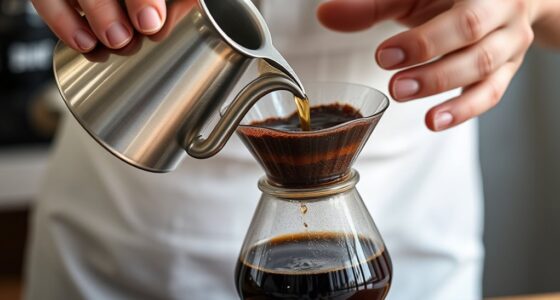

Water temperature plays a vital role in shaping your French press flavor by controlling how well the coffee compounds dissolve. Too hot, and you risk over-extraction, making your brew bitter. Too cold, and it might under-extract, resulting in a weak, flat taste. Maintaining the ideal range of 195°F to 205°F helps you achieve a balanced, flavorful cup with smooth aroma and richness. Keep exploring to discover how precise temperature control can elevate your French press experience.
Key Takeaways
- Water temperature affects the extraction of aroma, flavor, and body in French press brewing.
- Maintaining 195°F to 205°F (90°C to 96°C) ensures balanced, flavorful coffee.
- Too hot water causes over-extraction, resulting in bitterness and harshness.
- Insufficient heat leads to under-extraction, dull and muted flavors.
- Consistent temperature control promotes even extraction and a smoother, more harmonious cup.

The temperature of your water plays a crucial role in shaping the flavor of your French press coffee. When you pour hot water over your grounds, it’s not just about making the coffee hot—it’s about how that heat influences the extraction process. Coffee extraction is the process where hot water dissolves desirable compounds from the coffee grounds, including aroma, flavor, and body. If the water isn’t hot enough, the extraction may be incomplete, resulting in a weak, underwhelming brew with muted flavors. Conversely, water that’s too hot can over-extract certain compounds, causing bitterness and harshness. Finding that perfect temperature ensures you draw out the best qualities from your coffee grounds, creating a balanced and flavorful cup.
Maintaining consistent water temperature is key to achieving brewing consistency. When your water temperature fluctuates, so does the extraction process, leading to unpredictable results. For example, if your water cools too quickly or starts off too hot, your coffee’s flavor profile will vary from one brew to the next. Using a thermometer or a gooseneck kettle with temperature control can help you keep the water within the ideal range—generally between 195°F and 205°F (90°C to 96°C). This consistency allows you to replicate your favorite brew every time, ensuring that you can fine-tune your process over time and dial in your preferred flavor profile.
The right water temperature also influences how evenly your coffee grounds extract. When water is too cold, it struggles to fully dissolve solubles, leading to under-extraction. If it’s too hot, it can extract bitter compounds too quickly, overshadowing the more delicate flavors. By maintaining an ideal temperature, you facilitate a balanced coffee extraction, where the grounds release their flavors gradually and evenly. This results in a smoother, more harmonious cup, rather than one that’s muddled or overly bitter. Additionally, understanding the HEPA filtration technology that can improve air quality in your environment is important for overall well-being.

BOMATA Digital Water Thermometer for Water, Liquid, Candle and Cooking. Instant Read Food Thermometer Waterproof IPX7 with Long Probe for Cooking, Meat, BBQ! T101 (Black Color)…
[ Waterproof – IPX7 ] With the strong waterproof ability, it’s very suitable for measuring the temperature of…
As an affiliate, we earn on qualifying purchases.
As an affiliate, we earn on qualifying purchases.
Frequently Asked Questions
How Does Water Temperature Affect Extraction Time?
You’ll find that water temperature directly impacts extraction time, influencing your brew strength and flavor extraction. Hotter water speeds up extraction, reducing brew time and often resulting in a bolder, more robust flavor. Conversely, cooler water slows down extraction, leading to a lighter taste. Keeping water at the right temperature guarantees ideal brew strength and flavor, giving you a well-balanced French press coffee every time.
What’s the Ideal Water Temperature for Different Coffee Roasts?
You should calibrate your water temperature based on your coffee roast. For light roasts, aim for 195-200°F to preserve delicate bean chemistry and highlight bright flavors. Medium roasts thrive around 200-205°F, balancing acidity and body. Dark roasts benefit from slightly higher temps, around 205-210°F, to extract deeper flavors. Proper water temperature calibration guarantees ideal extraction, revealing the full potential of each roast’s unique coffee bean chemistry.
Can Temperature Fluctuations Impact Coffee Sediment?
Think of your French press as a delicate symphony; temperature fluctuations are like sudden crescendos that can disturb the harmony. Yes, they can impact coffee sediment, causing more particles to loosen and settle unevenly. This disrupts brewing consistency, leading to unwanted grit in your cup. To keep the melody smooth, maintain a stable water temperature, ensuring your coffee remains clear and flavorful without excessive sediment.
Is There a Temperature Threshold That Ruins French Press Coffee?
You should avoid exceeding 205°F because higher temperatures can ruin your French press coffee by burning the grounds and creating bitterness. Maintaining temperature stability and good heat retention during brewing helps extract ideal flavors without overdoing it. If your water gets too hot or fluctuates, it can negatively impact taste and consistency. To keep your coffee perfect, aim for a steady, controlled temperature around 195-205°F.
How Do Ambient Temperatures Influence Water Temperature During Brewing?
Ambient temperatures can substantially impact your brewing process, with studies showing that even a 10°F change affects extraction. As ambient humidity rises, water cools faster, especially in metal or glass vessels, making it harder to maintain ideal temperature. You should preheat your brewing vessel and control room temperature to guarantee consistent water temperature, preserving the rich flavors and full-bodied profile you want in your French press coffee.

COSORI Electric Gooseneck Kettle with 5 Temperature Control Presets, Pour Over Kettle for Coffee & Tea, Hot Water Boiler, 100% Stainless Steel Inner Lid & Bottom, 1200W/0.8L
5 𝑶𝑵𝑬-𝑻𝑶𝑼𝑪𝑯 𝑷𝑹𝑬𝑺𝑬𝑻𝑺: Your Gooseneck Electric Kettle features 5 precise temperature presets. These accurate presets make brewing coffee…
As an affiliate, we earn on qualifying purchases.
As an affiliate, we earn on qualifying purchases.
Conclusion
Remember, the water temperature is the maestro conducting your French press symphony. When you strike the right balance, you discover a world of flavors as vibrant as a painter’s palette. Too hot, and your brew might burn like a blazing sun; too cold, and it’s like whispering secrets in the shadows. Find that perfect warmth, and each sip will dance on your palate like a melody—delicious, harmonious, and unforgettable.

Nextmug Press – Temperature-Controlled, Self-Heating French Press (Black – 40 oz.)
THE PERFECT BREW & TEMPERATURE – The Nextmug Press will help you brew your coffee exactly how you…
As an affiliate, we earn on qualifying purchases.
As an affiliate, we earn on qualifying purchases.
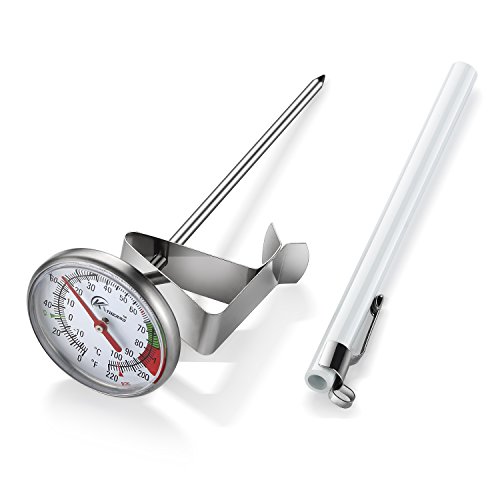
KT THERMO Instand Read 2-Inch Dial Thermometer,Best for The Coffee Drinks,Chocolate Milk Foam
DESIGN:Multi-stage design of the fixed clip, adjust the thermometer read the location of the disk surface to facilitate…
As an affiliate, we earn on qualifying purchases.
As an affiliate, we earn on qualifying purchases.