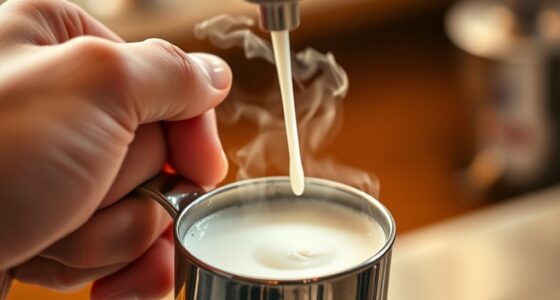

To make your cappuccino taste sweeter and creamier, keep the milk temperature between 150°F and 160°F. This ideal range enhances the milk’s natural sugars, giving your drink a richer flavor without scorched taste or loss of silky texture. Overheating can ruin the flavor, while underheating won’t allow proper frothing. Maintaining this temperature guarantees a smooth, balanced cup every time. If you want to learn more about perfect milk temperature control, keep exploring the best techniques.

Get coffee and tea gear delivered free with Prime
- Fast, free delivery on millions of items
- Prime Video, Amazon Music and more included
- Member-only deals all year
Key Takeaways
- Aim for a steaming temperature between 150°F and 160°F (65°C–70°C) for naturally sweeter milk.
- Proper temperature control enhances milk’s sweetness by unlocking natural sugars during steaming.
- Use a thermometer or gauge to monitor milk temperature accurately during steaming.
- Avoid overheating beyond 160°F to prevent burnt flavors and preserve milk’s natural sweetness.
- Consistently hitting the correct temperature range results in a richer, sweeter cappuccino experience.
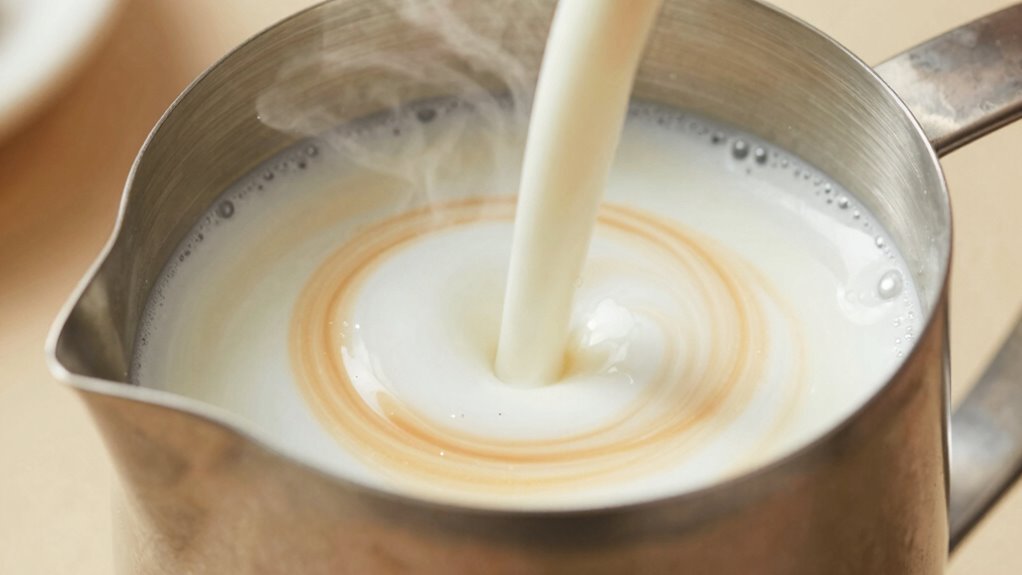
Have you ever wondered how the temperature of milk affects its taste and safety? It’s a vital factor, especially when you’re preparing a perfect cappuccino or latte. When you’re milk steaming, temperature control becomes your best friend. The right temperature not only ensures your drink tastes great but also keeps the milk safe to consume. If the milk gets too hot, it can develop a burnt flavor, ruining the smooth, creamy texture you’re after. On the other hand, if it’s too cold, it won’t froth properly, and the flavors won’t blend as well.
During milk steaming, you want to aim for a specific temperature range—typically between 150°F and 160°F (65°C to 70°C). This range is ideal because it allows the milk to reach that perfect sweet spot where it’s warm enough to enhance sweetness naturally, without turning bitter or scorched. When you control the temperature carefully, you’re essentially unlatching the milk’s natural sugars, making your coffee taste richer and sweeter. Proper temperature control during milk steaming also prevents bacteria growth, maintaining safety and freshness in your drink.
Getting the temperature right involves more than just turning on the steamer and hoping for the best. You should pay close attention to the steam wand’s heat and your own touch. Many espresso machines come with built-in thermometers or gauges, which can help you monitor the milk’s temperature accurately. If yours doesn’t, you might consider using a kitchen thermometer to ensure precision. As you steam, keep the pitcher at an angle and listen for a gentle hissing sound—this indicates you’re steaming at the right rate. When the milk reaches the desired temperature, remove it from the steamer promptly to prevent overheating. Additionally, understanding the role of temperature in food safety helps ensure your milk remains fresh and free from harmful bacteria.
Monitor your milk’s temperature with built-in gauges or a thermometer, and listen for a gentle hiss during steaming.
Overheating milk beyond 160°F can cause it to scald, leading to an unpleasant, burnt taste. It also destroys some of the delicate proteins that give milk its silky texture. Conversely, if the milk is too cool, you won’t get the essential froth or flavor enhancement. Mastering milk steaming and temperature control allows you to consistently produce drinks with a balanced, sweet flavor. It’s a small detail that makes a big difference in your coffee experience, giving each cup a professional touch.
In the end, paying attention to milk temperature isn’t just about safety; it’s about elevating your entire coffee game. When you hit that sweet spot, your cappuccino not only looks inviting but also tastes noticeably better—sweeter, creamier, and more satisfying. So next time you steam milk, remember: control the temperature, aim for that perfect range, and enjoy the rich, sweet results.
As an affiliate, we earn on qualifying purchases.
Frequently Asked Questions
How Does Milk Temperature Affect Cappuccino Foam Quality?
When you heat milk for your cappuccino, keeping it between 140-150°F enhances foam stability and boosts milk sweetness. At this temperature, the proteins create a smooth, long-lasting foam, making your drink creamier and more flavorful. If the milk gets too hot, foam may collapse, and sweetness diminishes. By maintaining the right temperature, you guarantee a perfect balance of sweet flavor and stable foam for an ideal cappuccino experience.
What’s the Ideal Temperature for Steaming Different Types of Milk?
You should aim for 140-150°F when steaming milk, whether it’s whole, skim, or plant-based. This temp preserves milk flavor, enhances its natural sweetness, and creates a silky, luscious texture. Going too hot turns your milk into a burnt rubber disaster, while too cold keeps it thin and bland. Mastering this range guarantees your cappuccino’s milk texture is perfect and flavors are beautifully balanced—without turning your barista skills into a comedy show.
Can Temperature Variations Impact the Nutritional Value of Milk?
Temperature variations can impact milk’s nutritional value, especially if it exceeds safe pasteurization limits, which can cause nutrient loss. Heating milk too much accelerates spoilage and diminishes vitamins like B12 and C. To preserve milk’s nutrients, keep it within recommended temperature ranges during pasteurization and storage. Proper temperature management not only maintains flavor but also prevents spoilage, ensuring you get the maximum nutritional benefits from your milk.
How Do Ambient Room Temperatures Influence Milk Steaming?
Did you know that ambient room temperatures can change how you steam milk? If your room is too warm, milk heats faster, affecting frothing techniques and consistency. Cold milk from proper storage steams better, creating smoother microfoam. Conversely, in colder rooms, it takes longer to heat, so you might need to adjust your technique. Monitoring room temperature helps you achieve the perfect milk texture and flavor in every cup.
Is There a Recommended Temperature for Reheated Milk?
You should aim to reheat milk to around 140°F (60°C) for ideal taste and safety. Proper milk storage and temperature control are essential, so avoid overheating to prevent scalding and nutrient loss. Use a thermometer to monitor the temperature and reheat gradually. This guarantees your milk remains smooth, flavorful, and safe to consume, maintaining the quality necessary for your beverages.
Conclusion
When you hit that perfect milk temperature, it’s like revealing a secret recipe for sweetness in your cappuccino. Think of it as tuning a musical instrument—bring the milk to just the right warmth, and you’ll unleash a symphony of creamy, sweet notes that dance on your palate. So, don’t rush the process; with a little patience, you’ll craft a cup that’s not just delicious but a warm hug in every sip.
Fall Picks
fall essentials
As an affiliate, we earn on qualifying purchases.