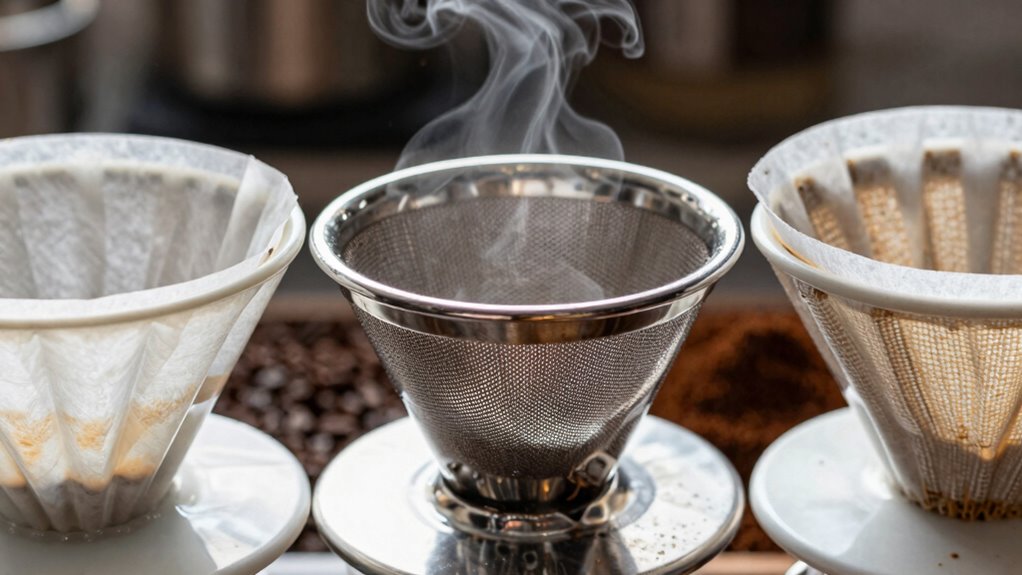
Choosing a paper filter results in a cleaner, crisper coffee because it traps oils and fine particles, reducing brew weight and richness. Metal filters allow more oils and solids through, creating a heavier, fuller-bodied cup. Cloth filters provide a balance, capturing some oils while allowing others through, resulting in a moderate brew. Understanding these differences lets you pick the filter that best matches your taste preferences and brew style—exploring further can help you perfect your perfect cup.
Key Takeaways
- Paper filters trap oils and fine particles, producing a lighter, cleaner cup with less body and oil content.
- Metal filters allow more oils and particles to pass through, resulting in a fuller-bodied, heavier, and more textured brew.
- Cloth filters offer a moderate filtration, balancing clarity and richness for a cup that’s neither too light nor too heavy.
- The choice of filter impacts oil retention, influencing whether your coffee tastes “clean” (paper) or “heavier” (metal/cloth).
- Ease of cleaning and material properties affect how much residual oils remain, shaping the perceived heaviness or cleanliness of the brew.
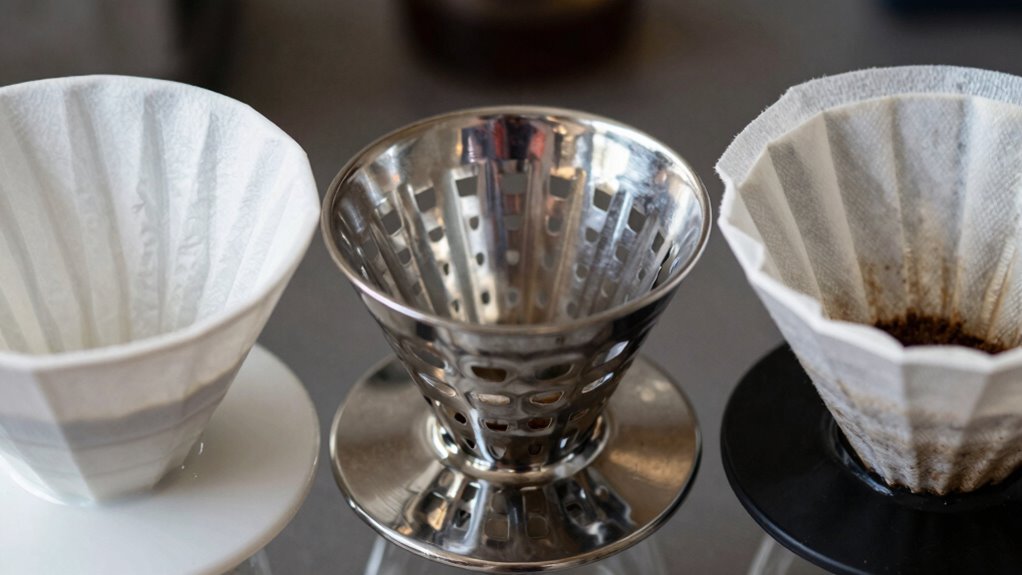
Have you ever wondered how different filters work to keep things clean? When you brew your favorite coffee or tea, the type of filter you choose can dramatically influence the flavor, brew strength, and overall experience. Each filter type—paper, metal, or cloth—serves a specific purpose, impacting how your drink tastes and how you approach cleaning methods afterward. Understanding these differences helps you make better choices for your brewing process and ensures your equipment stays in top shape.
Paper filters are the most common and are known for producing a clean, crisp cup. They trap fine particles and oils, resulting in a brew that’s lighter and less textured. If you prefer a smoother, purer taste, paper filters are ideal. They also make cleaning easier since you can simply toss the used filter and its contents away. However, because they absorb some of the oils, they can slightly reduce brew strength, which might be a downside if you like a more robust flavor. Cleaning methods are straightforward—dispose of the paper and rinse the brewing equipment, requiring minimal effort and no fuss. Additionally, paper filters are biodegradable, making them an environmentally friendly choice.
Paper filters produce a clean, crisp brew and are easy to dispose of after use.
Metal filters, often made of stainless steel or gold-plated mesh, offer a different experience. They allow more oils and fine particles to pass through, giving your coffee a fuller body and richer flavor. This results in a brew that feels heavier and more textured. Metal filters are reusable and durable, making them environmentally friendly and cost-effective over time. Since they don’t absorb oils, they tend to produce a stronger brew, which some coffee enthusiasts prefer. Cleaning methods involve rinsing with water and occasionally using a brush to remove trapped grounds. They require a bit more effort but are generally low-maintenance, especially if you clean them regularly to prevent buildup.
Cloth filters sit somewhere between paper and metal. They’re made of fine fabric that traps particles while allowing some oils to pass through, producing a balanced cup with moderate brew strength. Cloth filters can be reused multiple times, but they demand specific cleaning methods to maintain hygiene and performance. You’ll need to rinse them thoroughly after each use and occasionally soak or boil them to remove residual oils and prevent mold. If not cleaned properly, they can harbor bacteria and affect the taste of your brew. Their impact on brew strength is moderate—they don’t produce as light as paper filters nor as heavy as metal ones but provide a unique, nuanced flavor profile. Proper storage and careful maintenance are essential to preserve their effectiveness and prevent unpleasant odors.
Ultimately, your choice of filter depends on your taste preferences and willingness to maintain your equipment. Each type influences not just the flavor but also the cleaning methods you’ll need to follow. By understanding how they affect brew strength and cleanliness, you can tailor your brewing routine to enjoy the perfect cup every time. Exploring filter maintenance can help prolong the life of your filters and improve your overall brewing experience.
Frequently Asked Questions
How Do Filter Materials Affect Brewing Time?
Filter materials directly affect brewing time through their porosity and material density. A filter with larger porosity allows water to pass through faster, reducing brewing time, while denser materials slow it down. For example, metal filters are less porous and denser, so they often extend brewing time. Conversely, paper filters with higher porosity let water flow quickly, making your brew faster.
Are Reusable Filters More Eco-Friendly Than Disposable Ones?
Reusable filters are more eco-friendly than disposable ones because they reduce waste and support recycling benefits. By choosing a metal or cloth filter, you cut down on landfill contributions, lowering environmental impact. Although reusable filters require cleaning and initial investment, they last longer and lessen your carbon footprint over time. So, you help the environment by making a sustainable choice that minimizes waste and promotes recycling benefits.
Can Filter Type Influence Coffee’s Acidity?
Did you know that filter material can change your coffee’s acidity levels? Using paper filters, which trap more oils and particles, tends to produce a less acidic, smoother brew. Conversely, metal or cloth filters allow more oils through, often increasing acidity and bright flavors. So, your choice of filter material directly influences brew flavor and acidity, letting you customize your coffee’s brightness and body to match your preference.
Do Different Filters Impact Aroma Retention?
Different filters do impact aroma retention because of their porosity. A paper filter traps more oils and aromatic compounds, leading to less aroma preservation. Metal filters, being less porous, allow more oils to pass through, enhancing aroma. Cloth filters fall somewhere in between, offering moderate aroma preservation. Your choice of filter influences how vibrant and full-bodied your coffee smells, so pick based on whether you prefer a brighter aroma or a richer, heavier scent.
How Do Maintenance Needs Vary Among Filter Types?
You might think metal filters need less maintenance, but they actually require regular cleaning to prevent oil buildup, which can affect flavor. Paper filters have the shortest lifespan, needing a new one each brew, and require minimal cleaning. Cloth filters last longer but demand frequent cleaning and thorough drying to avoid mold. Overall, your choice influences cleaning frequency and filter lifespan, impacting how often you need to replace or maintain them.
Conclusion
Choosing between paper, metal, or cloth filters is like selecting the perfect brush for your masterpiece—each leaves a unique signature on your cup. Paper filters sweep away impurities, leaving a crisp, clean taste; metal filters let more oils through, creating a fuller, heavier sip; cloth filters strike a gentle balance, whispering softly of tradition. Your choice shapes your coffee’s story—whether it’s a bright morning melody or a deep, soulful ballad. Pick the filter that stirs your heart.