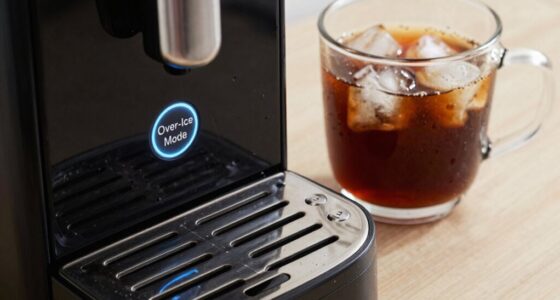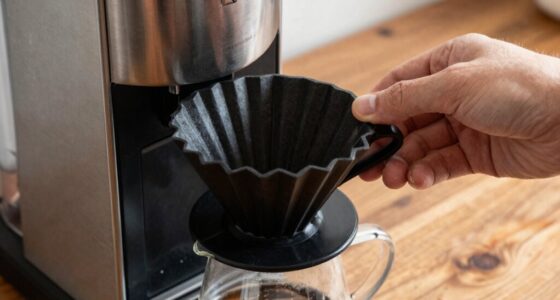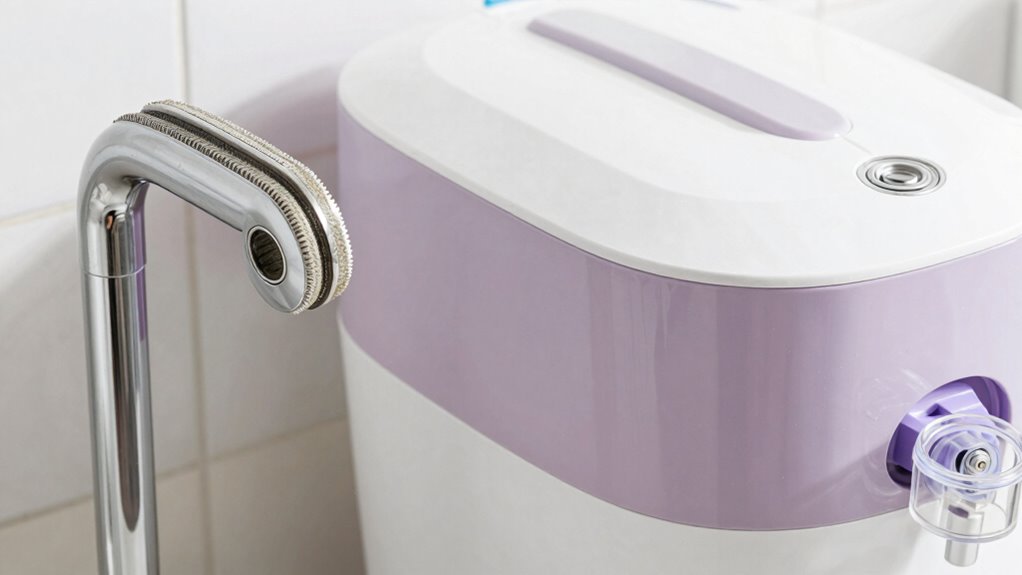

Understanding the difference between descaling and water softening is key to keeping your appliances running smoothly and avoiding costly damage. Descaling removes existing mineral buildup from appliances or pipes, while water softening prevents future deposits by treating water before they form. If you mix up these processes, you could cause more problems or spend unnecessary money. Stick with us to get tips that help you use the right approach at the right time.

Get coffee and tea gear delivered free with Prime
- Fast, free delivery on millions of items
- Prime Video, Amazon Music and more included
- Member-only deals all year
Key Takeaways
- Descaling removes existing mineral deposits, while water softening prevents future buildup by treating water beforehand.
- Use descaling when appliances show scale-related issues; soften water proactively to avoid deposits.
- Softening extends appliance lifespan and reduces repairs; descaling restores efficiency after scale buildup.
- Combining both methods offers optimal protection against hard water damage and mineral deposits.
- Misapplying descaling and softening can lead to damage, inefficiency, and higher maintenance costs.
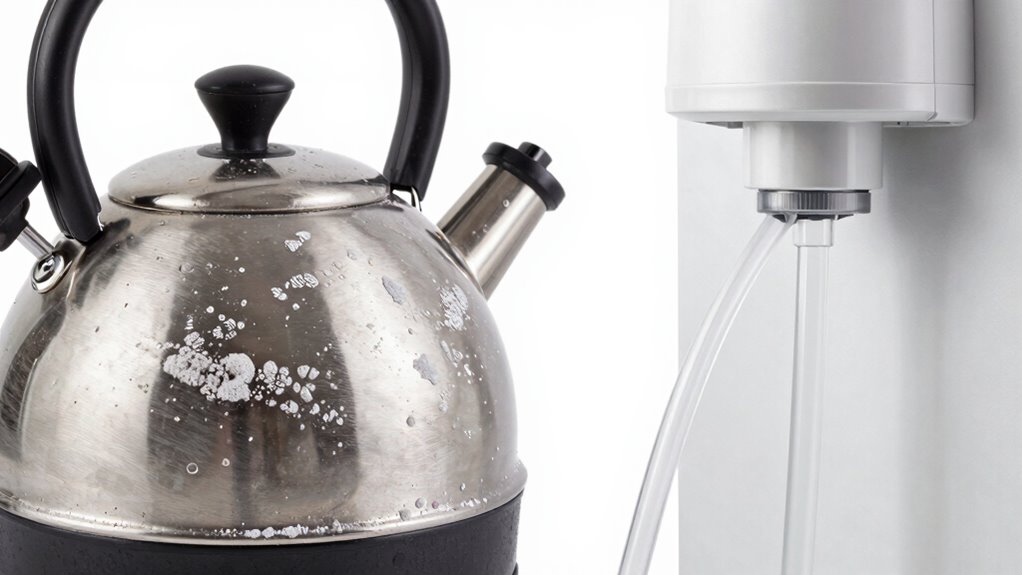
If you’re dealing with hard water, understanding the difference between descaling and water softening is vital. Both processes aim to address issues caused by mineral buildup, but they serve different purposes and require different approaches. Recognizing which method suits your needs can save you money, prevent damage, and extend the lifespan of your appliances. Hard water prevention begins with knowing how to maintain your system properly. By implementing effective water softening techniques, you can reduce mineral content before problems start. Softening typically involves installing a water softener that exchanges calcium and magnesium ions for sodium or potassium, making water gentler on your appliances and plumbing. This proactive approach keeps minerals from accumulating and causing scale buildup, which can impair appliance performance and increase energy costs. Proper appliance maintenance is essential when softening water to ensure your system operates efficiently. Regularly replenishing salt, cleaning the resin tank, and inspecting for leaks help keep the softener functioning correctly. When your appliances, like dishwashers, washing machines, or coffee makers, run with softened water, they experience less mineral buildup, resulting in fewer repairs and lower energy bills.
Furthermore, advances in European cloud innovation and sustainable solutions can play a role in optimizing monitoring systems for water quality, helping to detect mineral levels more accurately and prevent hard water issues proactively.
In contrast, descaling is a targeted process used when mineral buildup has already occurred. It involves removing existing scale deposits from appliances, pipes, or fixtures. Descaling doesn’t prevent future mineral accumulation; instead, it clears current blockages that hinder performance. You might need to descale your kettle, coffee maker, or water heater if you notice reduced efficiency or strange noises. Using descaling agents like vinegar or commercial descalers can dissolve calcium deposits, restoring functionality. Keep in mind that frequent descaling without addressing the root cause—hard water—can lead to ongoing issues. That’s why combining descaling with hard water prevention strategies, like installing a water softener, is often the best approach.
Failing to differentiate between these processes can lead to costly mistakes. Using descaling as a maintenance routine instead of preventing mineral buildup allows scale to accumulate rapidly, damaging appliances over time. Conversely, relying solely on softening without regular descaling can cause resin fouling or other issues that diminish system effectiveness. Ultimately, understanding when to descale and when to soften water ensures you protect your appliances, maintain efficiency, and avoid unnecessary expenses. Proper appliance maintenance rooted in the right approach to hard water management keeps your home running smoothly and saves you money in the long run.
water softener for household use
As an affiliate, we earn on qualifying purchases.
As an affiliate, we earn on qualifying purchases.
Frequently Asked Questions
Can Descaling Remove Existing Mineral Buildup?
Yes, descaling can eliminate existing mineral buildup. It targets mineral deposits, helping with mineral removal from appliances and plumbing. Regular descaling ensures your appliances stay efficient and prevents damage, promoting appliance safety. Keep in mind, though, that heavy buildup might need multiple treatments or professional assistance. By regularly descaling, you maintain cleaner appliances and avoid costly repairs caused by mineral accumulation.
How Often Should Water Softeners Be Maintained?
Think of your water softener as a garden that needs tending. You should follow a regular maintenance schedule, typically every 6 to 12 months, depending on water usage and hardness levels. During system inspection, check for salt levels, salt bridges, and resin bed condition. Proper maintenance keeps your system running efficiently, prevents mineral buildup, and extends its lifespan. Stay proactive to enjoy soft, trouble-free water.
Are Descaling Products Safe for All Appliances?
Descaling products are generally safe for appliances when used as directed, but you should always verify their chemical composition. Some contain acids or strong chemicals that can harm sensitive components or pose safety risks if mishandled. To guarantee appliance safety, read labels carefully, follow manufacturer instructions, and avoid overuse. If unsure, consult your appliance’s manual or a professional before applying descaling products.
Is Water Softening Effective in Hard Water Areas?
Yes, water softening is effective in hard water areas because it reduces water hardness caused by high mineral deposits like calcium and magnesium. When you soften water, you prevent mineral buildup in appliances, pipes, and fixtures, which can extend their lifespan and improve efficiency. Softening treats the water before it causes issues, making it a practical solution if you’re dealing with frequent mineral deposits and scale buildup in your home.
What Are the Long-Term Costs of Descaling Versus Softening?
Think of descaling as a quick fix that demands frequent chemical treatments, racking up ongoing costs. Water softening, on the other hand, acts like a long-term shield, reducing mineral buildup and cutting down maintenance frequency. Over time, softening costs less, saving you money on repairs and cleaning. While descaling might seem cheaper initially, the long-term expenses of regular chemical treatments and potential equipment damage can outweigh the benefits.
Conclusion
Remember, confusing descaling with water softening is like mistaking a brush for a paintbrush—you might miss the true picture. Descaling removes existing buildup, while water softening prevents future deposits. Knowing the difference isn’t just technical; it’s your key to preserving appliances and saving money. Don’t let this misunderstanding be the villain in your home’s story. Stay informed, choose wisely, and keep your water flowing smoothly—because clarity in your choices makes all the difference.
Fall Picks
fall essentials
As an affiliate, we earn on qualifying purchases.