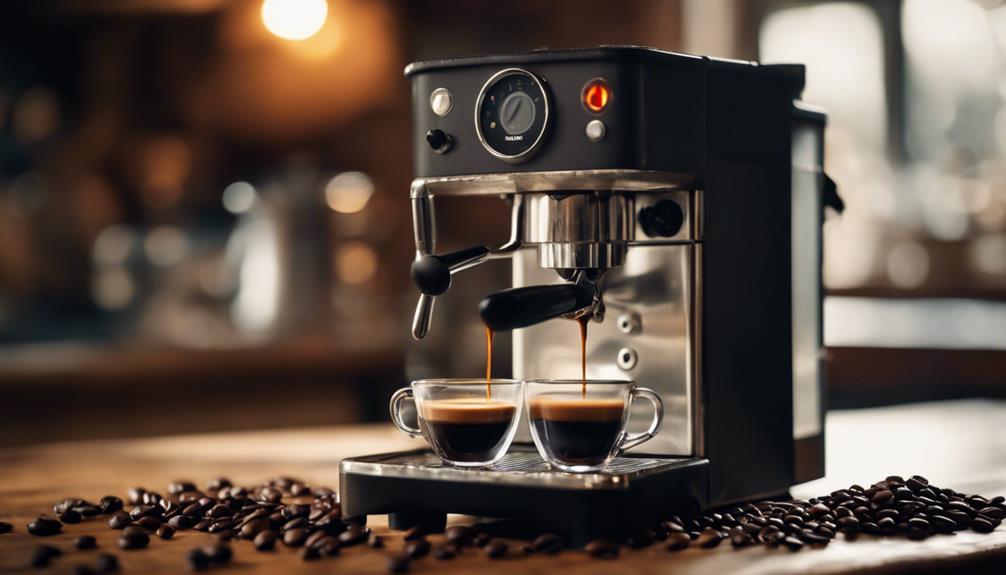
To guarantee great espresso, you need to optimize your water by balancing mineral content and maintaining cleanliness. Use fresh, filtered or spring water with the right amount of minerals—enough for extraction but not so much that it causes scale buildup or dull flavor. Regularly test your water and adjust as needed, using water softeners or mineral drops if necessary. Keep your machine clean and descaled. Want more tips? Keep going to master perfect water for your espresso.

Get coffee and tea gear delivered free with Prime
- Fast, free delivery on millions of items
- Prime Video, Amazon Music and more included
- Member-only deals all year
Key Takeaways
- Regularly test water mineral content to ensure optimal calcium, magnesium, and TDS levels for consistent espresso quality.
- Use filtration or water softening systems to reduce scale buildup and maintain machine efficiency.
- Adjust water mineral balance with mineral drops or bottled water to prevent dull or off-flavor extraction.
- Perform routine descaling and cleaning to remove mineral deposits and prolong equipment lifespan.
- Maintain consistent water profiles to achieve stable flavor and aroma in every espresso shot.

Water quality is essential for brewing the perfect espresso, as it directly impacts flavor, aroma, and overall extraction. When you start with high-quality water, you set a solid foundation for a rich, balanced shot. One of the most important factors to consider is water quality itself, which includes factors like clarity, purity, and mineral content. If your water is too hard or too soft, it can throw off the delicate balance needed for ideal extraction, leading to sour, bitter, or flat-tasting espresso.
Mineral content plays a key role in this process. Hard water, rich in calcium and magnesium, can cause scale buildup inside your espresso machine, reducing efficiency and requiring more frequent descaling. On the other hand, soft water, with low mineral content, might not provide enough minerals to properly extract the coffee’s flavors, resulting in a weak or insipid taste. Ideally, you want water with a balanced mineral profile—just enough minerals to enhance extraction without causing scale or dulling the flavor.
To achieve this balance, you can start by testing your water’s mineral levels. Use testing kits or consult your local water report to determine calcium, magnesium, and total dissolved solids (TDS). Once you know your water’s profile, you can adjust accordingly. If your water is too hard, consider using a water softener or filtering system designed for espresso machines. Conversely, if it’s too soft, adding mineral drops or using bottled spring water with a suitable mineral balance can improve the extraction process.
Maintaining consistent water quality is crucial because even slight variations can alter your espresso’s taste. Regularly cleaning and descaling your machine helps prevent mineral buildup from affecting the brewing process. Using filtered or purified water can also reduce impurities and unwanted flavors, ensuring that your espresso remains consistent and true to its intended profile. Remember, the goal isn’t just to have clean water but to have water with the right mineral content tailored for espresso brewing. Additionally, understanding the effects of water mineral content can help you fine-tune your brewing process for optimal flavor.
As an affiliate, we earn on qualifying purchases.
Frequently Asked Questions
How Often Should I Change My Espresso Machine’s Water Filter?
You should change your espresso machine’s water filter every 2 to 3 months as part of your maintenance schedule. Regular filter replacement prevents mineral buildup, guarantees ideal water quality, and maintains the best espresso flavor. Keep an eye on your filter’s condition and replace it sooner if you notice reduced water flow or taste changes. Staying on top of filter replacement helps extend your machine’s lifespan and guarantees consistent, delicious espresso.
What Temperature Should the Water Be for Optimal Espresso Extraction?
You should aim for water temperature between 195°F and 205°F for essential espresso extraction. Don’t worry about precise control—most machines handle this automatically. Proper temperature control is vital because it influences water chemistry, affecting flavor and crema. If your machine has adjustable settings, fine-tune them within this range. Remember, consistent water temperature ensures balanced extraction and a richer espresso experience.
Can I Use Bottled Water Instead of Tap Water?
Yes, you can use bottled water instead of tap water for your espresso. Bottled water benefits include consistent mineral levels and fewer impurities, which can enhance flavor and machine longevity. Just make sure to choose a bottled water with suitable mineral content, avoiding overly soft or hard options. This guarantees ideal extraction, better taste, and reduces mineral buildup, keeping your espresso machine in top condition.
How Does Water Mineral Content Affect Espresso Taste?
Your water’s mineral content, especially water hardness and mineral balance, greatly influences espresso taste. Hard water with high mineral levels can cause bitter or metallic flavors and scale your machine, while soft water may produce flat, dull espresso. Aim for a balanced mineral profile to enhance flavor clarity and maintain your equipment. Using filtered or specially prepared water helps achieve ideal water hardness and mineral balance for the best espresso.
What Are Signs of Water Quality Issues in My Espresso Machine?
You’ll notice signs of water quality issues like inconsistent espresso flavor, strange tastes, or discoloration. Water contamination can cause off-putting odors, while scale buildup may lead to sluggish operation or strange noises. Regularly check for these signs, and if you see mineral deposits or experience performance drops, it’s time to clean your machine, replace filters, or use better water to prevent problems caused by contamination and scale buildup.
Conclusion
Maintaining the right water quality is essential for perfect espresso. Did you know that using filtered water can reduce mineral buildup by up to 80%? This not only enhances the flavor but also extends your machine’s lifespan. Regularly cleaning and monitoring your water source guarantees every shot tastes its best. Keep these tips in mind, and you’ll enjoy rich, consistent espresso shots every time—your taste buds will thank you for it!
Fall Picks
fall essentials
As an affiliate, we earn on qualifying purchases.