
A common mistake is underestimating your coffee cart’s power needs, which can lead to equipment failures, shutdowns, and revenue loss. Relying on weak or single power sources increases the risk of interruptions during busy hours. To avoid this, you should carefully assess your equipment’s energy demands and plan for scalable, reliable power solutions. If you’re interested, there’s more to explore to guarantee your setup stays smooth and profitable.

Get coffee and tea gear delivered free with Prime
- Fast, free delivery on millions of items
- Prime Video, Amazon Music and more included
- Member-only deals all year
Key Takeaways
- Using underpowered or single generators can cause equipment shutdowns during peak hours.
- Ignoring detailed power demand assessments leads to insufficient power capacity.
- Relying on inconsistent power sources increases equipment malfunction risks.
- Failing to incorporate backup power options results in operational disruptions.
- Overlooking energy-efficient appliances causes unnecessary power strain and higher costs.
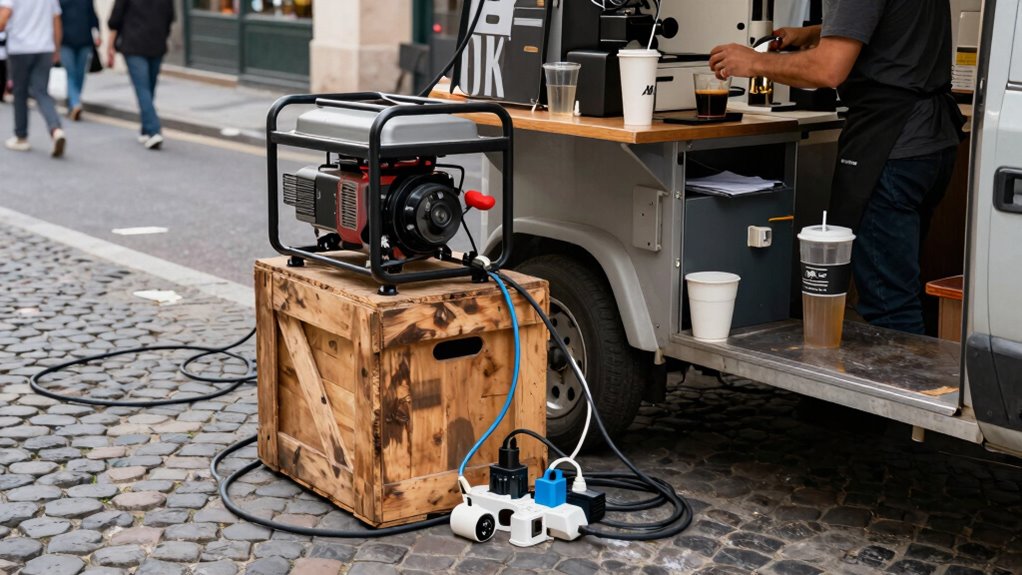
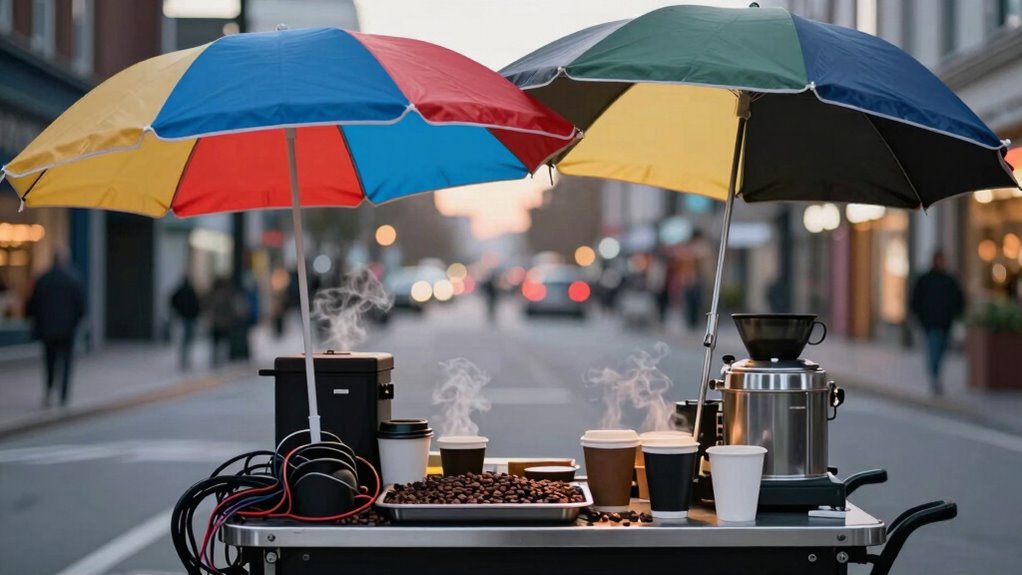
Are you prepared to guarantee your coffee cart has reliable power? Ensuring your setup runs smoothly begins with understanding how to power your mobile equipment efficiently. Mobile equipment, like espresso machines, grinders, and blenders, is the heart of your coffee operation. If you don’t plan the power supply properly, you risk interruptions during peak hours, which can frustrate customers and hurt sales. Proper planning means selecting a power source that can handle your equipment’s energy demands without overloading or wasting energy. Many don’t realize that relying on a single, underpowered generator or connecting to an inconsistent power source can cause equipment to malfunction or shut down unexpectedly, leading to lost revenue and unhappy customers.
Proper power planning prevents equipment failures and keeps your coffee business running smoothly.
Energy efficiency is vital in this scenario. Not only does it help reduce operational costs, but it also guarantees your mobile equipment performs at its best without putting undue stress on your power system. When you choose energy-efficient appliances and lighting, you minimize the load on your power source, making your setup more sustainable and less prone to failures. For example, switching to LED lighting and energy-efficient coffee machines can cut your overall power consumption considerably. This allows you to use smaller, more portable generators or battery packs, which are easier to transport and set up, especially if you operate at multiple locations or outdoor events. Additionally, understanding your energy consumption patterns enables you to optimize your power distribution and avoid unnecessary waste.
By integrating energy-efficient solutions into your design, you also extend the lifespan of your equipment and power sources. This proactive approach reduces maintenance costs and the risk of sudden breakdowns. Additionally, understanding your mobile equipment’s power needs in advance helps you establish a flexible setup. You can plan for backup power options like portable batteries or secondary generators, ensuring continuity even if your primary power source encounters issues. Being prepared for fluctuations in power demand prevents downtime and keeps your service seamless. Conducting a thorough power demand assessment will help you identify potential gaps in your setup and avoid costly mistakes. Incorporating energy-efficient devices not only optimizes your energy use but also contributes to a more sustainable operation overall. Incorporating proper load management strategies can further enhance your system’s reliability and efficiency.
In essence, the key to avoiding setup mistakes lies in thorough planning. Take the time to assess your equipment’s energy requirements, select energy-efficient devices, and choose power sources that can scale with your needs. Proper power management and strategic planning will safeguard your operations from unexpected problems, ensuring your coffee cart remains dependable and profitable. When you prioritize proper power planning, incorporating mobile equipment and energy efficiency, you’re setting yourself up for success—delivering great coffee without interruption, no matter where your mobile business takes you.
portable generator for coffee cart
As an affiliate, we earn on qualifying purchases.
As an affiliate, we earn on qualifying purchases.
Frequently Asked Questions
How Do I Choose the Right Power Sources for My Coffee Cart?
You should choose power sources based on your coffee cart’s energy needs and location. Portable generators are reliable for on-the-go power, especially in areas without grid access. Solar power is eco-friendly and cost-effective for long-term use, but guarantee your setup has enough sunlight and battery capacity. Combining both options can give you flexibility, ensuring your coffee cart runs smoothly without power interruptions.
What Are Common Electrical Code Violations in Coffee Cart Setups?
You might face common electrical code violations like grounding issues, which can cause shock hazards, or circuit breaker concerns, leading to overloaded circuits and outages. Always make certain your setup has proper grounding and that circuit breakers are appropriately rated for your equipment’s power needs. Regularly inspect wiring, avoid extension cords as permanent solutions, and adhere to local electrical codes to prevent safety hazards and keep your coffee cart running smoothly.
How Can I Prevent Power Overloads During Busy Hours?
Did you know that 60% of coffee cart power issues stem from overloads? To prevent this, manage your battery carefully and optimize power distribution. Regularly monitor your battery levels to avoid sudden drops, and distribute power loads evenly across outlets. Using a power strip with overload protection helps, too. Planning your equipment use during busy hours guarantees you don’t exceed your cart’s capacity, keeping everything running smoothly.
What Safety Precautions Should I Take With Electrical Wiring?
You should prioritize grounding safety by ensuring all electrical systems are properly grounded to prevent shocks. Use cable management techniques to keep wires organized, avoiding tripping hazards and accidental disconnections. Regularly inspect wiring for wear or damage, and never overload circuits. Keep electrical connections dry, and consider installing circuit breakers for added protection. These precautions help maintain a safe environment and prevent electrical mishaps during busy coffee cart hours.
How Do I Plan for Future Equipment Upgrades?
You should plan for future equipment upgrades by installing ample electrical capacity with energy efficiency in mind, guaranteeing your wiring can handle increased loads. Incorporate portable power solutions so you can easily adapt or expand your setup as needed. Regularly assess your power needs, and leave room for growth to prevent overloads. This proactive approach saves you time and money, keeps your coffee cart running smoothly, and assures safety as your equipment evolves.
Conclusion
Neglecting proper power planning can lead to serious issues, like equipment failures or safety hazards. Imagine opening your coffee cart only to find your grinder and blender shutting down mid-service because of insufficient power. Take the time to assess your equipment’s needs and plan your electrical setup carefully. Doing so guarantees smooth operation, happy customers, and avoids costly setbacks—like a recent case where a simple miscalculation caused a day’s worth of lost sales.
Halloween Picks
halloween
As an affiliate, we earn on qualifying purchases.