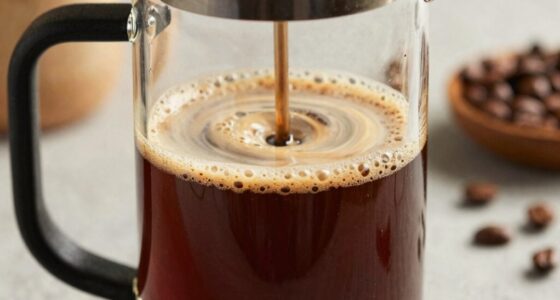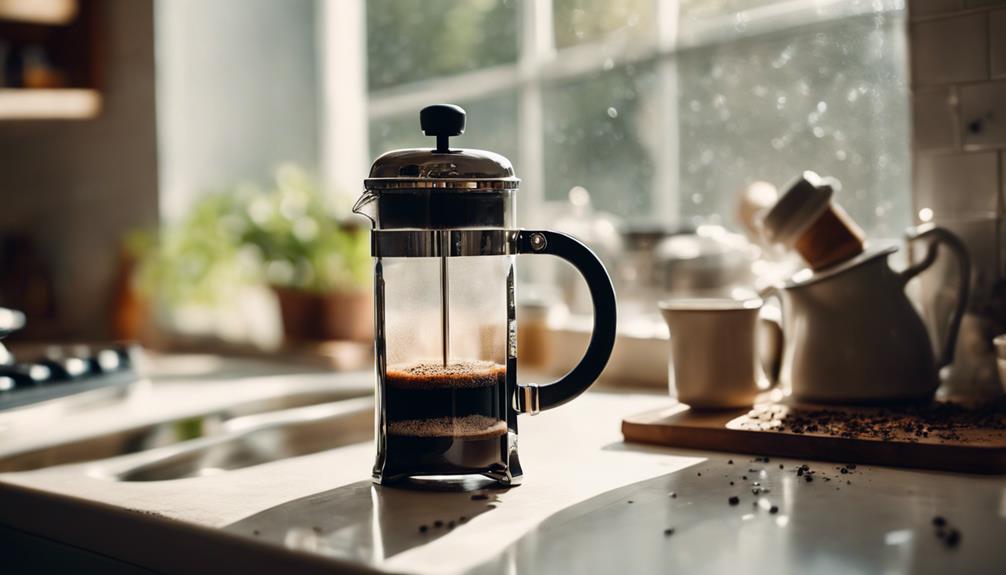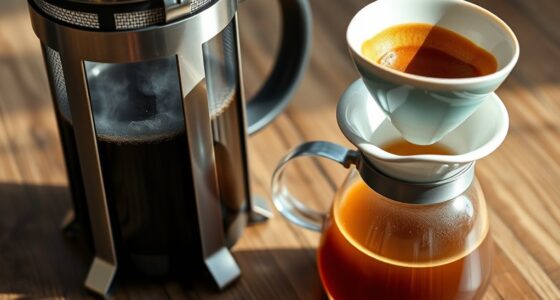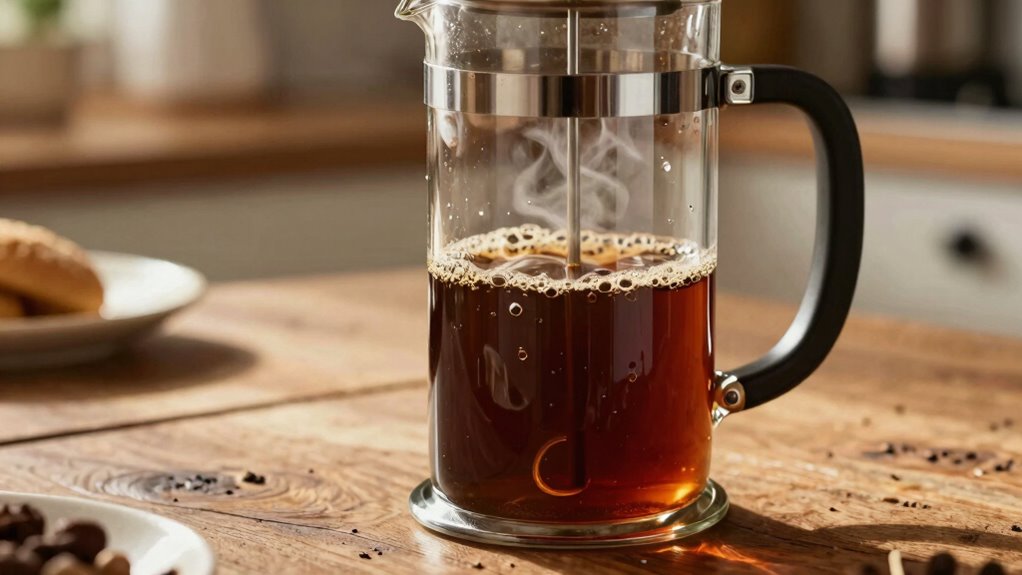

For the best flavor, you should enjoy your French press coffee within 20 to 30 minutes of brewing. This is when it’s at its freshest and most aromatic, as flavors start to degrade once it cools or oxidizes. To keep it tasting great, cover the carafe and serve promptly. If you want to discover more tips on maintaining peak taste and aroma, there’s plenty more to explore.

Get coffee and tea gear delivered free with Prime
- Fast, free delivery on millions of items
- Prime Video, Amazon Music and more included
- Member-only deals all year
Key Takeaways
- French press coffee tastes best within 20-30 minutes after brewing.
- Serve immediately after pressing to prevent flavor deterioration from oxidation.
- Maintaining brewing time around 4 minutes optimizes flavor extraction.
- Using water at about 200°F (93°C) enhances aroma and taste.
- Proper storage and covering help preserve freshness for a short period.
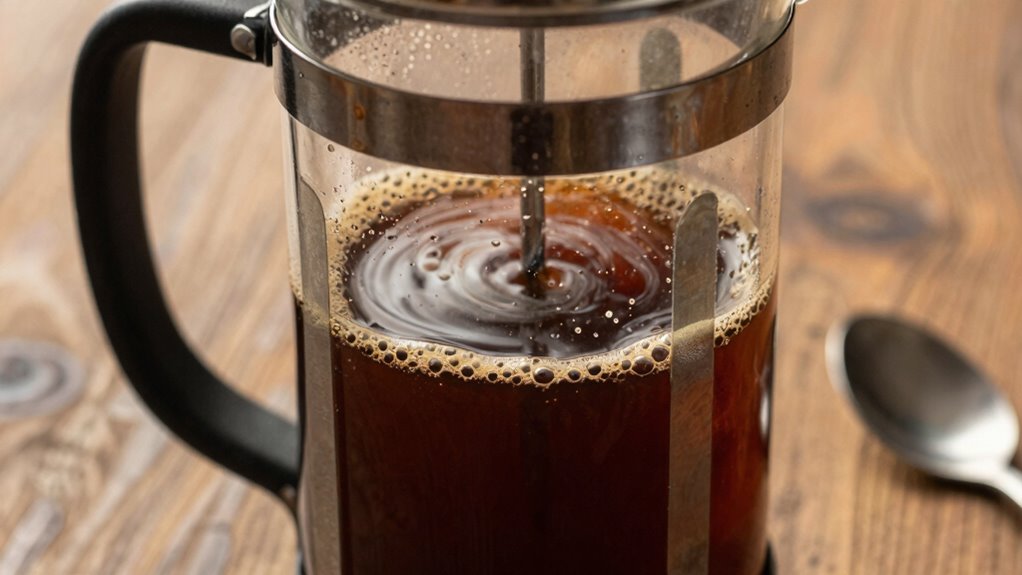
French press coffee is best enjoyed within a certain window to guarantee it tastes fresh and flavorful. The key to that perfect cup lies in understanding how coffee extraction and brewing temperature influence how long your coffee remains at its peak. When you pour hot water over coarsely ground coffee, the extraction process begins immediately. During this stage, flavors, oils, and aromatic compounds are released into the water. The goal is to extract the right balance without overdoing it, which can lead to bitterness or a dull, flat taste. Typically, you want to aim for a brewing time of about four minutes to optimize coffee extraction. This window allows the water to pull out the desirable flavors without over-extracting and creating a harsh or burnt taste. The brewing process also benefits from consistent agitation or stirring to ensure even extraction throughout the coffee grounds. Brewing temperature plays a crucial role in this process. If your water’s too hot—say, above 205°F (96°C)—you risk over-extracting, which shortens the window when your coffee tastes best. Over-extraction can make the coffee bitter and overpower the delicate notes you’re aiming for. Conversely, if the water’s too cool, you’ll under-extract, leaving your coffee weak, sour, or flat. The ideal brewing temperature hovers around 200°F (93°C), which is just below boiling point. This temperature allows for a steady, controlled extraction that enhances flavor and aroma without veering into bitterness. Once you’ve brewed your French press coffee for about four minutes at the right temperature, it’s best to enjoy it immediately. The moment you press the plunger, the extraction process halts, but the coffee’s flavor begins to change as it cools and continues to oxidize. That’s why the window for enjoying your coffee at its freshest is usually within the first 20 to 30 minutes after brewing. Proper storage methods can significantly impact the preservation of your coffee’s taste. Additionally, keeping the brewed coffee covered can help preserve its aroma and prevent it from cooling too quickly. In short, your French press coffee will taste its best within a limited time frame—roughly 20 to 30 minutes after brewing—when the coffee is still hot and the flavor profile remains intact. Paying attention to the brewing temperature and timing your extraction carefully will make sure every cup you enjoy is rich, balanced, and full of flavor.
As an affiliate, we earn on qualifying purchases.
Frequently Asked Questions
Does Water Temperature Affect French Press Coffee Freshness?
Yes, water temperature affects your french press coffee’s freshness. If the water’s too hot, it can over-extract, making your coffee bitter; too cool, and it won’t extract enough flavor. Use water around 195-205°F for ideal taste. High-quality water and proper brewing techniques, like stirring and steeping time, enhance freshness. Clean water and precise temperature control help preserve the coffee’s vibrant flavors and aroma, ensuring a fresh, satisfying brew.
Can Coffee Grind Size Impact the Optimal Brewing Time?
Yes, grind size impacts the ideal brewing time because inconsistent grind sizes lead to uneven extraction. If your grind is too coarse or inconsistent, you might think longer brewing helps, but it won’t fix poor grind quality. Particle size and grind consistency are key—finer, uniform grounds extract flavor faster, so adjust brewing time accordingly. Properly ground coffee ensures you get the best flavor without over-extraction or underdeveloped taste.
How Does Coffee Bean Type Influence Taste After Brewing?
You’ll notice that the coffee bean type, including the roast level and bean origin, directly influences your brew’s flavor. Light roasts highlight fruity, bright notes, while dark roasts offer bold, smoky flavors. Beans from different regions bring unique characteristics—Ethiopian beans may be floral, Colombian beans often have a nutty profile. So, your choice of roast and origin shapes your taste experience after brewing, making each cup distinct.
Is It Necessary to Stir the Coffee During Steeping?
You don’t need to stir the coffee during steeping, but a gentle stirring technique can help guarantee even extraction. If you choose to stir, do it lightly before the steeping duration begins, then let the coffee steep undisturbed. Over-stirring might lead to over-extraction, making the brew bitter. Stick to your preferred steeping duration, usually about 4 minutes, to achieve a balanced, flavorful cup without unnecessary agitation.
How Do Ambient Temperature Changes Affect Brewing Results?
Ambient temperature changes can markedly impact your brewing results. Higher temperatures may lead to faster extraction, resulting in a bolder flavor, while cooler temperatures slow down the process, making the coffee less intense. Ambient humidity can also influence how quickly coffee cools or warms. Additionally, the shape of your brewing vessel affects heat retention; a wider vessel cools faster, while a narrower one maintains heat longer, shaping your final taste.
Conclusion
Ultimately, understanding the delicate dance of timing transforms your French press experience. If you wait too long, the brew becomes bitter and overbearing; rush too soon, and the richness remains unrevealed. By mastering the minutes, you maintain a magnificent, mouthwatering mug. Remember, patience produces perfection—prudently prolonging the pause promises a potent, pleasurable pour. So, savor the seconds, seize the science, and sip serenely, securing superior, satisfying sips every single time.
Halloween Picks
halloween
As an affiliate, we earn on qualifying purchases.