
A good tamper helps you create an even, compact coffee bed, which is essential for consistent extraction and better flavor. When you tamp correctly, water flows evenly through the grounds, preventing channeling and ensuring balanced extraction. Proper tamping also helps develop rich crema and enhances overall espresso quality. Using the right technique makes a big difference in your shot’s flavor and texture. If you want to perfect your technique, there’s more to discover beyond this quick overview.
Key Takeaways
- A good tamper creates an even coffee bed, promoting uniform extraction and balanced flavor.
- Proper tamping ensures consistent pressure, reducing channeling and improving espresso quality.
- It helps water flow steadily through grounds, preventing over- or under-extraction.
- Consistent tamping enhances crema development and overall shot richness.
- It optimizes the interaction between grind size, tamping, and water temperature for ideal results.
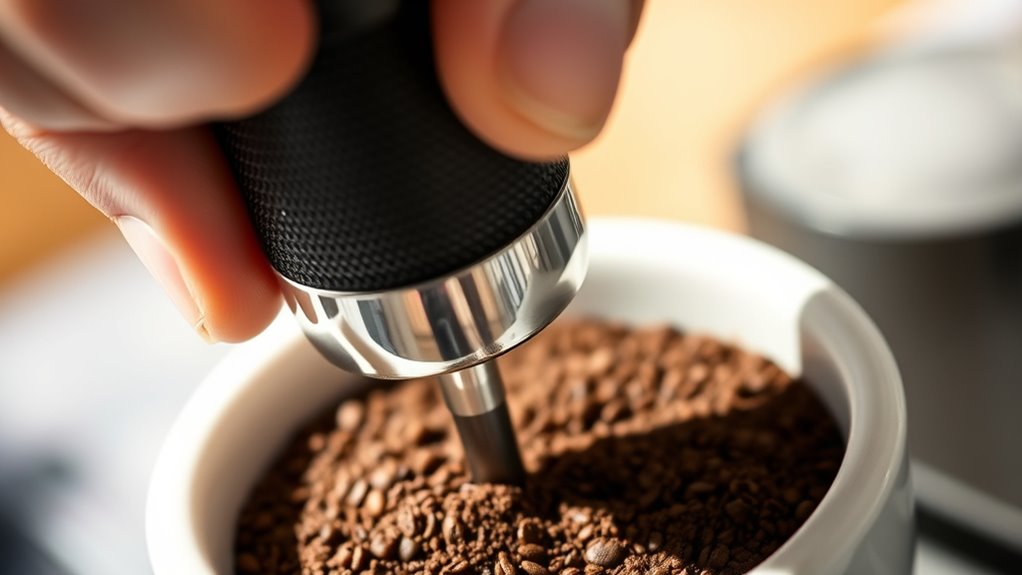
Have you ever wondered why proper tamping is essential for a smooth and consistent espresso shot? It all starts with understanding how key factors like grind size and water temperature influence the brewing process. When you’re preparing your coffee, the grind size determines how water interacts with the coffee grounds. If it’s too fine, water struggles to pass through, leading to over-extraction and bitter flavors. If it’s too coarse, water flows too quickly, resulting in under-extraction and weak taste. Achieving the right grind size helps create an even bed of coffee that allows water to flow uniformly, and proper tamping ensures this evenness is maintained. When you press the coffee grounds evenly with a good tamper, you create a consistent density throughout the puck, which helps water move at a steady rate. This consistency is vital because it directly impacts how well the coffee extracts, ultimately affecting flavor and strength.
Proper tamping creates an even coffee bed, ensuring uniform extraction and rich, balanced espresso every time.
Water temperature is another crucial element. Ideally, water should be between 195°F and 205°F for optimal extraction. If the water’s too hot, it can over-extract the coffee, pulling out bitter compounds and muddy flavors. If it’s too cold, under-extraction occurs, leaving your espresso sour and weak. Proper tamping works hand-in-hand with water temperature because it ensures that the hot water penetrates the coffee evenly. An uneven tamp can cause channels where water bypasses certain areas of coffee grounds, leading to uneven extraction regardless of the water temperature. By applying even pressure with your tamper, you help water flow uniformly through the puck, making the most of the water’s temperature and maximizing flavor extraction. Additionally, the quality of your tamping technique influences how well the coffee grounds are compressed, affecting extraction consistency. Using the right technique also helps prevent channeling, which can ruin an otherwise well-prepared shot.
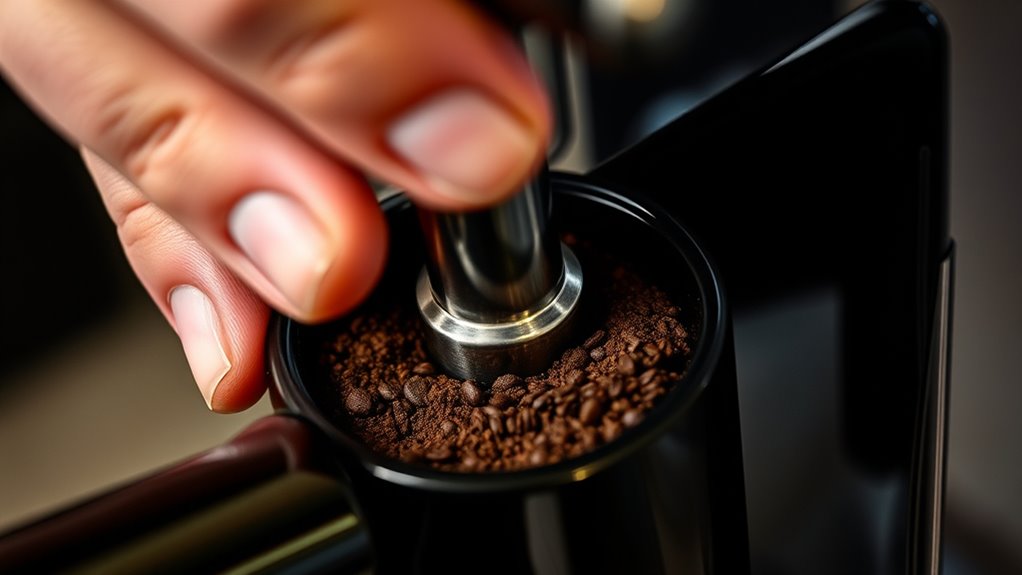
Think of tamping as the last step that ties everything together. It’s not just about pressing down hard; it’s about applying consistent, even pressure to create a compact, uniform bed of coffee. This uniformity allows hot water at the right temperature to extract the coffee’s oils, sugars, and flavors evenly. When you use the correct grind size and water temperature, the importance of a good tamp becomes even clearer. Proper tamping ensures the water encounters the same resistance across the entire puck, preventing weak spots or over-extraction zones. This balance results in a more flavorful, balanced espresso shot with the richness and crema you’re after.
In essence, a good tamper isn’t just a tool—it’s an essential part of your espresso-making process. When combined with the right grind size and water temperature, it helps you produce consistent, high-quality espresso every time. So next time you prepare your espresso, remember that a solid tamp can make all the difference in unlocking the full potential of your coffee.
Frequently Asked Questions
What Is the Ideal Tamping Pressure for Espresso?
The ideal tamping pressure for espresso is generally around 30 pounds, but it can vary based on your grind size and water temperature. When your grind is too fine, you might need a bit more pressure to guarantee proper extraction; if it’s too coarse, less pressure might suffice. Water temperature also affects extraction, so aim for consistent pressure to balance these factors and produce a rich, flavorful shot.
How Does Tamping Affect Espresso Extraction?
Tamping influences espresso extraction by creating uniform resistance, which helps water flow evenly through the coffee. When you tamp properly, you guarantee the grind size is consistent and the brew temperature remains stable, both vital for ideal extraction. If you tamp too hard or too soft, it can cause over- or under-extraction, affecting flavor. A well-tamped puck promotes balanced extraction, resulting in a richer, more flavorful espresso.
Can Improper Tamping Cause Espresso Machine Damage?
Improper tamping can indeed cause damage to your espresso machine over time. When you don’t maintain consistent tamping pressure, it puts uneven stress on the machine’s components, leading to wear and tear. Poor tamping can also cause water to flow improperly, which may strain the machine’s pump and boiler. To avoid this, focus on tamping consistency and proper machine maintenance to guarantee your espresso machine stays in good shape.
What Tools Can Help Achieve Consistent Tamping?
Think of your tamping process as a dance, and tamping tools as your steady rhythm. To achieve consistent tamping, you need reliable tools that guide your hand, like a tamper with a level surface or a tamping station. These tools act as your partners, helping you maintain tamping consistency every time. With them, your espresso shot becomes a harmonious blend of precision and passion, elevating your coffee experience.
How Does Tamping Technique Vary With Different Coffee Beans?
When tamping different coffee beans, you adjust your technique based on bean density and roast level. Denser beans require more pressure to make certain of even extraction, while lighter roasts might need a gentler touch to avoid over-extraction. You may also vary your tamping angle or distribution to accommodate uneven bean density. By paying attention to these factors, you optimize flavor and consistency in your espresso shot.
Conclusion
Now that you know how crucial proper tamping is, you’ll appreciate how it can elevate your espresso game. Did you know that even a slight inconsistency in tamping pressure can cause up to 30% variation in shot quality? By mastering a good tamp, you’re more likely to enjoy richer, more balanced espresso every time. So, keep practicing, stay consistent, and enjoy the delicious results of your improved technique!