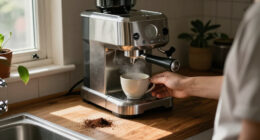
Using the right water quality is key to getting the best flavor from your coffee. Filters or specially balanced water help remove unwanted impurities and guarantee the mineral levels are just right. Too much mineral content can cause bitterness, while too little can make your coffee flat. Monitoring pH levels also boosts aroma and brightness. By choosing the right water and possibly adjusting it, you’ll open the door to richer flavors—there’s more to learn about perfecting your brew beyond this point.

Get coffee and tea gear delivered free with Prime
- Fast, free delivery on millions of items
- Prime Video, Amazon Music and more included
- Member-only deals all year
Key Takeaways
- Using filtered or spring water helps ensure balanced mineral content, enhancing coffee flavor and aroma.
- Overly mineralized or alkaline water can cause harsh, flat, or dull-tasting coffee; filtration can mitigate this.
- A water filter can remove impurities and excess minerals, providing more consistent water quality for brewing.
- Testing water pH and mineral levels guides whether additional adjustments or special water is necessary.
- Choosing the right water source and filtration improves extraction and preserves the coffee’s natural profile.
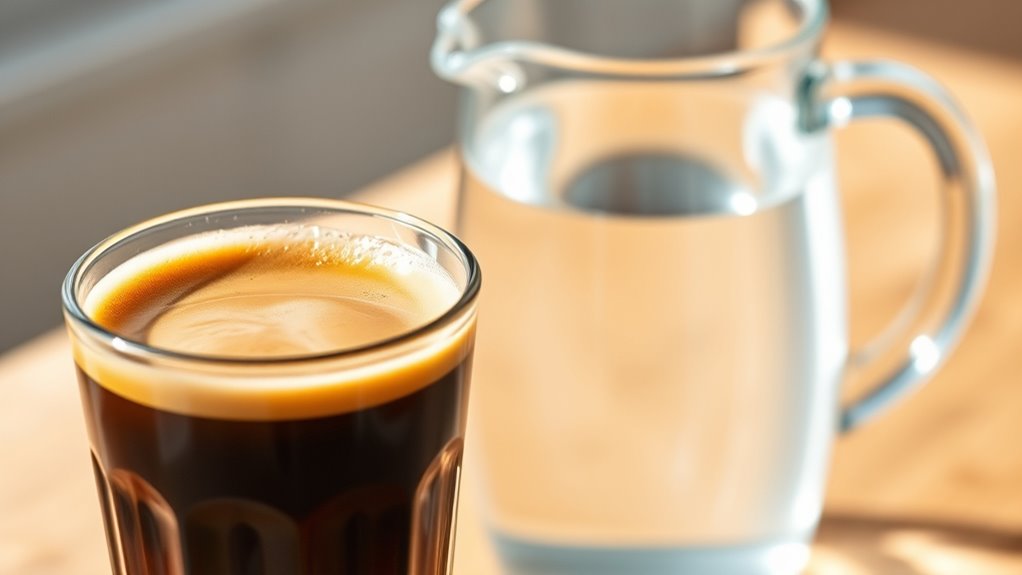
Water quality plays a crucial role in brewing a great cup of coffee because it directly affects the flavor and aroma. If your water isn’t just right, even the best beans can taste flat or off. One of the key factors to consider is water mineralization. This refers to the amount and type of minerals dissolved in your water, such as calcium, magnesium, and bicarbonates. These minerals influence how your coffee extracts, impacting both taste and body. Too much mineral content can lead to over-extraction, resulting in a bitter or harsh flavor. Conversely, too few minerals might produce a flat or bland cup. Ideally, you want a balanced mineral profile that enhances your coffee’s natural flavors without overpowering them.
Balanced mineralization enhances coffee flavor and aroma, preventing flat or bitter tastes.
Alongside mineralization, water pH plays a critical role. The pH level indicates whether your water is acidic, neutral, or alkaline. Coffee generally brews best with water that has a slightly acidic to neutral pH, around 6.5 to 7.5. If your water is too acidic or too alkaline, it can interfere with extraction, causing undesirable flavors. Acidic water might produce sour or sharp notes, while alkaline water can dull the coffee’s brightness and complexity. Monitoring and adjusting the pH ensures that your coffee’s acidity, sweetness, and aroma are properly balanced, letting the beans shine through.
Understanding water mineralization and pH helps you make smarter choices about your water source. If you’re using tap water, it’s wise to check its mineral content and pH. Many municipal supplies are well-balanced, but some can be overly mineralized or too alkaline. If you notice off-flavors or inconsistent results, investing in a water test kit can reveal what’s in your water. You might find that adding minerals or adjusting pH with specific treatments improves your brew. For example, some baristas use mineral drops or water filters designed to adjust mineral content, ensuring the water complements the coffee rather than detracts from it. Additionally, choosing dedicated water sources like spring water or filtered water can help maintain consistency and quality in your brew.
Regularly assessing your water quality aligns with best practices in water treatment and can significantly enhance your coffee experience. In some cases, using purified or spring water is a good option, especially if your local water quality is questionable. Purified water, free from excess minerals and with a neutral pH, can produce clean, consistent cups. However, be cautious—completely demineralized water can lead to flat-tasting coffee because minerals are essential for proper extraction. The key is finding the right balance that respects your beans’ unique qualities while ensuring optimal extraction. Paying attention to water mineralization and pH is a simple yet effective way to elevate your coffee brewing game and enjoy richer, more expressive flavors every time.
As an affiliate, we earn on qualifying purchases.
Frequently Asked Questions
Can Bottled Water Improve Coffee Flavor More Than Filtered Tap Water?
You might find bottled water benefits your coffee flavor more than filtered tap water because it’s often purer and has a consistent mineral balance. Bottled water benefits include fewer impurities and a cleaner taste, but filtered tap water can also improve flavor if you choose a good filter. Ultimately, it depends on your water source’s quality; both options can enhance your coffee experience when properly managed.
How Often Should I Replace My Coffee Water Filter?
Wondering when to replace your water filter? To maintain the best brew, follow a consistent filter replacement schedule based on your filter’s lifespan, usually every 2-3 months or after filtering a specific number of gallons. This guarantees peak water quality, prevents buildup, and preserves flavor. Regularly checking and adhering to your filter’s lifespan guarantees fresh, flavorful coffee every time, avoiding stale or off-tastes caused by neglected filters.
Does Mineral Content Affect the Health Benefits of Coffee?
Mineral content in your water can influence the health benefits of coffee through mineral interactions, which may enhance or hinder nutrient absorption. High mineral levels, like calcium and magnesium, can boost your intake of essential nutrients, but too many minerals might cause health implications such as kidney stones or digestive issues. So, understanding your water’s mineral profile helps you enjoy coffee’s benefits without risking health problems.
Are There Specific Water Filters Recommended for Espresso Machines?
Your espresso machine deserves the best, or it’ll feel like a diva! When choosing a water filter, make sure it’s compatible with your machine to prevent clogging and damage. Look for filters that reduce minerals and impurities, which are crucial for peak espresso machine maintenance. Brands like Brita, Watersafe, or AquaPure often offer models designed for espresso machines, ensuring your coffee stays flavorful and your machine runs smoothly.
Can Water Hardness Damage My Coffee Brewing Equipment?
You might be surprised, but hard water can damage your coffee equipment. It causes scale buildup inside your machine, which can clog and reduce efficiency. Over time, this buildup can lead to equipment corrosion, shortening its lifespan and affecting your coffee quality. To prevent these issues, consider using water with balanced hardness or installing a water filter that reduces mineral content, protecting your investment and ensuring great-tasting coffee.
Conclusion
So, don’t overlook your water quality—using a filter or special water truly elevates your coffee’s flavor. Some might think it’s unnecessary or too much hassle, but the difference in taste and aroma is worth it. Even if you’re on a budget or in a pinch, simple solutions like a filtered pitcher make a big impact. Ultimately, investing in good water means every cup you brew will be richer, more balanced, and truly coffee shop quality.
Columbus Day / Indigenous Peoples' Day Picks
long weekend sales
As an affiliate, we earn on qualifying purchases.