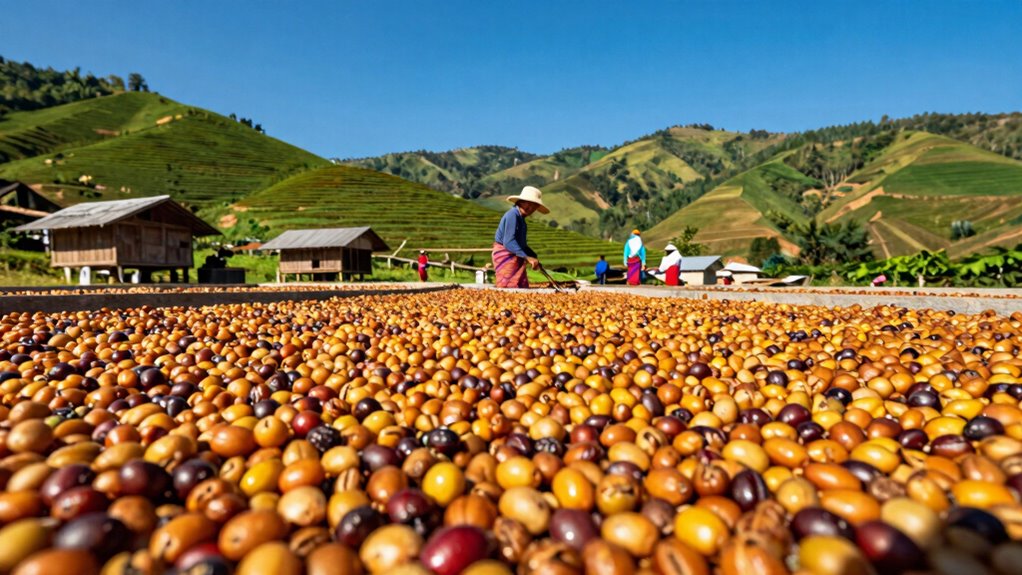

Thailand’s specialty coffee scene is rapidly rising, gaining global recognition for its vibrant flavors like citrus, tropical fruits, and floral notes. You’ll discover how local farmers use precise fermentation and light to medium roasting techniques to highlight these unique characteristics. Industry collaboration and tech advances boost quality and consistency. If you keep exploring, you’ll uncover even more about how Thailand is shaping its reputation as a top coffee destination.

Get coffee and tea gear delivered free with Prime
- Fast, free delivery on millions of items
- Prime Video, Amazon Music and more included
- Member-only deals all year
Key Takeaways
- Thailand’s specialty coffee industry is rapidly advancing with innovative fermentation and roasting techniques.
- The region is gaining global recognition for its vibrant, fruit-forward, and floral flavor profiles.
- Farmers and roasters collaborate to improve quality and incorporate modern technology.
- Light to medium roasts preserve the beans’ original citrus, tropical, and floral notes.
- Continuous investment and innovation position Thailand as a rising star in the specialty coffee scene.
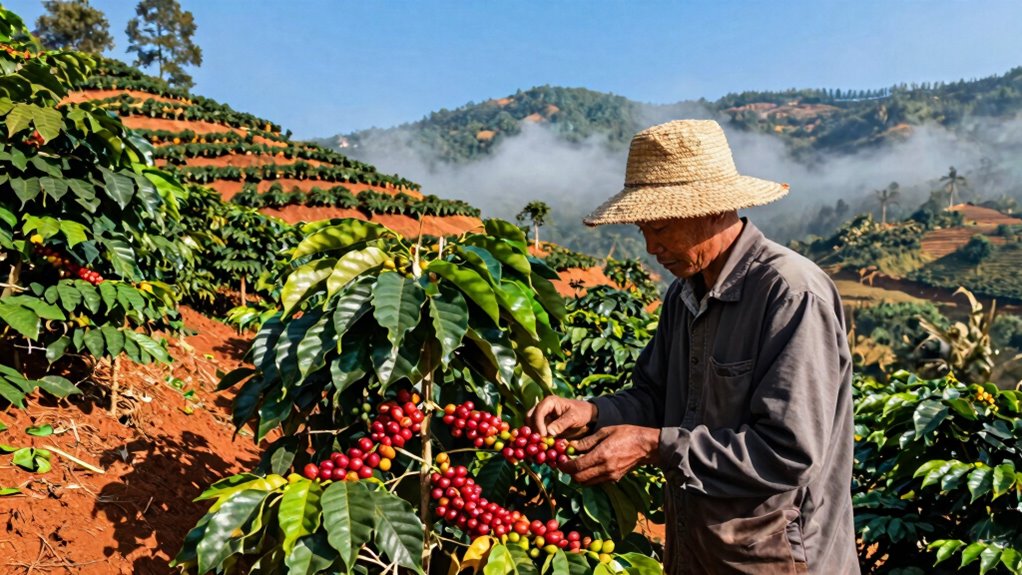
Thailand’s specialty coffee scene has been rapidly gaining recognition for its unique flavors and high-quality beans. As you explore this vibrant industry, you’ll notice that much of its success stems from meticulous processes like coffee fermentation and bean roasting. These steps are essential in shaping the distinctive profiles that make Thai coffee stand out on the global stage. Coffee fermentation, in particular, plays an important role in developing complex flavors, as it involves controlled microbial activity that transforms the beans’ intrinsic qualities. When done right, fermentation enhances the beans’ sweetness, acidity, and aroma, giving the coffee a depth that’s hard to find elsewhere. Thai farmers and producers pay close attention to fermentation times and conditions, often experimenting to perfect the process. This dedication results in beans that are rich in character and full of vibrant, nuanced flavors. Additionally, controlled microbial activity is fundamental in creating the unique flavor profiles characteristic of Thai specialty coffee. Once the beans are fermented, the next key step is bean roasting. You’ll find that Thai roasters emphasize precision and artistry in this stage, aiming to bring out the best in each batch. The roasting process reveals the beans’ full potential, transforming raw, green beans into aromatic, flavorful coffee. Many Thai roasters prefer light to medium roasts, which preserve the beans’ original fruit and floral notes, allowing their unique terroir to shine through. As you taste Thai specialty coffee, you might notice bright citrus, tropical fruits, or floral hints, all of which are enhanced by thoughtful roasting techniques. This careful approach guarantees that the coffee’s integrity remains intact, highlighting the region’s distinctive characteristics. The combination of expert coffee fermentation and skillful bean roasting is what propels Thailand’s specialty coffee industry forward. Farmers and roasters work hand-in-hand, sharing knowledge and innovation to elevate their craft. You’ll also see a growing number of cafes and coffee shops that emphasize transparency, showcasing their commitment to quality and sustainable practices. This focus on craftsmanship and authenticity resonates with coffee enthusiasts worldwide, fueling the region’s rising reputation. As Thailand continues to invest in advanced techniques and quality control, the industry is increasingly embracing innovative methods to enhance flavor and consistency. Incorporating modern technology has also become a vital part of maintaining high standards in production. You can expect even more exciting developments in its specialty coffee scene. Whether you are a casual drinker or a connoisseur, exploring Thai coffee offers a taste of a region full of passion, precision, and rich, memorable flavors.
As an affiliate, we earn on qualifying purchases.
Frequently Asked Questions
What Are Thailand’s Top Coffee-Growing Regions?
You’ll find Thailand’s top coffee-growing regions primarily in Chiang Mai, Chiang Rai, and Chiang Mai’s northern highlands, where coffee cultivation flourishes. These areas showcase remarkable regional diversity, with varying climates and altitudes producing unique flavors. As you explore, you’ll notice how local soil and weather influence the beans’ profiles, making Thailand a dynamic destination for coffee lovers seeking diverse, high-quality specialty coffees from these thriving regions.
How Does Thai Climate Affect Coffee Flavor Profiles?
Ever wonder how Thailand’s climate shapes its coffee flavors? The altitude influence plays a key role, with higher elevations producing brighter, more nuanced beans. Monsoon effects bring seasonal rains that can enhance bean development, adding complexity. The warm, humid climate fosters unique profiles, blending fruity and earthy notes. So, your coffee’s taste is a vibrant reflection of Thailand’s diverse weather patterns and diverse growing altitudes.
Are There Organic Thai Coffee Options Available?
Yes, there are organic Thai coffee options available. Many farms pursue organic certifications, ensuring their coffee is grown without synthetic pesticides or fertilizers. These farms often embrace eco-friendly farming practices, promoting sustainability and environmental health. When you choose organic Thai coffee, you’re supporting responsible agriculture and enjoying a pure, flavorful brew. Look for certifications like USDA Organic or Thai Organic labels to guarantee your coffee is genuinely organic and eco-conscious.
What Traditional Methods Are Used in Thai Coffee Processing?
Think of Thai coffee processing like a carefully choreographed dance. You start with traditional methods such as wet processing, where coffee beans undergo fermentation, enhancing flavor complexity. Then, drying techniques like sun-drying or shade drying are used, preserving quality and flavor. These methods create a rich, nuanced cup that reflects Thailand’s cultural heritage, allowing each bean to tell its story through every sip you take.
How Does Thai Coffee Compare to Other Southeast Asian Coffees?
You’ll find that Thai coffee stands out in Southeast Asia thanks to its unique coffee bean varieties and traditional brewing techniques. Unlike some neighboring countries, Thailand uses Arabica and Robusta beans, often processed with wet methods, which highlight bright, complex flavors. Your brewing techniques, like pour-over or siphon brewing, further enhance these qualities, making Thai coffee rich and aromatic. It’s a distinctive, flavorful experience compared to other regional coffees.
Conclusion
So, as you sip your Thai specialty coffee, marvel at how this burgeoning region is quietly conquering the global scene. Who knew that behind those humble beans lies a revolution, fueled by passion and a dash of daring? It seems Thailand’s coffee scene isn’t just rising—it’s staging a caffeinated coup. So next time you crave sophistication, remember: you’re not just drinking coffee, you’re tasting a revolution, one expertly roasted bean at a time.
Halloween Picks
halloween
As an affiliate, we earn on qualifying purchases.