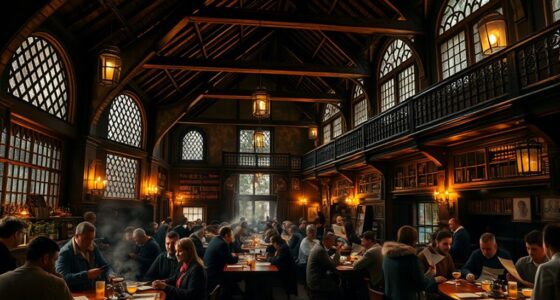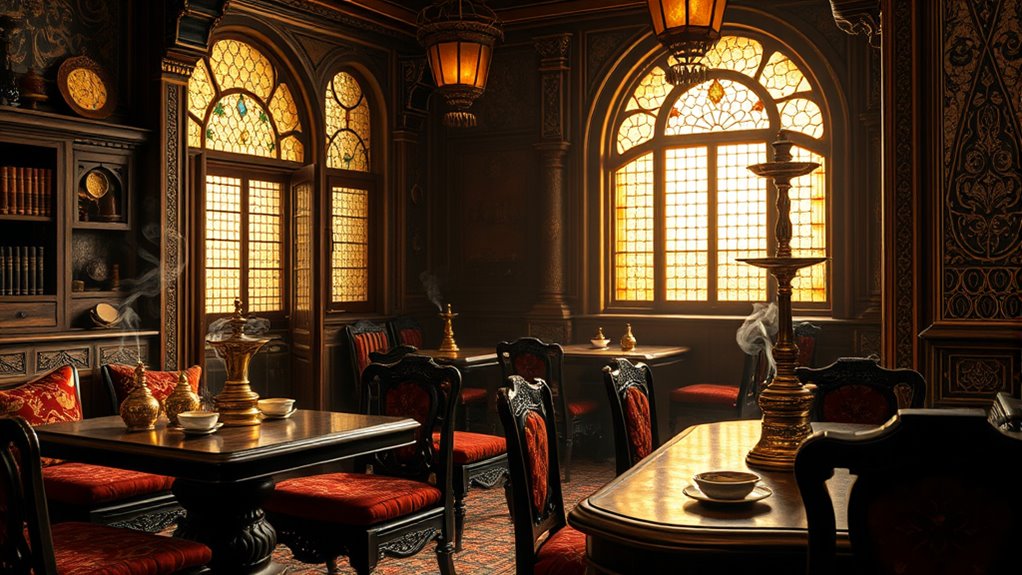

In the Ottoman Empire, coffeehouses quickly became vibrant hubs for socializing, cultural exchange, and political debate. They transformed daily life by encouraging open conversations across social classes and fostering artistic expression. These lively spaces not only served drinks but also shaped urban culture and communities, promoting inclusivity and shared identities. If you want to discover how these bustling cafés influenced society’s development and left a lasting legacy, there’s much more to explore.
Key Takeaways
- Coffee transformed Ottoman social life, becoming central to communal gatherings and cultural exchange.
- Coffeehouses (*kahveshane*) emerged as lively spaces for socializing, debates, and artistic expression.
- These venues fostered inclusivity, bringing together diverse social classes and ethnicities.
- Coffeehouses influenced urban development, cultural practices, and the dissemination of ideas.
- They left a lasting legacy, shaping societal norms and promoting civil society in the Ottoman Empire.
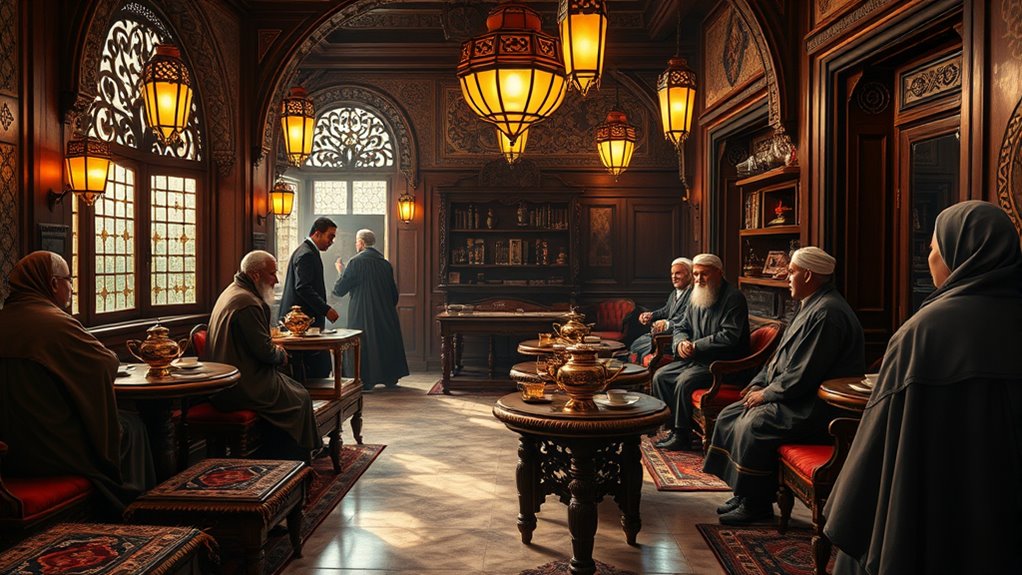
Coffee’s arrival in the Ottoman Empire transformed social and cultural life, becoming more than just a beverage. It quickly became a catalyst for social impact, shaping how people gathered, communicated, and shared ideas. When coffee was introduced, it didn’t take long for it to move beyond individual consumption and into the domain of social interaction. Coffeehouses, known as *kahveshane*, emerged as vibrant centers where men from different walks of life met to converse, debate, and relax. These establishments fostered a unique environment that encouraged cultural exchange, breaking down social barriers and promoting dialogue among diverse groups. As you step into a typical Ottoman coffeehouse, you’d notice the lively atmosphere—laughter, heated discussions, and the aroma of roasted coffee beans filling the air. It’s here that ideas circulated freely, and social cohesion grew stronger.
Ottoman coffeehouses fostered lively social exchange, breaking barriers and inspiring debate, laughter, and cultural harmony.
The coffeehouse’s role extended beyond simple social gatherings; it became a space for political discussion and artistic expression. Artists, poets, and intellectuals often congregated here, sharing their work and exchanging perspectives. This encouraged a vibrant cultural exchange, where new ideas and traditions blended seamlessly. You’d see musicians performing, writers exchanging manuscripts, and patrons engaging in lively debates—all centered around cups of steaming coffee. These interactions helped shape Ottoman culture, fostering a sense of community and shared identity. The coffeehouse’s influence went further, inspiring other social institutions and contributing to the development of urban life. Additionally, some scholars suggest that the social impact of coffee helped lay the groundwork for the emergence of civil society in the empire.
Furthermore, coffeehouses played a significant role in spreading new cultural practices, fashion, and even language. They became melting pots where different ethnicities and social classes interacted comfortably, enriching the local culture. The social impact of these spaces was profound, as they promoted inclusivity and dialogue at a time when societal divisions could be rigid. Coffee provided a neutral setting for people to connect, and the coffeehouse became a symbol of cosmopolitanism within the empire. It wasn’t just about drinking coffee; it was about creating a communal experience that valued conversation, exchange, and shared knowledge.
In essence, the Ottoman coffeehouse transformed society by creating a space where cultural exchange thrived and social bonds strengthened. It helped forge a collective identity rooted in shared experiences and open dialogue. Coffee’s influence extended well beyond the cup, shaping social norms and cultural practices that still resonate today. You can see its legacy in the modern coffee culture, where social interactions and cultural exchange remain central to the experience. The rise of the coffeehouse was more than a trend; it was a turning point that redefined social life in the Ottoman Empire and left a lasting imprint on history.

3.5oz Ceramic Espresso Cups Set of 6, Small Stackable Coffee Cups with Saucers, Ottoman-Style Turkish Coffee Cup Set for Tea, Espresso, Latte, Coffee, Cafe Mocha, Black Gift Box with Window(White)
【PREMIUM PORCELAIN CRAFTSMANSHIP】Experience the excellence of ALIMOTA Espresso Cups, expertly crafted from premium LEAD-FREE, CADMIUM FREE and NON-TOXIC…
As an affiliate, we earn on qualifying purchases.
As an affiliate, we earn on qualifying purchases.
Frequently Asked Questions
How Did Coffee Influence Ottoman Social Hierarchy?
You see, coffee disrupted Ottoman social stratification by creating spaces where social class mattered less. Coffeehouses welcomed men from different backgrounds, encouraging interaction beyond traditional gender roles that kept women mostly confined. As a result, coffee fostered a more egalitarian environment, subtly challenging hierarchy and gender norms, and allowing for new social dynamics to emerge, which influenced Ottoman society in lasting ways.
Were There Any Restrictions on Coffee Consumption in the Empire?
You should know that there were some coffee regulations and consumption restrictions in the Ottoman Empire. Authorities occasionally imposed bans on coffee, fearing its influence on social gatherings and political dissent. These restrictions aimed to control its spread, but they often met with resistance from the public. Despite these limitations, coffee remained popular, and its cultural significance grew, eventually becoming a central part of Ottoman social life.
How Did Coffeehouses Affect Ottoman Political Discussions?
You notice that coffeehouses critically shaped Ottoman political discussions by fostering public discourse and encouraging political activism. These spaces became hubs where people shared ideas freely, challenging traditional authority and spreading new perspectives. As a result, coffeehouses played an essential role in enabling citizens to engage in political debates, influence opinions, and even mobilize collective action, ultimately impacting the empire’s political landscape.
Did the Ottoman Empire Export Coffee to Europe?
While the Ottoman Empire didn’t directly export coffee to Europe initially, it played a key role in the coffee trade that fueled European import. You see, Ottoman merchants facilitated the spread of coffee, making it a prized commodity. This indirect influence helped introduce coffee to Europe, where it became a popular beverage. So, although not a direct exporter, the Ottoman Empire’s coffee trade considerably impacted European coffee culture.
What Cultural Practices Around Coffee Originated in the Ottoman Empire?
You learn that many cultural practices around coffee originated in the Ottoman Empire, especially coffee brewing methods and Ottoman etiquette. You observe how elaborate coffee rituals emphasize politeness, such as serving coffee with a smile and using specific cups. These customs foster social interaction and respect, shaping how people enjoy coffee today. The Ottoman emphasis on hospitality and refined manners around coffee still influence modern coffeehouse etiquette across the world.
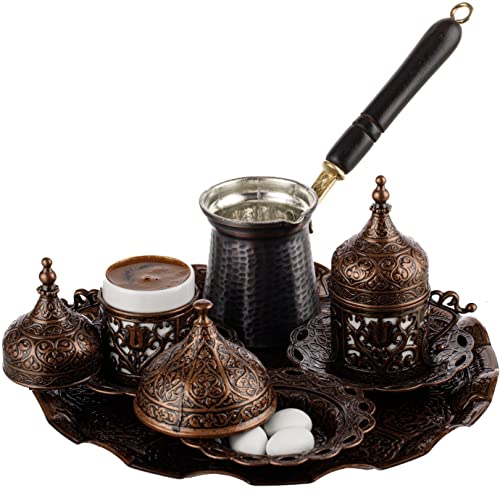
DEMMEX Turkish Greek Arabic Coffee Making and Serving Full Set with Cups Saucers Lids Sugar Bowl Tray and Copper Coffee Pot, Hand Decorated with Gold Crystals, 12 Pcs
DEMMEX 12 Pcs Turkish coffee Full Set for 2.
As an affiliate, we earn on qualifying purchases.
As an affiliate, we earn on qualifying purchases.
Conclusion
As you reflect on how coffee transformed the Ottoman Empire, remember that “a little coffee can brighten even the darkest day.” The rise of the coffeehouse wasn’t just about a beverage; it was a catalyst for social change, conversation, and culture. By embracing this history, you see how small innovations shape the world. So, savor your coffee today, knowing it’s part of a legacy that brought people together and sparked new ideas.

Witches Brew Coffee House Metal Tin Signs Vintage Witches Kitchen Decor Halloween Party Retro Decorations for Home Bar Cafe Porch Patio Yard Outdoor Decorative 12×8 Inch (Retro Black)
Specifications: Measures 12"L X 8"W X 0.1"T, making it the perfect size to hang on your porch, patio,…
As an affiliate, we earn on qualifying purchases.
As an affiliate, we earn on qualifying purchases.

CHIEN-CHI LILI Novelty Artist Mug Gift for Art Lover Wifey Mom Sister – Appreciation Gifts for Teacher – Artist Christmas Mug Gift for Art Lover – Artists Gallery Rainbow Mugs
5A High Quality: They are made of premium ceramics, use the best professional machines, the surface is sprayed…
As an affiliate, we earn on qualifying purchases.
As an affiliate, we earn on qualifying purchases.