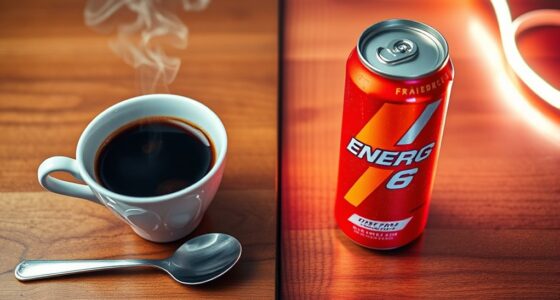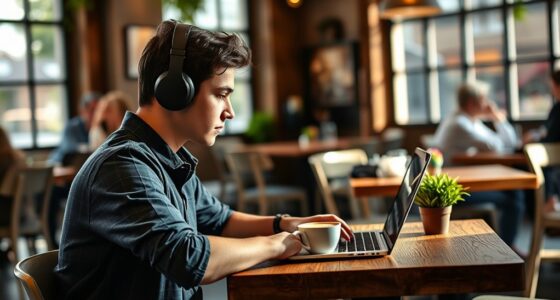
To maximize focus and protect your sleep, aim to drink your first coffee about an hour after waking, around 9-10 a.m., when natural alertness is rising. Have a second cup before 2-3 p.m. to avoid disrupting your sleep cycle. Timing caffeine carefully aligns with your body’s rhythms, helping you stay alert without interference. If you keep these tips in mind, you’ll discover how to optimize your caffeine schedule for better energy and rest.
Key Takeaways
- Drink coffee within 1 hour of waking, around 9-10 a.m., to maximize alertness during peak morning hours.
- Consume caffeine before 2-3 p.m. to prevent sleep disruption and support restful nighttime sleep.
- Schedule a second caffeine boost mid-afternoon for sustained focus without interfering with rest.
- Avoid late-day caffeine to prevent interference with sleep quality and overall restfulness.
- Personalize timing based on your sleep patterns and body response for optimal focus and health.
Caffeine timing can considerably impact how alert you feel and how well you sleep. If you’re looking to maximize the health benefits of your coffee habit while maintaining good sleep quality, understanding the best times to consume caffeine is essential. Consuming caffeine strategically can help you stay focused during your most demanding parts of the day without disrupting your natural sleep cycle. When planning your coffee intake, knowing the concept of ideal schedules can make a significant difference in how you feel and function throughout the day. For example, drinking coffee too late in the afternoon can interfere with your ability to fall asleep, leading to less restful nights and a cycle of fatigue. On the other hand, having your coffee too early might mean missing out on the peak alertness benefits that caffeine provides during your most productive hours. The key is to find a balance that aligns with your body’s natural rhythms and your daily commitments.
Research shows that the best window for caffeine consumption aligns with your body’s circadian rhythm, usually between mid-morning and early afternoon. This timing allows you to enjoy the health benefits of caffeine, like improved focus, enhanced mood, and increased metabolic rate, without the downside of sleep disruption. You should aim to have your first cup within an hour of waking up, ideally around 9 or 10 a.m., when your body naturally starts producing more alertness-inducing hormones. Waiting a little longer after waking up helps your body fully wake up on its own, making your coffee more effective. If you’re someone who needs a second boost, it’s best to have it before 2 or 3 p.m., as caffeine’s half-life means it can stay in your system for several hours. Beyond that, it might interfere with your sleep and reduce the quality of your rest. Additionally, understanding your body’s natural rhythms can help you optimize your caffeine intake and mitigate any negative effects.
Adjusting your caffeine schedule can also provide broader health benefits. Consuming caffeine at the right times can help manage anxiety, reduce jitteriness, and prevent dependence. Sticking to an ideal schedule ensures you enjoy the mental clarity and physical energy that caffeine offers without risking overstimulation or sleep disturbances. Every person’s body reacts differently, so pay attention to how your body responds and tweak your intake accordingly. If you notice trouble sleeping, consider cutting back on caffeine after early afternoon. By aligning your caffeine intake with your natural energy peaks and avoiding late-day consumption, you can enjoy the benefits of caffeine safely and effectively, all while supporting better overall health and sleep quality.

Cafezi 50 oz Tritan Clear Plastic Tumbler with Handle | Reusable Leak-Proof BPA-Free Water Bottle with Time Marker for Iced Coffee, Tea, Juice, Boba, Smoothies | Wide Mouth | Single-Walled
Generous 50 oz Capacity: 50 ounces size meets your hydration needs throughout the day
As an affiliate, we earn on qualifying purchases.
As an affiliate, we earn on qualifying purchases.
Frequently Asked Questions
Does Caffeine Affect Sleep Quality if Consumed Later in the Day?
Yes, caffeine can affect your sleep quality if you drink it later in the day. It may cause sleep disruption by making it harder to fall asleep or reducing deep sleep stages. Even if you don’t notice it immediately, consuming caffeine in the afternoon or evening can interfere with your rest, leading to poorer sleep quality overall. To avoid these issues, consider limiting caffeine intake several hours before bedtime.
How Does Caffeine Intake Vary Across Different Age Groups?
An old saying goes, “What’s right for the goose isn’t always right for the gander.” You’ll find that age-related caffeine sensitivity influences consumption patterns, with younger people often drinking more coffee to stay alert, while older adults tend to cut back due to reduced tolerance. As you age, your body processes caffeine differently, so adjusting your intake helps you avoid sleep disruptions and keeps your energy steady throughout the day.
Can Caffeine Consumption Impact Hydration During Workouts?
Caffeine consumption can affect your hydration balance during workouts because it has a mild diuretic effect, leading to increased electrolyte loss and potential dehydration. To stay properly hydrated, you should drink water alongside caffeinated beverages and monitor your electrolyte levels, especially during intense or long exercises. This way, you maintain ideal hydration, prevent dehydration-related fatigue, and enhance your workout performance.
Are There Natural Alternatives to Caffeine for Boosting Focus?
You can boost focus naturally with herbal stimulants like ginseng or rhodiola, which improve alertness without caffeine’s jitters. Focus-enhancing foods such as berries, nuts, and dark chocolate provide antioxidants and healthy fats that support brain function. Incorporate these options into your diet to stay sharp and energized throughout the day. These natural alternatives can help you maintain concentration without relying solely on caffeine.
How Does Caffeine Tolerance Develop Over Prolonged Use?
Ever wonder why your coffee no longer sparks the same energy? Tolerance buildup happens as your body undergoes metabolic adaptation, reducing caffeine’s effects over time. With prolonged use, your receptors become less responsive, making you need more to achieve the same focus boost. This gradual process sneaks up on you, so staying mindful of your intake helps prevent diminishing returns and keeps your alertness sharp.

TIME TIMER 12 inch Visual Timer 60 Minute Kids Desk Countdown Clock with Dry Erase Activity Card, Also Magnetic for Classroom, Homeschooling Study Tool, Task Reminder, Home and Kitchen Timer
TIME MANAGEMENT — The 60-minute learning clock helps to stay on task, and assist with organization and concentration…
As an affiliate, we earn on qualifying purchases.
As an affiliate, we earn on qualifying purchases.
Conclusion
Now that you know the best times to sip your coffee, you’ll unlock your focus like a secret weapon. Think of caffeine as your loyal sidekick—timed right, it boosts your energy and sharpness just when you need it most. Don’t let missteps turn your brew into a missed opportunity. With this knowledge, you’re ready to conquer your day—because when it comes to caffeine, timing truly is everything. Cheers to smarter sipping!

THERMOS Stainless King Vacuum-Insulated Stainless Steel Tumbler – 16oz, Midnight Blue – Insulated Coffee Tumbler for Hot & Cold Drinks – Leak-Proof & Sweat-Proof for Commuting & Traveling
Premium insulation: Make sure your morning routine never loses steam with this insulated Thermos tumbler; our coffee Thermos…
As an affiliate, we earn on qualifying purchases.
As an affiliate, we earn on qualifying purchases.

BLACK+DECKER 12-Cup Digital Coffee Maker, Programmable, Washable Basket Filter, Sneak-A-Cup, Auto Brew, Water Window, Keep Hot Plate, Black
12-CUP DURALIFE GLASS CARAFE: The sturdy 12-cup* carafe has measurement markings for accurate filling and an easy-grip handle…
As an affiliate, we earn on qualifying purchases.
As an affiliate, we earn on qualifying purchases.