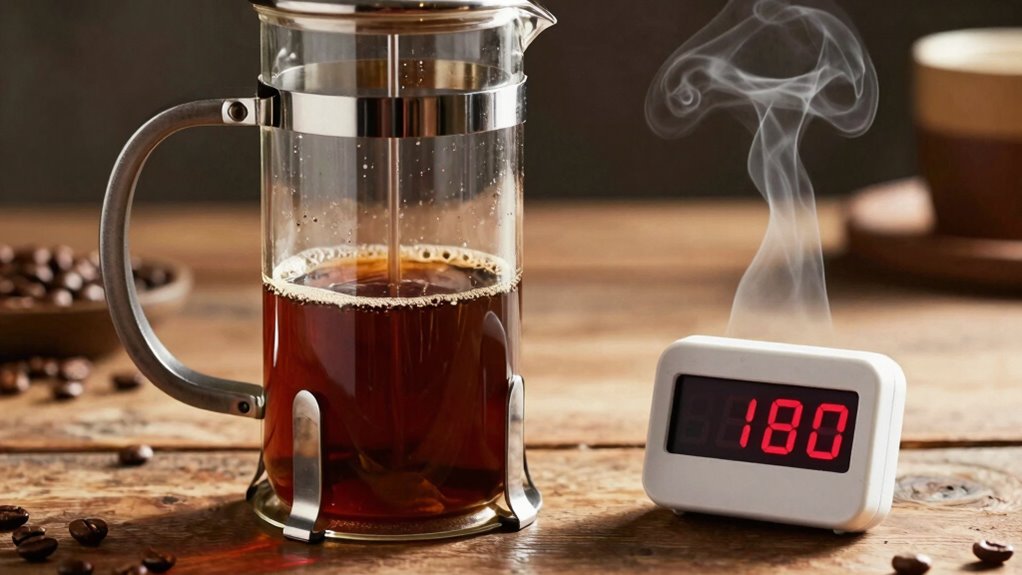

The 4-minute rule is a handy guideline to time your French press brew for the best flavor. You should steep your coffee grounds for around four minutes to balance extraction and avoid bitterness or sourness. If you break the brew earlier, your coffee might be weak or under-extracted. Let it go longer, and it could become over-extracted and bitter. Knowing when to stop helps you craft a perfect cup—keep exploring to learn more about optimizing your brew.

Get coffee and tea gear delivered free with Prime
- Fast, free delivery on millions of items
- Prime Video, Amazon Music and more included
- Member-only deals all year
Key Takeaways
- The 4-minute mark is a general guideline for optimal extraction, balancing flavor, aroma, and body.
- Brew longer than 4 minutes can cause over-extraction, resulting in bitterness and astringency.
- Brew less than 4 minutes may lead to under-extraction, producing weak or sour coffee.
- Adjusting brew time slightly longer or shorter allows customization based on taste preferences.
- Monitoring flavor during brewing helps determine the ideal moment to break the 4-minute rule.
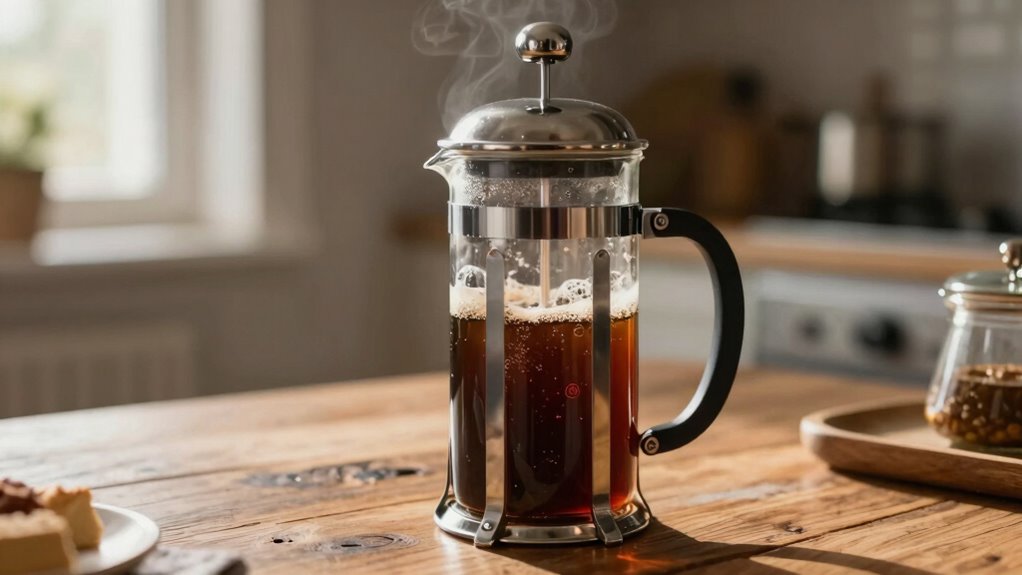
If you want to brew the perfect cup of French press coffee, timing is everything. The 4-minute rule is a guideline many enthusiasts swear by, but understanding why it works can help you decide when to break it. Coffee extraction, the process that releases flavors from the coffee grounds, depends heavily on both brewing temperature and time. During those four minutes, the hot water interacts with the coffee grounds, dissolving oils, acids, and aromatic compounds. This interval is usually enough to produce a rich, balanced brew. If you let it sit too long, over-extraction can occur, making your coffee bitter and astringent. Conversely, pulling the plunger too early might result in under-extraction, leaving your coffee weak or sour.
Maintaining the right brewing temperature is crucial during those four minutes. Ideally, you’ll want your water to be between 195°F and 205°F. At this temperature, extraction proceeds efficiently without scalding the grounds. If your water is too hot, it accelerates extraction, which can lead to bitterness. Too cold, and the extraction remains incomplete, leaving your coffee dull and flat. Many people find that sticking within this temperature range helps achieve the best flavor profile in exactly four minutes. However, some connoisseurs experiment with slightly longer or shorter steeping times, especially if they prefer a different flavor intensity or body. Temperature control is essential for consistent results and a better understanding of how your coffee develops. Adjusting brew time based on your preferences can also influence the overall flavor and body of your coffee.
The key is to pay attention to how your coffee tastes at different times. When you follow the four-minute rule, you allow the coffee to reach an optimal balance of flavor without overdoing it. That said, depending on the grind size—usually medium-coarse—you might find that a minute or so more or less makes a noticeable difference. If you prefer a bolder, more robust flavor, a slightly longer steep might be your go-to. For a lighter, more delicate cup, a shorter brew time could work better. The main thing is to monitor the extraction carefully; too long, and bitterness creeps in, too short, and your coffee feels thin. Understanding coffee extraction can help you fine-tune your brewing process for better results. Additionally, experimenting with different brew times can help you discover your personal flavor preferences and elevate your overall coffee experience.
As an affiliate, we earn on qualifying purchases.
Frequently Asked Questions
Does Water Temperature Affect the 4-Minute Brewing Time?
Yes, water temperature affects the 4-minute brewing time. If your water is too hot or too cold, it can alter extraction, meaning you might need to adjust the brewing time slightly. Using high-quality water and a consistent brewing vessel helps maintain ideal temperature and flavor. Ideally, keep the water just off boiling—around 200°F—to ensure proper extraction within the 4-minute window, resulting in a balanced, flavorful cup.
Can I Adjust the Time for Stronger or Milder Coffee?
Absolutely, you can adjust brewing time to tweak your brew strength and flavor profile. Think of it like tuning a radio—shorter times give a milder, brighter taste, while longer brews deepen the flavor. If you prefer a stronger coffee, extend the steeping slightly beyond four minutes; for milder notes, shorten it. Experimenting helps you find that perfect balance tailored to your taste buds.
Is the 4-Minute Rule the Same for All Types of Coffee Beans?
No, the 4-minute rule isn’t the same for all coffee beans. Different beans, like lighter or darker roasts, affect brewing time and coffee flavor. You might need to adjust the steeping time to optimize flavor and maintain brewing consistency. Lighter roasts often need a bit more time to develop their flavor, while darker roasts may need less. Experimenting helps you find the perfect balance for each bean type.
How Does Grind Size Influence Brewing Time Accuracy?
Grind size greatly influences brewing time accuracy because inconsistent grind sizes can cause uneven extraction. If your grind isn’t uniform, some particles will brew faster, leading to over-extraction or under-extraction. Additionally, maintaining a consistent brewing temperature helps guarantee the contact time remains ideal. To get the best results, use a consistent grind size and keep your brewing temperature steady, so your brewing time aligns with your desired flavor profile.
What Signs Indicate I Should Break the 4-Minute Rule Early?
You should break the 4-minute rule early if your coffee tastes overly bitter or sour, signaling over-extraction or under-extraction. If you notice a lost or dull aroma, it indicates the brewing process isn’t ideal. Proper coffee storage keeps beans fresh, and using quality brewing equipment guarantees your timing is precise. Trust your taste buds—if something seems off, don’t hesitate to adjust your brewing time for the best flavor.
Conclusion
Mastering the 4-minute mark makes your French press brew fabulous. Don’t delay or deviate—deliberately dwell or rush, and your coffee’s character could crumble. By balancing brew time with precision and patience, you produce a perfect pot every time. Remember, the secret to sensational sips lies in sticking to the schedule. So, stay steadfast, savor the seconds, and serve up a stunning, satisfying cup that’s truly tailored to your taste.
Halloween Picks
halloween
As an affiliate, we earn on qualifying purchases.