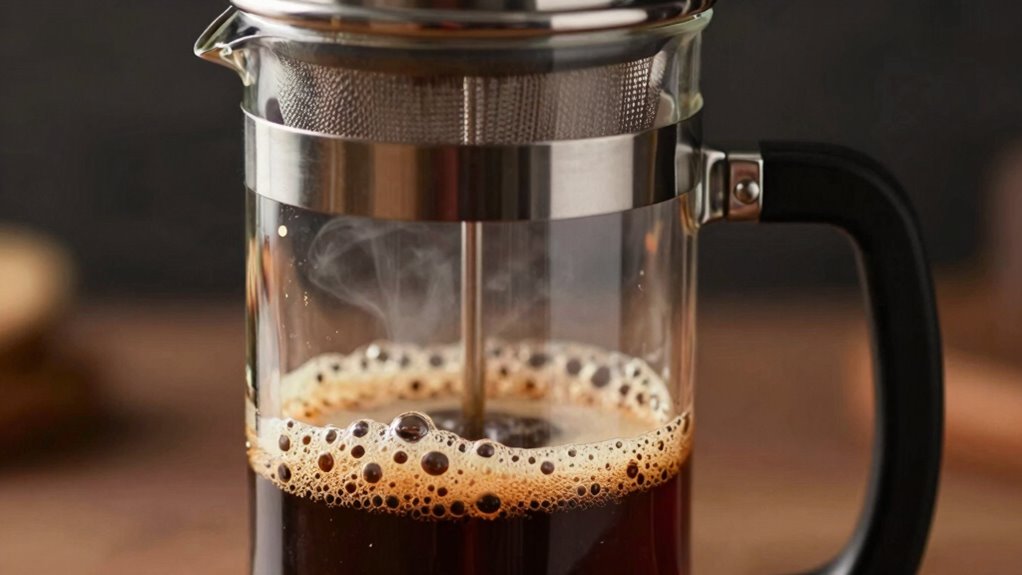

You don’t need to follow the traditional blooming step for good French press coffee. Blooming, which involves pouring hot water to release CO₂, is more of a habit than a necessity. Scientific evidence shows skipping it won’t harm your flavor if you focus on maintaining proper temperature, grind size, and steep time. By controlling these key variables, you can brew richer, more aromatic coffee. Keep exploring how mastering fundamentals makes all the difference in your cup.
Listen free for 30 days with Audible
Thousands of audiobooks and originals — cancel anytime.
As an affiliate, we earn on qualifying purchases.
Key Takeaways
- Blooming is a traditional step but not essential; skipping it does not harm coffee flavor or aroma.
- Proper temperature control and steeping time are more critical for extracting good flavor.
- Scientific evidence shows blooming has minimal impact on overall coffee quality.
- Experienced baristas focus on fundamentals like grind size and water temperature, not blooming.
- Emphasizing process control yields better aroma and flavor than following blooming rituals.
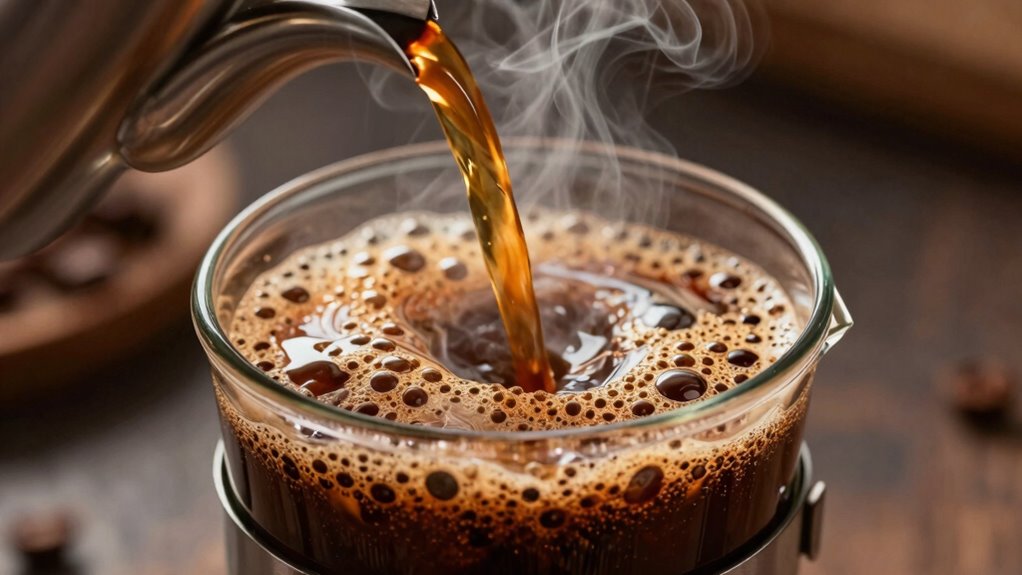
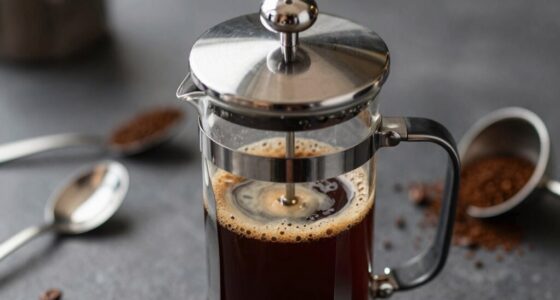
Have you ever noticed a burst of bubbles or a sudden foaming action when you pour hot water into a French press? That fizzing is often mistaken for the “bloom,” a step believed to enhance coffee aroma and flavor. Many guides suggest that blooming—pouring a small amount of hot water to let coffee degas—is essential, but the truth is, it’s more of a myth than a necessity. You don’t have to obey this tradition to make great coffee.
Blooming is a myth; controlling temperature and timing matters more for great French press coffee.
The idea behind blooming is that it releases carbon dioxide, which supposedly improves extraction and boosts the coffee’s aroma. While this can sometimes help, it’s not a strict rule. The key to a good cup lies in controlling your brewing temperature and overall process, not necessarily in waiting for bubbles to settle. Coffee aroma, responsible for much of what we enjoy in a good brew, is influenced by many factors, but the initial foaming isn’t the only thing that matters. If your water is too hot or too cold, the aroma will suffer regardless of whether you bloom or not. Additionally, understanding coffee degassing can help you better appreciate the science behind brewing and how it impacts flavor extraction. Furthermore, the roast level of your beans significantly affects how aromas develop during brewing, making it a critical component in the overall flavor profile.
Brewing temperature plays a more vital role than the blooming myth. The ideal temperature for French press coffee is around 200°F (93°C). Too hot, and you risk burning the coffee, resulting in bitter notes; too cold, and the extraction won’t be thorough enough, leaving your brew flat and lacking aroma. When you pour hot water directly over the grounds, you’re already starting the extraction process. If you prefer a more intense aroma and richer flavor, maintaining the right temperature from start to finish is much more effective than fussing over a quick bloom. Controlling brewing variables such as temperature and steeping time is crucial for optimal extraction. In fact, many scientific studies have shown that controlling variables like temperature has a more significant impact on flavor than the mere act of blooming.
Many experienced baristas and coffee enthusiasts skip the blooming step altogether, focusing instead on consistent water temperature and proper steeping times. They understand that the quality of your coffee aroma depends on controlling variables like grind size, brewing temperature, and steeping duration. They also recognize that the coffee roasting process influences aroma development, which means that even with perfect brewing techniques, the beans’ origin and roast level play a big role. Blooming doesn’t significantly change these factors if your overall process is sound. It might add a bit of visual flair or a moment of anticipation, but it’s not a game-changer.
In the end, the myth of blooming in French press coffee is just that—a myth. You don’t need to follow the ritual to enjoy a fragrant, flavorful cup. Focus on the fundamentals: keep your brewing temperature precise, use fresh grounds, and steep for the right amount of time. That’s what truly elevates your coffee aroma and overall experience, not a quick foaming action that you can skip entirely.
As an affiliate, we earn on qualifying purchases.
Frequently Asked Questions
Does Blooming Improve Coffee Flavor Significantly?
Blooming can enhance your coffee’s flavor, but it’s not essential for great taste. By blooming, you release trapped gases, which helps with aroma preservation and can lead to a more vibrant flavor profile. While it may not drastically improve every cup, it allows for better extraction and can subtly boost the overall flavor. If you enjoy experimenting, trying blooming might add a slight but noticeable difference to your French press brew.
What Is the Best Water Temperature for Blooming?
You should aim for about 200°F (93°C) for blooming your coffee. Ironically, the perfect temperature isn’t just about heat—water mineral content and your brewing equipment influence extraction. Too hot or cold can dull flavors, but a steady, just-off-boil temperature balances mineral interactions and enhances blooming. This way, you release rich aromas without over-extracting, proving that precise temperature control beats mere guesswork in brewing.
Can Blooming Cause Over-Extraction?
Blooming can cause over-extraction if you’re not careful, especially if pre-wetting is overdone. Some misconceptions suggest that excessive blooming improves flavor, but it may actually release too many soluble compounds too quickly. The blooming efficiency debate centers on whether it’s necessary for good extraction. To avoid over-extraction, control your pouring, keep bloom times moderate, and don’t rely solely on pre-wetting to enhance flavor.
How Long Should I Bloom My Coffee?
Ever wondered how long to bloom your coffee? Usually, 30 seconds is enough. You don’t need to follow strict rules—just guarantee your grind size is appropriate for French press brewing, and store your coffee properly to maintain freshness. Blooming helps release gases, but overdoing it can lead to over-extraction. Keep it simple: a quick bloom, then pour, and enjoy your rich, flavorful coffee!
Does Blooming Affect All Coffee Bean Types Equally?
Blooming affects different coffee bean types differently, depending on their roast level and maturity. The blooming technique helps release trapped gases, which varies with bean freshness and processing. For fresh, vibrant beans, blooming is more impactful, while older or darker roasts might not need as much. So, consider your coffee’s maturity and roast when applying the blooming technique, but don’t feel obligated to follow a strict rule for every type.
Conclusion
So, next time you brew with your French press, forget the blooming myth. Studies show that only about 2% of coffee’s flavor compounds are released during blooming, meaning it’s not as vital as many believe. Instead, focus on your grind size and brewing time for the best results. Don’t let outdated myths hold you back—trust your taste buds and enjoy your coffee your way. After all, brewing is all about personal preference.
Fall yard work Picks
leaf blowers
As an affiliate, we earn on qualifying purchases.