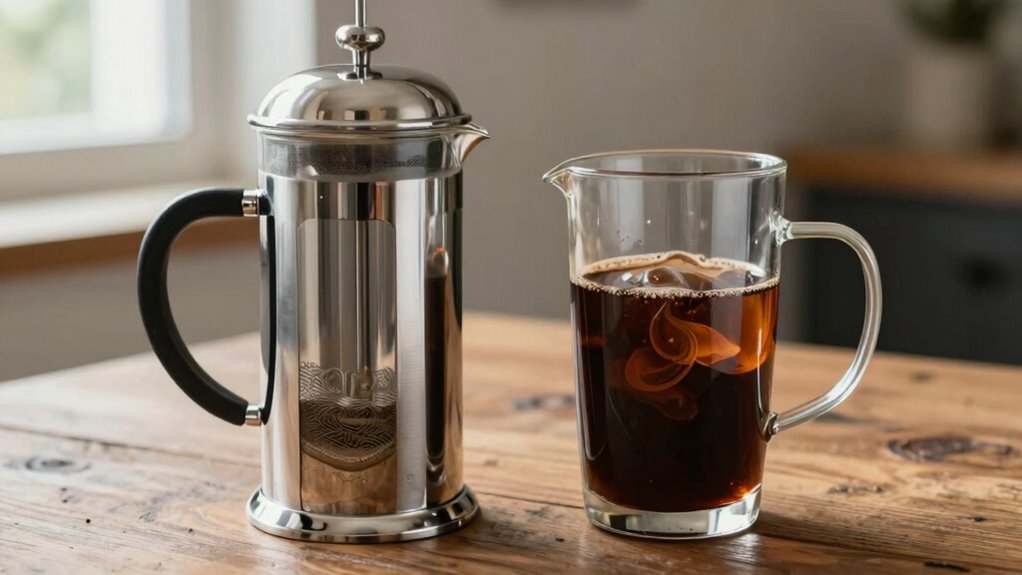

Choosing a stainless steel French press can make your coffee routine more durable and convenient, as it retains heat longer and is easier to clean, perfect for busy mornings or travel. On the other hand, a glass press offers a more delicate, pure flavor experience, highlighting nuanced notes for true coffee enthusiasts. Your decision impacts flavor, routine efficiency, and maintenance. To discover which suits your style best, explore the detailed differences that follow.

Get coffee and tea gear delivered free with Prime
- Fast, free delivery on millions of items
- Prime Video, Amazon Music and more included
- Member-only deals all year
Key Takeaways
- Glass presses offer pure flavor extraction but are fragile, requiring careful handling and potentially altering routine safety precautions.
- Stainless steel presses are durable and retain heat longer, making them ideal for quick, extended coffee enjoyment without frequent maintenance.
- Glass models provide a traditional aesthetic, enhancing the visual experience, while steel offers a sleek, modern look suited for busy or contemporary settings.
- Steel presses are easier to clean and more resilient, reducing routine cleaning time and risk of breakage.
- The choice impacts routine focus: glass emphasizes flavor purity, while steel prioritizes durability and convenience.
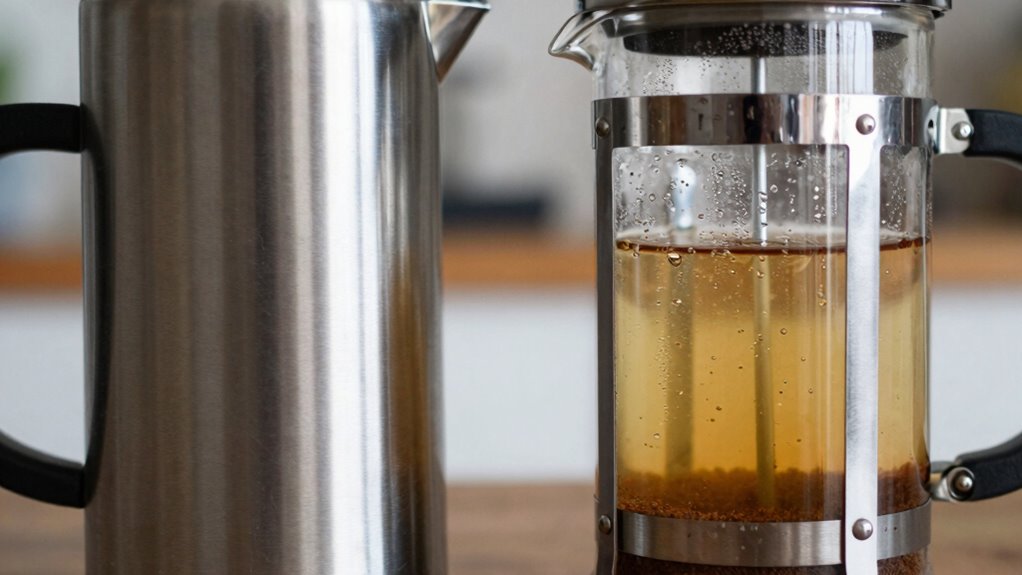
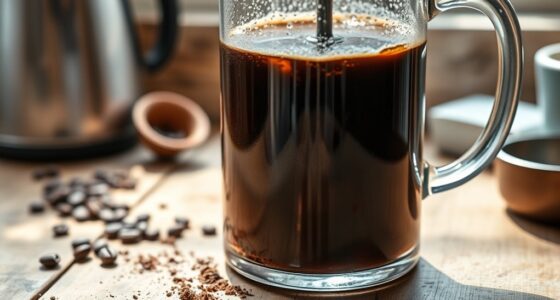
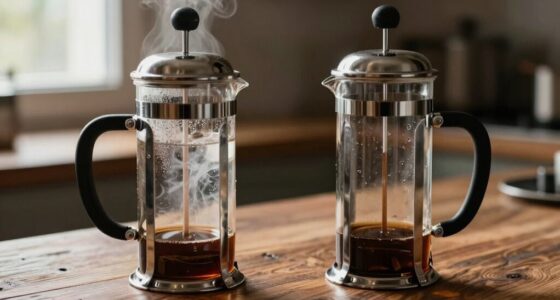
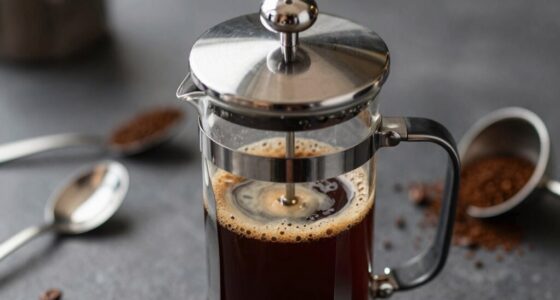
When choosing a French press, the decision between stainless steel and glass models can considerably impact your brewing experience. One of the most noticeable differences is how each material affects the coffee flavor. Glass presses tend to be more neutral, allowing the true taste of your coffee beans to shine through without interference. This means you’ll often notice more nuanced flavors and a cleaner cup. If you’re someone who appreciates the delicate notes of specialty coffees, a glass French press can elevate your brewing experience by preserving those subtle flavors. Conversely, stainless steel presses can sometimes impart a slight metallic undertone, which might alter the flavor profile, though many users find it minimal and accept it as part of the robust brewing process. Additionally, stainless steel is often praised for its heat retention properties, ensuring your coffee stays warm longer. Durability is another key factor that influences your choice. Glass models are fragile and can shatter if dropped or mishandled, making them less suitable for travel or busy kitchens. However, they often come with thick, heat-resistant walls that provide some protection. Stainless steel presses, on the other hand, are virtually indestructible. They withstand drops, bumps, and everyday wear and tear, making them ideal if you want a long-lasting, rugged option. Plus, stainless steel is resistant to staining and corrosion, ensuring the press maintains its appearance over time. If you’re someone who values a product that can handle rough treatment without breaking, a stainless steel French press will serve you well. In addition to durability, consider how each material impacts your routine. Glass presses require a bit more careful handling, especially when cleaning or pouring hot water, as they’re more prone to accidents. They often have a more traditional, aesthetic appeal that adds a touch of elegance to your kitchen. Stainless steel models tend to have a modern, sleek look and are easier to clean, often being dishwasher safe. They also tend to retain heat longer, which means your coffee stays warm for extended periods. This can be a real convenience if you like to sip slowly or prepare multiple cups at once. The maintenance process can also influence your routine, as stainless steel generally requires less delicate care. Furthermore, some eco-friendly options are available in stainless steel, making it a sustainable choice for environmentally conscious consumers. Using recyclable materials like stainless steel can help reduce waste and lessen your ecological footprint, aligning with a greener lifestyle. A well-designed stainless steel French press can also contribute to reducing environmental impact, as these materials are typically more sustainable and last longer than glass options. Ultimately, your choice depends on what matters most in your brewing routine. If you prioritize a pure coffee flavor and don’t mind handling a breakable vessel, a glass French press may be the way to go. But if durability, ease of maintenance, and long-term use are your top concerns, a stainless steel model offers a reliable, no-fuss option. Both can produce excellent coffee — it just depends on how you want to experience your brew daily.
As an affiliate, we earn on qualifying purchases.
Frequently Asked Questions
Which French Press Type Is More Eco-Friendly?
You’ll find stainless French presses more eco-friendly because they’re made from durable, eco-conscious materials that last longer. Plus, many stainless models are produced using recycled materials, reducing environmental impact. Glass presses are often fragile and may require more frequent replacements, increasing waste. By choosing a stainless French press, you support recycled production and minimize waste, making it a smarter, more sustainable choice for your routine.
How Do Maintenance and Cleaning Differ Between Stainless and Glass?
Think of cleaning your French press like tending a garden—you want things to stay healthy and vibrant. Stainless steel is more durable, resisting scratches and stains, making maintenance easier. Glass, while delicate and prone to smudges, offers a sleek aesthetic appeal but needs gentle cleaning to avoid cracks. Regular disassembly and hand-washing help preserve both materials, ensuring your press stays functional and attractive for years.
Are There Specific Coffee Grounds Better Suited for Each Material?
You’ll find that medium to coarse coffee grounds work best for both stainless and glass French presses, guaranteeing ideal extraction and minimal clogging. For material-specific brewing, stainless presses are more forgiving with slightly finer grounds, but coarse remains ideal. Glass presses demand consistent, coarse grounds to prevent sediment and ensure proper brewing. Overall, choose grounds that match your preferred coffee strength and the specific material’s brewing style for the best results.
Which French Press Retains Heat Longer?
You’ll find that stainless steel French presses retain heat longer, often up to 60% more than glass models. This is due to their superior material durability, which helps insulate coffee better. Plus, stainless steel offers a sleek, modern aesthetic appeal that resists staining and breakage, making it ideal for those who want both functionality and style. So, if keeping your coffee hot is your priority, go for stainless steel.
Can the Materials Affect the Taste of the Coffee?
Yes, the materials can affect the taste of your coffee. Stainless steel preserves flavor better because it doesn’t impart any odors or chemicals, and it’s durable, lasting through daily use. Glass, on the other hand, is non-reactive, so it preserves the pure, fresh taste of your coffee. Both materials impact flavor preservation and material durability, meaning your choice influences how long your French press lasts and how the coffee tastes.
Conclusion
So, whether you’re forging your morning brew with a sleek stainless steel fortress or frolicking with fragile glass elegance, remember, it’s all about your style. Picture your coffee adventure: a tough knight conquering heat with steel armor, or a delicate artist delicately pouring liquid art from glass. Whichever you choose, just don’t forget—your routine’s the real masterpiece. After all, whether steel or glass, your coffee’s the true hero in this caffeinated drama.
Evergreen bestsellers Picks
bestsellers
As an affiliate, we earn on qualifying purchases.