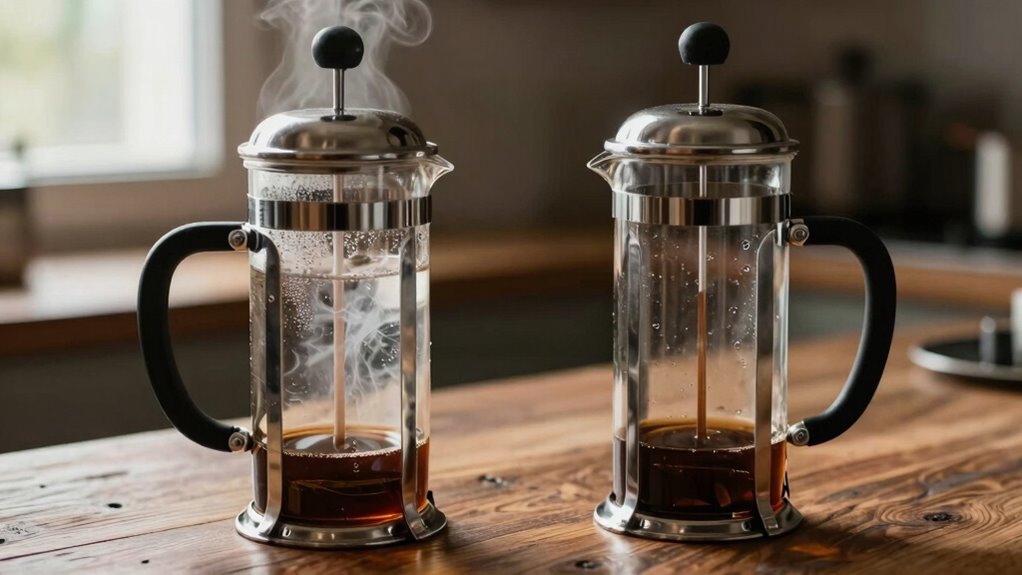

Preheating your French press really does change your cup by helping to keep the coffee hot and preserve its aroma and flavor. It guarantees the water stays at the ideal brewing temperature, leading to more consistent extraction and a fuller, more balanced taste. When you skip this step, your coffee cools quickly and can taste weaker or more bitter. Want to discover how this small step can make a big difference in your brew? Keep exploring to find out more.

Get coffee and tea gear delivered free with Prime
- Fast, free delivery on millions of items
- Prime Video, Amazon Music and more included
- Member-only deals all year
Key Takeaways
- Preheating maintains the French press and coffee at optimal temperatures, ensuring better extraction and flavor development.
- It prevents rapid cooling, resulting in a hotter, more aromatic, and well-balanced cup.
- Without preheating, coffee cools quickly, leading to weaker flavor and reduced aroma.
- Preheating extends the French press’s lifespan by reducing thermal stress and potential damage.
- Overall, preheating significantly improves brewing consistency and enhances the sensory qualities of the final cup.
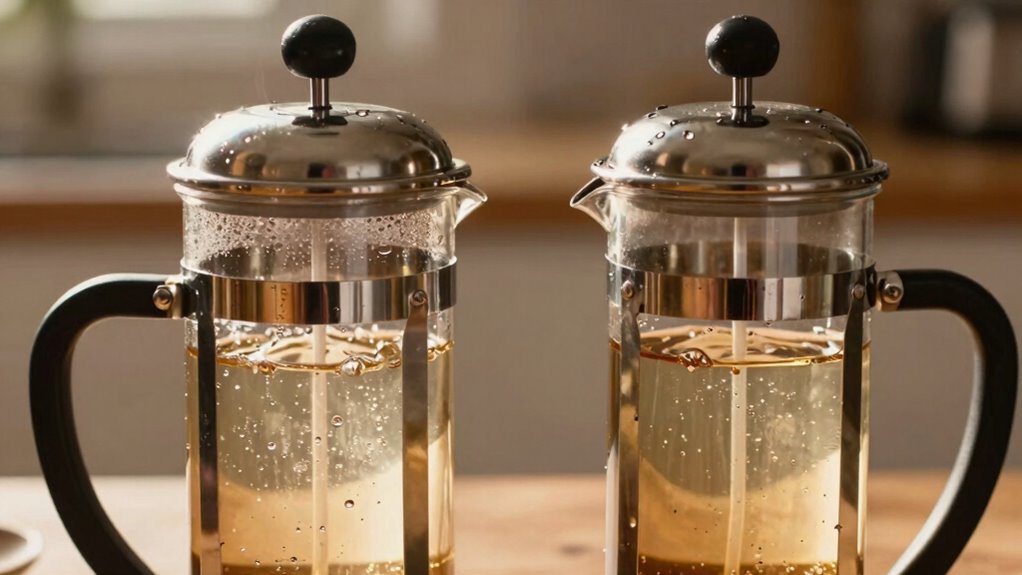
Have you ever wondered if preheating your French press actually makes a difference in the taste of your coffee? It’s a common question among coffee enthusiasts who want to optimize every step of their brewing process. The idea behind preheating is straightforward: by warming the French press beforehand, you help maintain a stable coffee temperature during brewing. This stability is vital because coffee temperature directly influences extraction, which in turn affects flavor. When the brewing vessel is cold, the coffee cools quickly, leading to inconsistent extraction. This inconsistency can result in a cup that’s either under-extracted, sour, and weak, or over-extracted, bitter and harsh. Preheating helps prevent these issues by ensuring the temperature stays within the ideal range for extraction, typically between 195°F and 205°F.
Preheating stabilizes temperature, ensuring consistent extraction and a more flavorful, balanced coffee experience.
When you pour hot water into a cold French press, the temperature drops rapidly, which can disrupt the brewing process. By warming the vessel first—either with hot water or by rinsing it thoroughly—you create a more controlled environment for your coffee. This step helps you achieve brewing consistency, meaning your extraction process remains uniform from start to finish. Consistent brewing temperature translates into a more balanced and flavorful cup, where the subtle nuances of your coffee beans shine through. Furthermore, maintaining the right coffee temperature ensures your brew develops fully, extracting flavors fully without risking under- or over-extraction. Proper temperature control is essential for a truly optimal brewing experience. In addition, preheating can help reduce the chances of thermal shock, which might cause cracks or damage to your French press over time. Properly preheated vessels also help preserve the integrity of your French press, extending its lifespan.
Preheating might seem like a minor step, but it has a significant impact on your final cup. If you skip it, you might notice that your coffee cools too quickly, especially if your kitchen is cool or drafty. This quick loss of heat can result in a less aromatic, less flavorful brew. Conversely, preheating helps keep the coffee hot longer, preserving its aroma and flavor profile. It also promotes temperature stability, which is crucial for consistent extraction. It’s a simple trick, but one that can elevate your overall coffee experience. You’ll find that with a preheated French press, your coffee maintains an inviting temperature longer, giving you more time to enjoy its richness without it cooling off too fast. This small adjustment can lead to a more consistent extraction, ultimately improving the overall quality of your brew.
In short, preheating your French press isn’t just about warmth—it’s about controlling coffee temperature to enhance brewing consistency. By doing so, you guarantee that each cup you make is well-extracted, flavorful, and perfectly temperature-balanced, making every sip worth savoring. This small step can make a big difference in the quality of your coffee and your overall brewing process.
As an affiliate, we earn on qualifying purchases.
Frequently Asked Questions
How Long Should I Preheat My French Press?
You should preheat your French press for about 3 to 5 minutes before brewing. This guarantees the coffee temperature stays consistent, helping you achieve better brewing consistency. When you pour hot water into the press, it warms the vessel, preventing the coffee from cooling too quickly. As a result, your coffee maintains the ideal temperature longer, leading to a richer flavor and a more satisfying cup.
Can Preheating Prevent Coffee From Cooling Too Quickly?
Preheating your French press definitely helps prevent your coffee from cooling too quickly, keeping the temperature consistent. By warming the vessel beforehand, you boost brewing efficiency and maintain ideal extraction. It’s like giving your coffee a head start, ensuring it stays warm longer. This simple step can make all the difference, so don’t let your brew go cold on you—preheat and enjoy a hotter, more flavorful cup from start to finish.
Does Preheating Affect the Coffee’s Flavor Profile?
Preheating your French press considerably affects the coffee’s flavor profile by enhancing flavor preservation and maintaining temperature stability. When you preheat, the brewing process starts at the right temperature, preventing rapid cooling that can dull flavors. This allows the coffee’s aromatic compounds to develop fully, resulting in a richer, more balanced taste. Without preheating, the coffee cools quickly, causing flavor loss and a less satisfying experience.
Is Preheating Necessary for All Types of Coffee Beans?
Preheating isn’t necessary for all coffee beans, but it does impact the final experience. When you preheat, you maintain ideal coffee temperature, preventing rapid cooling that can dull flavors. Fresh beans benefit most from preheating because their vibrant oils and aromas stay preserved longer. Without it, you risk a lukewarm brew that masks subtle nuances. So, whether you should preheat depends on your beans’ freshness and your desire for a perfect, flavorful cup.
What Are the Best Methods to Preheat a French Press?
To preheat your French press, fill it with hot water, guaranteeing the water matches your desired brew temperature for better temperature retention. For glass or ceramic presses, preheating helps maintain consistent heat, while metal presses naturally retain warmth longer. Swirl the hot water around, then discard it before adding your coffee grounds. This simple step guarantees your coffee stays hot longer and enhances extraction, resulting in a better-tasting cup.
Conclusion
Preheating your French press truly makes a difference. For example, imagine brewing coffee with a cold press—your brew cools quickly, losing flavor. But preheating keeps the temperature stable, ensuring your coffee stays hot and rich longer. Think of it like warming up your car on a chilly morning; it performs better and lasts longer. So, next time, give your French press a quick warm-up, and enjoy a more flavorful, satisfying cup every time.
Fall Picks
fall essentials
As an affiliate, we earn on qualifying purchases.