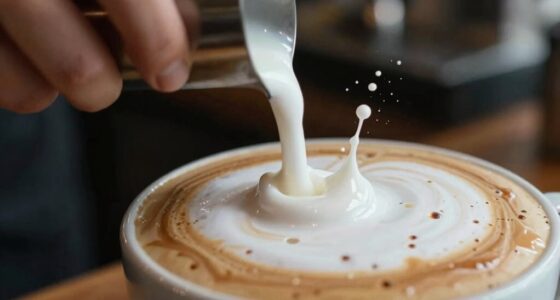

A modern cappuccino is defined by its perfect balance of bold espresso, smooth steamed milk, and velvety microfoam. You’ll want the espresso to be rich and flavorful, topped with a glossy, dense foam that holds its shape. The key is layering the textures for a luxurious mouthfeel and visual appeal. If you keep exploring, you’ll uncover the nuances that make each cappuccino uniquely satisfying.
Key Takeaways
- A classic cappuccino combines equal parts espresso, steamed milk, and microfoam for a balanced, velvety texture.
- The drink is characterized by a glossy, dense microfoam that maintains shape and enhances flavor.
- Proper extraction of rich, caramel-colored espresso and precise milk frothing are essential for quality.
- The microfoam’s silky texture and tiny bubbles create the signature layered appearance and mouthfeel.
- Attention to brewing and frothing techniques results in a harmonious blend of bold coffee and creamy milk.

Have you ever wondered what makes a perfect cappuccino? It’s not just about pouring milk and coffee into a cup; it’s about mastering the delicate balance of two essential components: milk frothing and espresso extraction. When you start your journey to making an ideal cappuccino, understanding these elements is key. Milk frothing transforms ordinary milk into a velvety, creamy foam that sits atop your espresso with a silky texture. To achieve this, you need to introduce air into the milk at just the right temperature—usually around 150°F—and use a steam wand to create microfoam. This microfoam should be smooth and shiny, with tiny bubbles that give it a luxurious mouthfeel. Proper milk frothing isn’t just about heating the milk; it’s about introducing just the right amount of air and then heating it evenly. The goal is to produce a glossy, dense foam that can hold its shape and complement the espresso without overwhelming it. Using the right technique ensures the microfoam maintains its structure and quality throughout the drink.
Espresso extraction is equally vital. When you pull a shot, you want to ensure it’s rich, full-bodied, and brewed with precision. This involves using freshly ground coffee, tamping it evenly in the portafilter, and controlling the water temperature and pressure. The extraction process should take around 25 to 30 seconds, resulting in a shot with a caramel-colored crema on top. That crema isn’t just for appearance; it’s packed with oils and flavors that define the taste of your cappuccino. If the extraction is too fast, the coffee will be weak and sour; too slow, and it might be bitter and over-extracted. Mastering espresso extraction means paying close attention to grind size, tamping pressure, and timing, all of which influence the flavor and strength of your shot.
Once you have your espresso and frothed milk ready, combining them correctly is what turns these elements into a cappuccino. The espresso serves as the base, providing the bold, intense flavor, while the milk foam adds creaminess and sweetness. Typically, a cappuccino is composed of equal parts espresso, steamed milk, and foam—each layer playing its role. The art of pouring the milk is also important; you want to create a layered effect with a smooth, velvety top. When you get these steps right—perfect milk frothing and precise espresso extraction—you’ll craft a cappuccino that’s balanced, flavorful, and irresistibly smooth. It’s this meticulous attention to detail that truly defines a classic cappuccino in today’s coffee world. For consistent results, understanding the importance of brewing techniques can help refine your process and elevate your coffee experience.

CASABREWS CM5418 Compact Espresso Machine with Milk Frothing Steam Wand
- Make Espresso at Home: Prepare your favorite espresso-based drinks
- 20 Bar Pressure System: Professional Italian pump for rich extraction
- Powerful Boiler: 1350W boiler for consistent performance
As an affiliate, we earn on qualifying purchases.
As an affiliate, we earn on qualifying purchases.
Frequently Asked Questions
What’s the History Behind the Cappuccino’s Name?
You might find it interesting that the name “cappuccino” comes from its cultural origins and linguistic roots. The term is derived from the Italian word “capuchino,” which relates to the Capuchin friars, whose brown robes resemble the drink’s color. This connection highlights how the drink’s name reflects its appearance and history, blending Italian language and cultural influence to create a name that’s now recognized worldwide.
How Does Milk Frothing Affect the Flavor?
Frothing milk is like painting with a soft, airy brush, transforming its texture into a velvety cloud. This milk texture boosts flavor enhancement by balancing the bold espresso’s intensity and adding a creamy sweetness. When you froth milk properly, it releases subtle sugars and oils, making each sip smoother and richer. So, good milk frothing elevates your cappuccino, turning simple ingredients into a harmonious, flavorful masterpiece.
Can You Make a Vegan Cappuccino?
Yes, you can make a vegan cappuccino using dairy alternatives like plant-based milk. Simply choose your preferred type, such as almond, soy, or oat milk, and froth it just like traditional milk. These options create creamy, frothy textures that mimic regular milk, giving you a delicious vegan cappuccino. Just heat and froth your plant-based milk, pour over espresso, and enjoy a rich, dairy-free coffee experience.
What Are the Best Coffee Beans for Cappuccino?
They say, “You are what you eat,” but in coffee, you are what you brew. For a perfect cappuccino, choose coffee varieties with balanced acidity and rich flavor. Opt for beans roasted medium to bring out their depth. Look for fresh, high-quality beans from reputable sources, as fresh roasting enhances aroma and taste. Your ideal beans will elevate your cappuccino experience with every sip.
How Has Cappuccino Evolved Over the Decades?
Over the decades, you’ve seen cappuccinos evolve with creative coffee art and varied caffeine content. Baristas now craft intricate designs on foam, elevating the visual appeal. You’ll notice modern cappuccinos often feature richer flavors, different milk options, and tailored caffeine levels to suit preferences. This evolution combines artistry and personalization, making each cup a unique experience while staying true to the classic balance of espresso, milk, and foam.
Conclusion
Now that you know what makes a cappuccino, it’s funny how you might find yourself craving one just as you’re passing by your favorite café. Sometimes, the perfect foam or the right espresso shot appears at exactly the right moment, almost like a coincidence. So, next time you enjoy a cappuccino, remember it’s not just a drink—it’s a delightful coincidence waiting to happen, turning an ordinary moment into something a little more special.