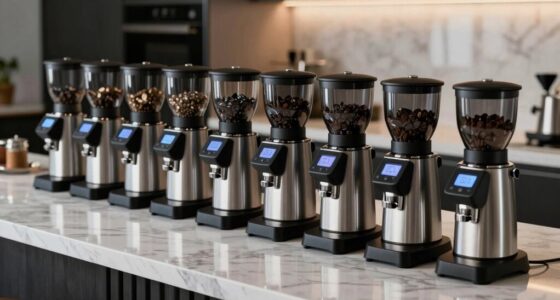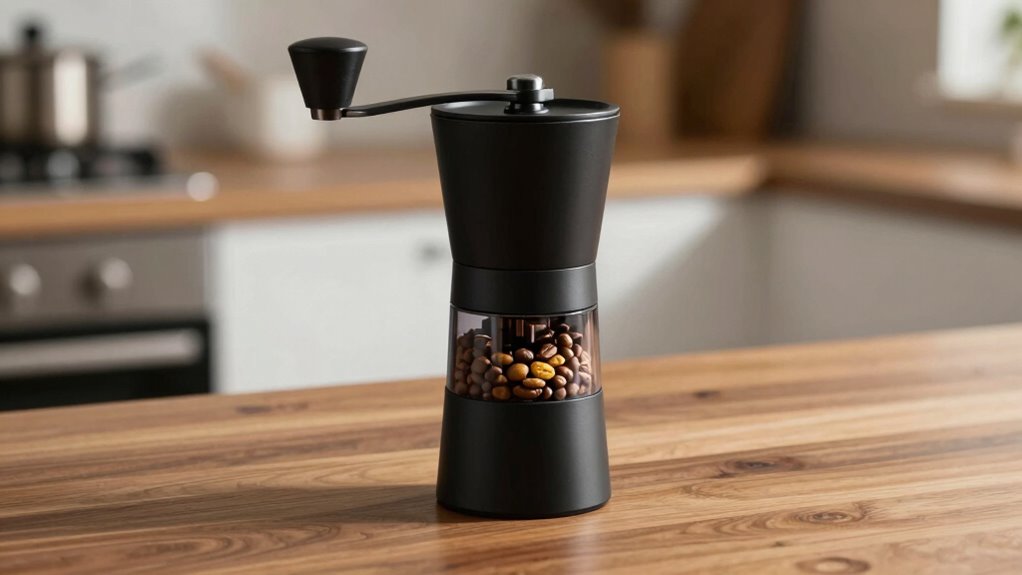
When you pull espresso daily, grounds trapped between the burrs and the chute quietly ruin your next shot — stale coffee mixing into a fresh dose is one of the most common reasons shots taste flat and inconsistent. This roundup focuses on grinders engineered for single dosing and minimal retention, so every shot starts with freshly ground coffee and nothing else. The MiiCoffee DF64 II takes the top spot thanks to its 64mm flat burrs, bellows-assisted purge design, and near-total dose transfer at a mid-range price. The Beanglass T64 is a strong runner-up with a similar 64mm flat burr platform and a cleaner aesthetic, while the budget-friendly Turin SK40 proves a tilted base and compact conical burrs can keep retention surprisingly low. The main tradeoff in this category: larger flat burrs deliver clarity and low retention at higher cost and more noise, while conical models trade some flavor separation for price and counter-friendliness. Read on for the full breakdown of all eight.

Get coffee and tea gear delivered free with Prime
- Fast, free delivery on millions of items
- Prime Video, Amazon Music and more included
- Member-only deals all year
Complete the kit


Key Takeaways
- Single-dose design with a bellows or tilt geometry mattered more than burr size for keeping retention under half a gram — the Turin SK40 with 40mm conical burrs outperformed larger grinders that lacked a purge mechanism.
- The 64mm flat burr trio (MiiCoffee DF64 II, Beanglass T64, DF64 Gen 2) dominated on flavor clarity, but the DF64 II separated itself with anti-static features and improved tolerances over the Gen 2.
- Entry-level models like the SHARDOR and Wirsh GU38 are timed-dose grinders rather than true single-dosers, so expect some retained grounds unless you purge between uses.
- The Wirsh GU63’s 63mm conical burrs offer a middle path — sweeter, more forgiving shots than flat burrs with less waste than small timed grinders.
- Upgradability splits this category: the DF64 family accepts aftermarket burr swaps, protecting your investment, while closed systems like the AMZCHEF and Beanglass are what-you-see-is-what-you-get.
| MiiCoffee DF64 II Single-Dose Coffee Grinder, Black |  | Best Overall for Burr Upgrades | Burr type: 64 mm stainless steel flat burrs | Grind adjustment: Stepless | Stated retention: Less than 0.1 g | VIEW ON AMAZON | See Our Full Breakdown |
| Beanglass T64 Single-Dose Coffee Grinder with 64 mm Flat Burrs, White |  | Best for Easy Chute Cleaning | Burr type: 64 mm titanium-plated stainless steel flat burrs | Grind adjustment: Stepless | Stated retention: Approximately 0.1 g | VIEW ON AMAZON | See Our Full Breakdown |
| Turin SK40 Single Dose Coffee Grinder, 40mm Stainless Steel Conical Burrs, Stepless Adjustment, Tilted Base, Black |  | Best Compact Pick | Burr type: 40 mm stainless steel conical, 8-point | Grind adjustment: Stepless | Hopper capacity: 40 g | VIEW ON AMAZON | See Our Full Breakdown |
| DF64 Gen 2 Single-Dose Coffee Grinder, Black |  | Best for Tool-Free Cleaning | Model: DF64 Gen 2 | Color: Black | Manufacture year: 2024 | VIEW ON AMAZON | See Our Full Breakdown |
| Wirsh Geimori GU63 Single-Dose Electric Coffee Grinder with 63 mm Conical Burrs |  | Best for Quiet, Multi-Method Grinding | Burr type: 63 mm high-carbon stainless steel conical burrs | Adjustment: Stepless, 0–85 scale | Micro-adjustment precision: Approximately 20 μm (0.02 mm) | VIEW ON AMAZON | See Our Full Breakdown |
| SHARDOR Conical Burr Espresso Coffee Grinder with Precision Timer |  | Best Budget Pick for Multi-Cup Households | Burr type: 40 mm stainless steel conical burr | Grind settings: 51 | Timer: Up to 60 seconds, adjustable in 0.1-second increments | VIEW ON AMAZON | See Our Full Breakdown |
| Wirsh Geimori GU38 Coffee Grinder with Stepless Conical Burr |  | Best Value Single-Dose Grinder | Burr: 38 mm, 6-core SUS420 stainless steel conical | Grind settings: 65 stepless settings | Adjustment precision: 0.02 mm | VIEW ON AMAZON | See Our Full Breakdown |
| AMZCHEF Single-Dose Coffee Grinder with 75 Settings |  | Best for a Mess-Free Workflow | Brand: AMZCHEF | Model: 8306A | Burr: 40 mm six-star forged conical burr | VIEW ON AMAZON | See Our Full Breakdown |
| espresso grinders with low retention | Burr type |
|---|---|
| MiiCoffee DF64 II Single-Dose | 64 mm stainless steel flat burrs |
| Beanglass T64 Single-Dose Coff | 64 mm titanium-plated stainless steel flat burrs |
| Turin SK40 Single Dose Coffee | 40 mm stainless steel conical, 8-point |
| DF64 Gen 2 Single-Dose Coffee | — |
| Wirsh Geimori GU63 Single-Dose | 63 mm high-carbon stainless steel conical burrs |
| SHARDOR Conical Burr Espresso | 40 mm stainless steel conical burr |
| Wirsh Geimori GU38 Coffee Grin | — |
| AMZCHEF Single-Dose Coffee Gri | — |
More Details on Our Top Picks
MiiCoffee DF64 II Single-Dose Coffee Grinder, Black
The MiiCoffee DF64 II is a strong fit for espresso drinkers who want very low stated retention and room to change the grinder’s character later. Its 64 mm flat burrs, stepless adjustment, and plasma generator support precise dialing and a tidier single-dose routine; the burrs can also be upgraded to SSP options. Compared with the Turin SK40, it offers a larger flat-burr platform, while the SK40 is the more compact choice with conical burrs. The DF64 II’s retention claim is under 0.1 g, but clearing its dead space completely depends on using the blow-out funnel and lid. Its included 58 mm dosing cup may not suit every portafilter, so buyers should check their transfer workflow before choosing it.
Pros:- Stated retention below 0.1 g suits frequent bean changes and single dosing
- Custom 64 mm flat burrs can be upgraded to SSP burrs
- Stepless adjustment allows fine espresso tuning
- Plasma generator helps reduce static
Cons:- The blow-out funnel and lid are needed to clear dead space completely
- The included 58 mm dosing cup may not fit every portafilter
Best for: Espresso drinkers who single-dose, want a 64 mm flat-burr platform, and may upgrade burrs later
Not ideal for: Buyers who want grounds to transfer directly into any portafilter or prefer a workflow without a blow-out step
- Burr type:64 mm stainless steel flat burrs
- Grind adjustment:Stepless
- Stated retention:Less than 0.1 g
- Voltage:110 V
- Dosing cup:58 mm food-grade aluminum
- Static control:Plasma generator
- Single-dose feature:Integrated anti-popcorn disc
Our verdict“Choose the DF64 II if you want low-retention single dosing with a flat-burr platform you can upgrade.”
Beanglass T64 Single-Dose Coffee Grinder with 64 mm Flat Burrs, White
The Beanglass T64 suits single-dose espresso users who want low stated retention and a chute they can access for cleaning. Its removable exit chute and bellows make it easier to clear grounds between coffees, while the 64 mm titanium-plated flat burrs and stepless adjustment offer a familiar precision-focused setup. The stated retention is approximately 0.1 g, close to the DF64 II’s under-0.1 g claim, though neither figure alone guarantees a mess-free routine. The T64’s 300 W motor and cast aluminum body make for a substantial countertop appliance, at about 15 lb. One limitation matters for espresso: the product data warns that grinding below setting 5 may clog. Compared with the smaller-burr Turin SK40, it offers a larger flat-burr set but takes up a heavier, more involved role on the counter.
Pros:- Removable exit chute and bellows support easier cleaning
- Stepless adjustment allows precise grind changes
- Approximately 0.1 g stated retention suits single dosing
- Cast aluminum body provides a sturdy countertop build
Cons:- Grinding below setting 5 may cause clogging
- At approximately 15 lb, it is less convenient to move
- The included 58 mm dosing cup may not suit every portafilter workflow
Best for: Home espresso drinkers who single-dose and want removable chute access for routine cleanup
Not ideal for: Users who need to grind at settings below 5 or frequently move their grinder between locations
- Burr type:64 mm titanium-plated stainless steel flat burrs
- Grind adjustment:Stepless
- Stated retention:Approximately 0.1 g
- Motor power:300 W
- Body material:Cast aluminum
- Dosing cup:58 mm food-grade aluminum
- Weight:Approximately 15 lb
- Warranty:One year
Our verdict“Pick the T64 if accessible chute cleaning matters and your espresso settings stay clear of the stated clogging range.”
Turin SK40 Single Dose Coffee Grinder, 40mm Stainless Steel Conical Burrs, Stepless Adjustment, Tilted Base, Black
The Turin SK40 is the compact option in this group for espresso drinkers who want a single-dose routine without a large 64 mm flat-burr grinder. Its 40 mm conical burrs, stepless adjustment, tilted base, and bellows are intended to limit grounds left behind, while its 6.75 × 3.75 inch footprint is notably narrow. The listing does not give a retention figure, so I would not treat its low-retention design as a quantified match for the DF64 II or DF64 Gen 2, both of which state less than 0.1 g. The SK40 instead makes its case through its smaller footprint and 40 g hopper capacity. It also covers espresso through French press, though buyers should expect factory testing may leave coffee traces in a new unit.
Pros:- Compact 6.75 × 3.75 inch footprint
- Stepless adjustment supports fine grind tuning
- Tilted base and bellows are designed to reduce leftover grounds
- Aluminum body provides durable construction
Cons:- No numerical retention figure is provided
- 40 mm conical burrs differ from the larger flat burrs in the DF64 II and DF64 Gen 2
- Factory testing may leave signs of coffee in the grinder
Best for: Espresso drinkers with limited counter space who want stepless adjustment and a compact single-dose setup
Not ideal for: Buyers who require a published retention figure or specifically want larger flat burrs
- Burr type:40 mm stainless steel conical, 8-point
- Grind adjustment:Stepless
- Hopper capacity:40 g
- Dimensions:6.75 × 3.75 × 12.5 inches
- Body material:Aluminum
- Design:Tilted base and bellows system
- Color:Black
Our verdict“Choose the SK40 when counter space matters more than a quantified retention claim or a larger flat-burr set.”
DF64 Gen 2 Single-Dose Coffee Grinder, Black
The DF64 Gen 2 pairs a stated retention below 0.1 g with a practical advantage for owners who clean often: it opens for tool-free disassembly. Its plasma generator is designed to reduce static, and stepless adjustment lets espresso users make small changes while dialing in. Compared with the MiiCoffee DF64 II, it shares a 64 mm flat-burr, low-retention style of workflow but lists a transparent plastic dosing cup and a 20 g bean capacity without the bellow. The bellow raises capacity to 50 g, though that means using an extra part in the dosing routine. The aluminum body has a powder-coated finish. This is a more appealing fit for easy access and cleanup than for anyone seeking a larger ready-to-grind dose without handling the bellow.
Pros:- Stated retention below 0.1 g
- Tool-free disassembly makes internal cleaning more accessible
- Plasma generator is designed to reduce static buildup
- Stepless adjustment supports precise grind setting
Cons:- Bean capacity is limited to 20 g without the bellow
- Included 58 mm dosing cup is transparent plastic
- Larger doses require adding the bellow to the workflow
Best for: Single-dose espresso users who value tool-free access for cleaning and typically grind doses up to 20 g
Not ideal for: Users who want a metal dosing cup or need to load more than 20 g without using the bellow
- Model:DF64 Gen 2
- Color:Black
- Manufacture year:2024
- Dosing cup:58 mm food-grade transparent plastic
- Stated retention:Less than 0.1 g
- Bean capacity:20 g without bellow; 50 g with bellow
- Adjustment:Stepless
- Body:Aluminum with powder-coated finish
- Cleaning:Tool-free disassembly
Our verdict“Pick the DF64 Gen 2 if easy tool-free cleaning matters and a 20 g dose capacity suits your routine.”
Wirsh Geimori GU63 Single-Dose Electric Coffee Grinder with 63 mm Conical Burrs
The Wirsh Geimori GU63 combines low stated retention with a quiet, low-speed setup that can serve espresso and coarser brews. Its 63 mm conical burrs, stepless 0–85 scale, and approximate 20 μm adjustment precision give espresso users room to tune grind size; the product data states under 0.1 g retention with a 10 g dose. At under 65 dB and 80 RPM, it is the quiet, slow-running alternative to the DF64 Gen 2, whose listed strengths focus on plasma anti-static control and tool-free cleaning. The GU63 also has a magnetic dosing cup and all-metal body, but single dosing is less convenient for larger batches, and tool-free disassembly does not remove the need for routine cleaning. Its published retention figure is tied to a specific 10 g dose.
Pros:- Stated retention below 0.1 g with a 10 g dose
- Stepless adjustment supports espresso through French press
- 80 RPM motor and under 65 dB stated noise level suit quieter routines
- Magnetic dosing cup and tool-free disassembly support a tidy workflow
Cons:- Single-dose workflow is less convenient for larger batches
- Routine cleaning is still needed despite tool-free disassembly
- Retention figure is specified for a 10 g dose
Best for: Home brewers who single-dose espresso and filter coffee and want a quieter grinder with a stated retention figure
Not ideal for: People who regularly grind large batches or want a retention claim specified across multiple dose sizes
- Burr type:63 mm high-carbon stainless steel conical burrs
- Adjustment:Stepless, 0–85 scale
- Micro-adjustment precision:Approximately 20 μm (0.02 mm)
- Motor speed:80 RPM
- Noise level:Under 65 dB
- Ground retention:Less than 0.1 g with a 10 g dose
- Features:Plasma anti-static technology, bellows, magnetic dosing cup, tool-free disassembly
- Body:All-metal
- Brewing methods:Espresso, pour-over, drip, and French press
Our verdict“Choose the GU63 if you want a quiet single-dose grinder for espresso and other brew methods, with retention stated for a 10 g dose.”
SHARDOR Conical Burr Espresso Coffee Grinder with Precision Timer
Most grinders in this roundup are built around single-dosing workflow, but this option takes a different approach: it’s aimed at households that brew multiple cups and want a timer-driven, set-and-forget routine. The 51 grind settings and 0.1-second timer increments make dialing in espresso repeatable, and the portafilter cradle lets you grind hands-free directly into your basket.
Where it falls short of dedicated low-retention machines like the Wirsh GU38 or the Turin SK40 is in purge behavior — a timed hopper-style grinder will always leave more residual grounds than a single-dose unit with bellows. The anti-static tech and residual grounds cleaner soften the problem, but purists chasing sub-0.1 g retention will notice the difference. This pick makes the most sense for buyers who value convenience and cup-count presets over minimal waste.
Pros:- 51 grind settings span espresso-fine to French press-coarse
- Precise 0.1-second timer and cup presets make dosing repeatable
- Portafilter cradle enables hands-free grinding
- Anti-static technology and grounds cleaner simplify cleanup
Cons:- Timed, hopper-style design retains more grounds than true single-dose grinders
- No published retention figures, so waste between doses is hard to predict
Best for: Households that brew drip, French press, and occasional espresso and want programmable dosing without a single-dose workflow
Not ideal for: Espresso purists who switch beans frequently and need near-zero retention — a single-dose grinder like the Wirsh GU38 suits that habit better
- Burr type:40 mm stainless steel conical burr
- Grind settings:51
- Timer:Up to 60 seconds, adjustable in 0.1-second increments
- Cup settings:1 to 12 cups
- Controls:Touchscreen interface
- Extras:Anti-static technology, portafilter cradle, residual grounds cleaner
Our verdict“Choose this if you brew for a household and want programmable convenience — skip it if minimal retention is your top priority.”
Wirsh Geimori GU38 Coffee Grinder with Stepless Conical Burr
This is the entry that best proves you don’t need a 64 mm flat-burr flagship like the MiiCoffee DF64 II to get serious low-retention performance. With less than 0.1 g of retention when paired with the included bellows, the GU38 delivers the near-zero-waste workflow that defines this category, and its 0.02 mm stepless micro-adjustment gives espresso dialing a finesse that stepped grinders like the SHARDOR simply can’t match.
The tradeoff is the 38 mm burr. Compared with the Wirsh GU63’s larger conical set, it grinds slower and heats more under sustained load, so back-to-back doses for a crowd will test your patience. What you get in return is a compact aluminum body, a magnetic dosing cup that keeps the routine tidy, and a bundled RDT spray bottle that shows the brand actually understands single-dosing habits. For the money, this is the smartest low-retention entry point in the lineup.
Pros:- Retention under 0.1 g with bellows rivals costlier single-dose grinders
- 65 stepless settings with 0.02 mm precision excel for espresso dialing
- Aluminum body with removable burr set for easy cleaning
- Thoughtful accessories: bellows, magnetic dosing cup, RDT spray bottle
Cons:- 38 mm burr grinds slowly and is less suited to high-volume sessions
- Stepless adjustment requires manual fine-tuning with no set reference points
Best for: Espresso-focused home baristas who want true single-dose, near-zero-retention grinding on a budget
Not ideal for: Households grinding large batches or multiple brew methods daily — the small burr and single-dose workflow slow things down
- Burr:38 mm, 6-core SUS420 stainless steel conical
- Grind settings:65 stepless settings
- Adjustment precision:0.02 mm
- Motor:80 W DC, 170 RPM
- Retention:Less than 0.1 g with bellows
- Materials:Aluminum, stainless steel, wood
- Included components:Bellows, magnetic dosing cup, power adapter, RDT spray bottle
- Warranty:1-year hassle-free replacement
Our verdict“The GU38 is the best-value path into genuine low-retention single-dosing — ideal for one or two espresso doses a day.”
AMZCHEF Single-Dose Coffee Grinder with 75 Settings
Where the Wirsh GU38 competes on retention numbers, this model competes on workflow polish. Its low-retention magnetic outlet detaches for cleaning, the anti-static outlet keeps grounds from clinging to the chute, and a built-in LED lights the dosing area so you can see exactly what’s landing in your cup — a small touch that makes early-morning dialing noticeably less fiddly.
The 75 stepped settings and 0.1–0.2 g retention figures put it in the same practical territory as the GU38, though the stepped adjustment trades the Wirsh’s infinite espresso fine-tuning for easier repeatability across brew methods. Compared with flat-burr options like the Beanglass T64, the 40 mm conical burr won’t match that grind clarity, but it also keeps the footprint and price in check. Documentation on capacity and funnel-stand compatibility is thin, which matters if you already own a specific dosing setup.
Pros:- 75 stepped settings cover espresso through French press with easy repeatability
- Detachable magnetic chute makes cleaning the low-retention outlet simple
- Anti-static technology minimizes stray grounds around the dosing area
- LED-lit dosing zone and 5–60 second timer support a consistent workflow
Cons:- Stepped adjustment is less precise than the Wirsh GU38’s stepless 0.02 mm increments for espresso
- Published specs omit capacity and dimensions, making setup planning difficult
Best for: Brewers who switch between espresso, pour-over, and French press and want a tidy, repeatable single-dose routine
Not ideal for: Buyers with an existing dosing funnel or catch-cup system — compatibility details are vague, and stepped adjustment limits fine espresso tuning
- Brand:AMZCHEF
- Model:8306A
- Burr:40 mm six-star forged conical burr
- Grind settings:75
- Retention:0.1–0.2 g
- Timer:5–60 seconds
- Features:Anti-static outlet, detachable magnetic chute, built-in LED
Our verdict“Pick the AMZCHEF if a clean, well-lit, low-fuss single-dose workflow matters more than stepless espresso precision.”
How We Picked
I evaluated each grinder against the one thing this roundup exists for: how little coffee stays inside after a dose. That means favoring direct-to-chute single-dose paths, tilted or funnel geometries, bellows purge systems, and low-dead-space designs — and penalizing hopper-fed timed grinders where grounds inevitably sit between sessions. I also weighed burr quality and size (flat versus conical, 40mm to 64mm), because retention only matters if the coffee that does come out tastes good, plus grind adjustment style, since stepless dials suit espresso dialing better than preset clicks.
Beyond the shot itself, I compared build quality, static control, noise, counter footprint, and upgradability. A grinder that exchanges 99% of its dose but sprays static-charged grounds across the counter fails the daily-usability test, and a budget grinder with cheap bearings will drift out of dial even if retention is low. Ranking prioritized the intersection of low retention, espresso-capable grind quality, and long-term ownership value — which is why the DF64 II leads and the pure budget picks, while genuinely low-retention, sit lower for their grind consistency limits.
Factors to Consider When Choosing Espresso Grinders With Low Retention
Choosing a low-retention grinder involves more than checking whether the word “single-dose” appears in the product listing. Below are the factors that actually determine whether stale grounds end up in your cup — and where buyers most often go wrong.Retention Design: Bells, Tilts, and Dead Space
Manufacturers attack retention three ways: a bellows purge that pushes air through the chute, a tilted chassis that lets gravity do the work, and straight-line grind paths with no elbows where grounds can settle. The best designs combine at least two of these. A common mistake is assuming a single-dose hopper alone means low retention — if the chute has a bend or the burr chamber is deep, grounds will still pool. Look for measured retention claims (anything under 0.5g is genuinely low) and check whether reviewers report needing a purge puff to hit target dose weight. If a grinder requires two or three purge cycles per session, its low-retention marketing is doing the work the design should.
Flat vs. Conical Burrs and Why It Changes Your Shot
Flat burrs (like the 64mm sets in the DF64 family and Beanglass T64) produce more uniform particles, which translates into brighter acidity and clearer flavor separation — great for light roasts and pour-over crossover. Conical burrs (Turin SK40, Wirsh GU63/GU38) create a wider particle distribution that favors body, sweetness, and forgiving shots with darker roasts and milk drinks. Neither is objectively better, but flat burrs typically cost more, run louder, and demand more precise dialing. If you drink mostly milk-based drinks, a well-made conical grinder with low retention may serve you better than a flat burr grinder you constantly fight. Match the burr type to your roast preferences before comparing prices.
Stepless vs. Stepped Adjustment for Espresso
Espresso lives in fractions of a gram and hair-width adjustment turns, which is why stepless dials dominate this roundup. Stepped or preset systems (like the AMZCHEF’s 75 settings) make big jumps feel precise — 75 clicks sounds granular until you realize espresso dialing happens within a two- or three-click window. Stepped adjustment is fine for beginners who want repeatability, but once you start chasing a shot that’s five seconds too fast, stepless becomes the difference between dialing in and guessing. Also check where the adjustment lives: external dials you can move with a full hopper are far more convenient than internal collars requiring disassembly.
Static, Mess, and Daily Annoyances
Low retention is pointless if the grounds that do exit the chute cling to everything. Static control — through anti-static coatings, grounded metal chutes, or included accessories like Rossa droppers — separates daily-use grinders from occasional ones. This is where cheaper single-dosers often cut corners: plastic catch cups and chutes generate static cling that throws grounds everywhere and leaves residue in the cup. Noise is the other hidden factor; 64mm flat burr grinders at espresso fineness are loud enough to wake a household, while smaller conical models run noticeably quieter. Read user feedback specifically about mess and noise, because spec sheets never mention either.
Upgradability and Long-Term Value
There’s a real difference between a timed grinder and a true single-doser, and listings blur the line. A true single-doser (DF64 family, Turin SK40, Wirsh GU63) holds only the beans you weigh per shot and exchanges nearly all of them. Timed grinders (SHARDOR, some AMZCHEF configurations) grind for a set duration, which leaves room for retained grounds and inconsistent doses as beans de-gas and flow rates change. Single dosing also lets you weigh beans in and grounds out — the single most effective habit for shot consistency. If you’re buying specifically for low retention, insist on a single-dose workflow rather than a hopper grinder with a single-dose mode bolted on.
Frequently Asked Questions
How much retention is actually acceptable for daily espresso?
Anything under about 0.5 grams per dose is considered genuinely low, because that amount won’t meaningfully change your brew ratio or introduce enough stale coffee to flatten a shot. Between 0.5 and 2 grams, you’ll want to purge briefly before each session, which wastes coffee and complicates dialing. Above 2 grams, the grinder is functionally a hopper machine regardless of its marketing. Keep in mind that retention often grows over time as coffee oils coat the chute and increase cling, so a grinder that measures 0.3g when new may drift upward without regular cleaning. If a manufacturer doesn’t publish a number, look for owner reports of weighed in/out dose comparisons — that’s the only trustworthy evidence.
Is a 64mm flat burr grinder overkill if I mostly make milk drinks?
Probably, yes. Flat burrs shine with light roasts and straight shots, where their uniform particle distribution produces clarity and layered acidity — qualities that steamed milk largely buries. For lattes and cappuccinos, a quality conical burr grinder like the Wirsh GU63 or Turin SK40 delivers the body and sweetness that cuts through milk, at lower cost and noise. The money you save can go toward better beans, which matters more for milk drinks than burr geometry. That said, if you split your drinking between black espresso and milk drinks, the flat burr platform gives you headroom for when your palate shifts. Buy for the coffee you’ll actually make most, not the coffee you imagine making.
Do I need a bellows, or is a tilted design enough?
A tilted base relies on gravity and works well when the grind path is short and straight — the Turin SK40 demonstrates this effectively at small scale. A bellows actively pushes air through the system and becomes more valuable as burr size and chamber volume grow, which is why the 64mm DF64 grinders include one. For larger flat burr grinders, skipping the bellows purge typically leaves half a gram or more in the chute. If you’re deciding between designs, bigger burrs plus a short path plus a purge mechanism is the gold standard combination. Neither feature compensates for a chute with bends in it, so geometry still matters most.
Are budget single-dose grinders like the SHARDOR or GU38 actually good for espresso?
They can pull drinkable espresso, but with honest caveats. Their smaller conical burrs produce a wider particle distribution, which shows up as shots that run slightly fast no matter how finely you dial — fines and boulders average out to faster flow than a uniform grind. They also tend to use timed dosing rather than true single-dose weighing, so expect a few purge grinds when switching beans or after idle periods. For someone making one or two milk drinks a day on a budget machine, that’s an acceptable trade. For someone chasing repeatable 1:2 shots on a decent espresso machine, the frustration usually justifies stepping up to a DF64-class grinder. The budget picks are entry points, not long-term homes for a serious habit.
Can I upgrade the burrs later, and does it affect retention?
The DF64 platform is the standout here — its burr carrier accepts a wide range of aftermarket flat burr sets, letting you upgrade flavor performance substantially without buying a new grinder. Swaps on that platform are well documented, with active community guides for alignment and seasoning. Closed grinders like the Beanglass, SHARDOR, Wirsh, and AMZCHEF don’t offer this path; their burrs are integrated and replacements are usually OEM-only. Aftermarket burrs can slightly change retention because different burr geometries move grounds differently, but a bellows-equipped design absorbs that variance easily. If long-term upgradability matters to you, that consideration alone should narrow your shortlist to the DF64 family before you compare anything else.
Conclusion
The right pick here depends less on budget and more on how you drink espresso and how deep the hobby goes. For the best overall balance of retention control, grind quality, and upgradability, the MiiCoffee DF64 II is the clear choice — its bellows system, 64mm flat burrs, and aftermarket support make it a grinder you can grow with. The Beanglass T64 serves as the premium-styled alternative for buyers who want similar flat burr performance in a cleaner, more design-forward package, while the DF64 Gen 2 remains the best value flat burr option if you can accept slightly looser tolerances.
For beginners and milk-drink drinkers, the Wirsh GU63 is my recommendation — its 63mm conical burrs produce forgiving, sweet shots with low waste and less dialing frustration. The Turin SK40 is the best compact pick for tight counters and travel-capable setups. Budget buyers making occasional drinks should look at the SHARDOR or Wirsh GU38, understanding that timed dosing means a small purge habit, while the AMZCHEF suits someone who wants preset convenience over true single-dose workflow. Whatever you choose, weigh your beans in and your grounds out — that habit, paired with any of these low-retention designs, is what makes every shot taste like the first of the day.
Fall Picks
fall essentials
As an affiliate, we earn on qualifying purchases.