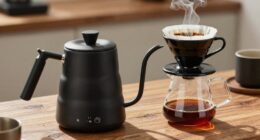

To brew better with tap water, start by testing its mineral content and pH level using simple kits or digital meters. Adjust mineralization with mineral drops or filtered water to enhance flavor and extraction. Correct the pH using food-grade pH adjusters for a balanced brew. Small tweaks make a big difference, so experimenting with these adjustments can open up richer, more nuanced coffee. Keep exploring to discover even more ways to perfect your water for ideal taste.
Key Takeaways
- Test your tap water’s mineral content and pH using simple kits or digital meters.
- Adjust mineral levels with mineral drops or filtered water to enhance flavor and extraction.
- Balance pH with food-grade pH adjusters or specialized water treatments for optimal brewing.
- Small modifications in mineralization or pH can significantly improve coffee taste and aroma.
- Properly optimized tap water ensures better extraction, reduces bitterness, and elevates overall coffee quality.
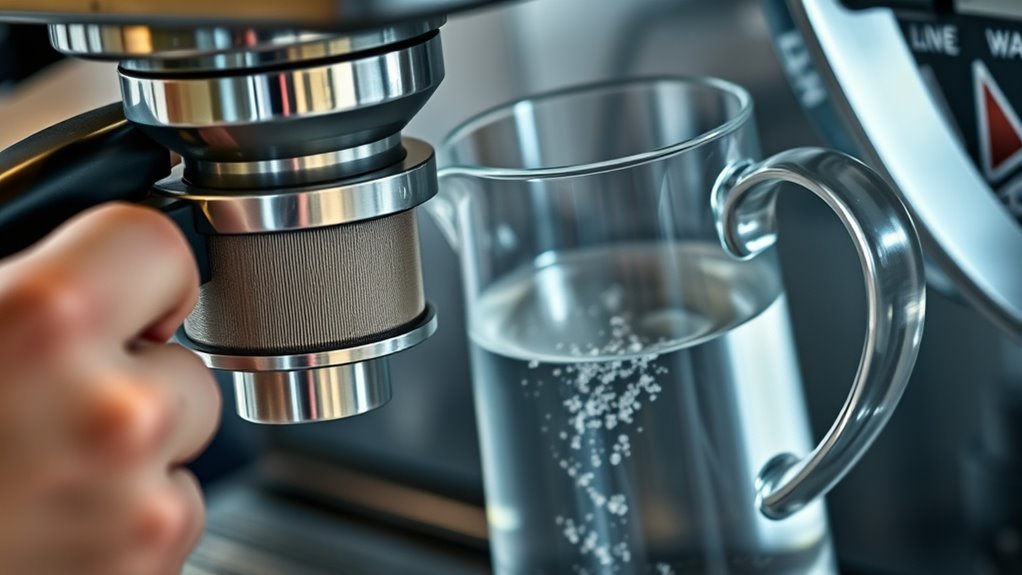
While many coffee enthusiasts focus on selecting the perfect beans or mastering brewing techniques, they often overlook the importance of water quality. Yet, water is the foundation of a great cup, and its mineral content can dramatically influence flavor. Water mineralization refers to the levels of minerals like calcium, magnesium, and sodium dissolved in your tap water. These minerals aren’t just background details; they actively shape the taste, mouthfeel, and overall extraction process. Too much mineral content can lead to a bitter or overly mineralized flavor, while too little can result in flat, dull coffee. Finding the right balance means understanding your water’s mineralization and adjusting accordingly. Additionally, storage in airtight containers can help prevent contamination and preserve water quality before brewing.
Water mineralization shapes flavor, mouthfeel, and extraction—balance minerals for the perfect cup.
pH balancing is equally crucial when it comes to maximizing water for brewing. The pH level indicates how acidic or alkaline your water is, with pure water sitting around a neutral 7. However, many tap waters tend to be slightly acidic or alkaline, which can skew the extraction process. Coffee extraction relies on a precise pH range to reveal the complex flavors in your beans. If the water is too acidic or too alkaline, it can distort the taste, making your brew either too sharp or too flat. By measuring and adjusting the pH, you guarantee the water interacts efficiently with your coffee grounds, highlighting the nuanced flavors you’re aiming for.
Balancing water mineralization and pH doesn’t have to be complicated. You can start by testing your tap water with simple kits or digital meters. Once you know the mineral content and pH level, you can make small adjustments. For mineralization, using filtered water or adding mineral drops designed for brewing can help achieve the desired balance. For pH, adding food-grade pH adjusters or using specially formulated water treatments can bring your water to the ideal range. These tweaks are simple but impactful, guaranteeing your water complements your coffee beans instead of overpowering them.
Paying attention to water quality isn’t just about making good coffee; it’s about opening its full potential. Proper mineralization and pH balancing help extract the best flavors, reduce unwanted bitterness, and create a more balanced, consistent cup. Instead of relying solely on premium beans or fancy equipment, give your water the attention it deserves. Small adjustments can lead to a noticeable difference in taste and aroma. So, next time you brew, remember: great coffee begins with great water. It’s a simple step that elevates your brewing game without extra expense or effort, guaranteeing that every cup is as flavorful and satisfying as possible.
Frequently Asked Questions
How Does Water Temperature Affect Brewing Quality?
Water temperature directly impacts your brewing quality by influencing extraction. If your water’s too hot, it can over-extract, leading to bitterness, while too cold water under-extracts, resulting in weak flavors. Maintaining the right water temperature guarantees consistent brewing, giving you better control over flavor and strength. Adjusting your water temperature helps you achieve brewing consistency, so your coffee always tastes just how you like it.
Can Mineral Content Improve or Harm My Coffee Flavor?
You’re right to wonder if mineral content can make or break your brew. The truth is, a good mineral balance can enhance flavor, making your coffee richer and more complex. Too many minerals, however, can harm the taste, causing bitterness or dullness. Think of it as seasoning—balance is key. Adjusting mineral levels thoughtfully guarantees flavor enhancement without tipping the scale into harm, giving you a perfect cup every time.
What Are Common Signs of Water Quality Issues?
You’ll notice water quality issues if your coffee tastes flat, sour, or bitter. Hard water with high mineral content can cause buildup and affect flavor, while pH imbalance may lead to off-tastes or inconsistent extraction. If your water feels overly mineralized or has a strange odor, those are signs of water hardness or contamination. Addressing these issues improves your brew’s taste and prevents equipment problems.
How Often Should I Test My Tap Water for Brewing?
You should test your tap water at least once every six months for brewing. Regular water testing helps you monitor pH balance and detect potential contaminants. If you notice changes in taste, smell, or clarity, test more frequently. Maintaining proper pH balance is essential for maximum extraction and flavor. Investing in a reliable water testing kit ensures your brewing water stays consistent, improving your coffee or beer quality every time.
Are Water Filters Necessary for Optimal Coffee Extraction?
Think of your coffee as a delicate dance, where water is the lead. Water filters act like a choreographer, ensuring water pH and hardness stay balanced for smooth moves. Without them, minerals can clash, dulling flavors. Filters help remove excess minerals and adjust pH, giving you a cleaner, more consistent brew. So yes, investing in a water filter can elevate your coffee, unleashing richer taste and better extraction.
Conclusion
By making simple adjustments to your tap water, you can dramatically improve your coffee or tea’s flavor. Did you know that water quality affects up to 98% of your brew? That’s right—using better water can turn an ordinary cup into something extraordinary. So next time you brew, take a moment to tune your tap water. Small changes make a big difference, and your taste buds will thank you for it. Cheers to better brewing!