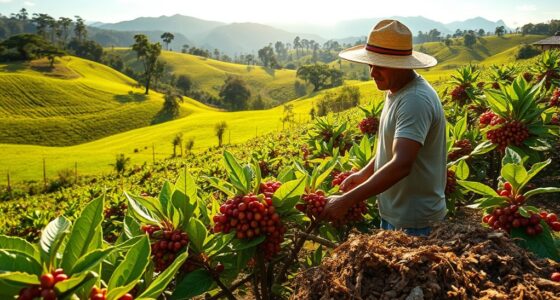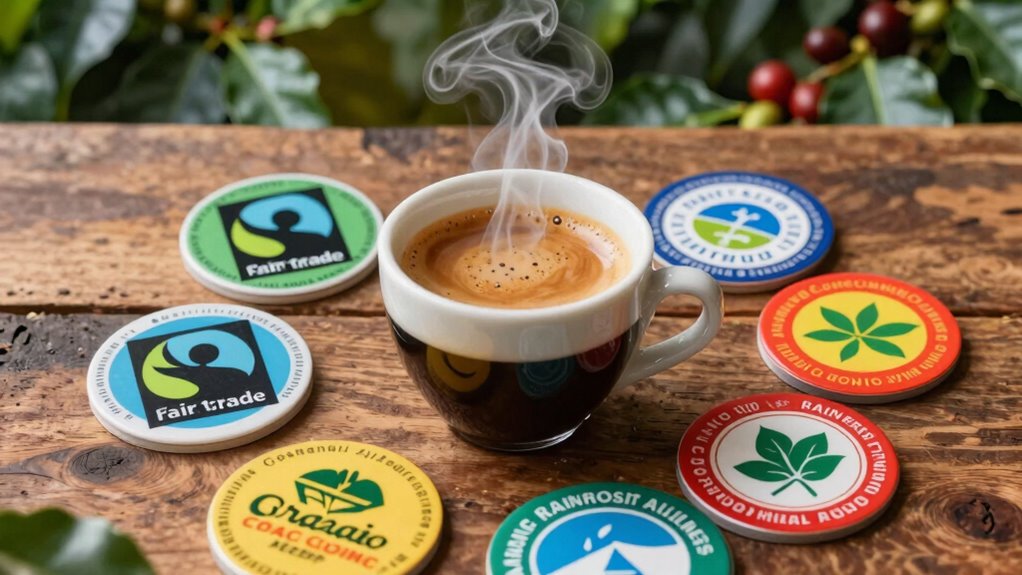

Combining multiple coffee certifications strengthens your confidence in a product’s quality, sustainability, and ethics. Each certification highlights different aspects, like eco-friendly practices or flavor standards, creating a more complete story about the coffee’s origin. This layered approach reduces risks of subpar products and makes tracing and trusting easier. Plus, it supports responsible farming and fair labor. If you want to discover how these collaborations enhance your coffee experience even more, keep exploring!

Get coffee and tea gear delivered free with Prime
- Fast, free delivery on millions of items
- Prime Video, Amazon Music and more included
- Member-only deals all year
Key Takeaways
- Combining certifications offers a comprehensive assurance of quality, sustainability, and ethical practices.
- Multiple certifications highlight different strengths, building stronger consumer trust and transparency.
- Together, they promote responsible land use, biodiversity, and eco-friendly farming practices.
- Layered certifications streamline procurement by covering ethical labor, environmental impact, and quality standards.
- A combined certification approach creates a compelling story of integrity, enhancing brand reputation and consumer loyalty.
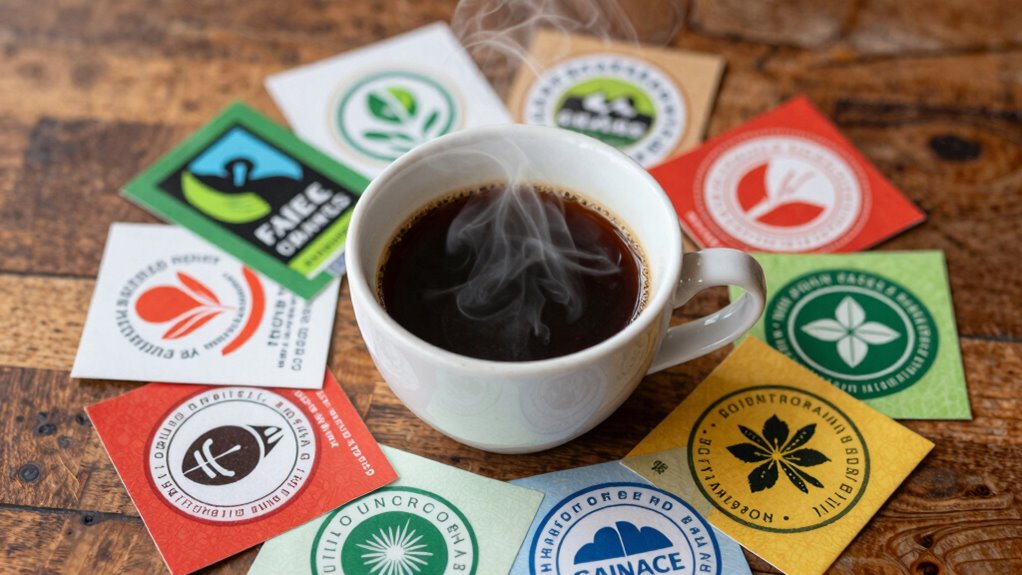
Certifications in the coffee industry often work best when combined, creating a more all-encompassing assurance of quality, sustainability, and ethical practices. When you look beyond a single certification, you realize that each one brings a unique focus, but together, they form a holistic guarantee that benefits everyone involved—from farmers to consumers. For example, sustainable farming certifications such as Rainforest Alliance or Fair Trade emphasize eco-friendly practices, ensuring that farmers use responsible land management, conserve water, and protect biodiversity. These certifications show your commitment to environmental stewardship, but they also signal that the coffee was produced with respect for the farmers’ well-being and community development.
Pairing these with quality assurance certifications like Organic or Specialty Coffee Association (SCA) standards helps establish a higher level of trust in the final product. While sustainable farming certifications prioritize responsible practices on the farm, quality assurance focuses on consistency, flavor, and freshness. When combined, they assure you that the coffee not only supports eco-friendly methods but also meets rigorous standards for taste and freshness. This layered approach reduces the risk of receiving subpar products and enhances the overall coffee experience.
Combining organic and SCA standards ensures eco-friendly farming with consistent, high-quality, fresh coffee for a better experience.
You’ll find that these certifications reinforce one another, creating a stronger narrative around the coffee’s origin. For instance, a farm that is certified sustainable is often more transparent about their processes, making it easier for buyers and consumers to trace the journey from farm to cup. This transparency builds confidence that the product aligns with your values of environmental responsibility and high-quality standards. As a result, you’re more likely to support brands that prioritize both sustainability and exceptional quality, fostering a positive cycle of demand for responsibly produced, great-tasting coffee. Additionally, understanding how certifications work together can help you make more informed choices that align with your values. Incorporating standardized practices ensures consistency and trustworthiness in the supply chain, making it easier for consumers to identify reputable sources. Recognizing the importance of biodiversity in coffee cultivation further emphasizes the need for combined standards that promote diverse, healthy ecosystems.
The synergy of working with multiple certifications also simplifies the procurement process for roasters and retailers. Instead of juggling different standards, they can rely on certifications that together cover all critical aspects—ethical labor practices, environmental impact, and product quality. This comprehensive approach can also promote long-term sustainability by encouraging continuous improvement and adherence to evolving best practices. For you, this means easier access to trustworthy products that meet your ethical and taste expectations. It streamlines your purchasing decisions, ensuring that every cup you enjoy is a conscious choice.
In the end, combining certifications isn’t just about ticking boxes; it’s about creating a well-rounded approach that benefits the environment, supports fair labor, and guarantees top-tier flavor. When these standards work together, they tell a compelling story of integrity and excellence—one that resonates with you as a consumer seeking meaningful, quality coffee in every sip. Understanding how certifications work together can help you appreciate the comprehensive efforts behind your coffee and make more aligned choices.
As an affiliate, we earn on qualifying purchases.
Frequently Asked Questions
How Do Certifications Impact Coffee Pricing and Consumer Perception?
Certifications like sustainability and price transparency directly influence coffee pricing and how consumers perceive it. When you see these certifications, you understand the coffee meets strict standards, which justifies higher prices. They also boost your trust, knowing your purchase supports ethical practices and environmental care. Certification sustainability reassures you that your coffee is responsibly sourced, while price transparency helps you see exactly what you’re paying for, making your choice more informed and confident.
Can Certifications Guarantee the Best Quality Coffee?
Like a puzzle with missing pieces, certifications alone can’t guarantee top-quality coffee. While they provide important quality assurance and signal certain standards, certification overlap can create gaps or redundancies. You should view certifications as helpful guides, not guarantees. The best coffee often results when multiple certifications work together, giving you a more reliable sense of quality, but nothing can replace direct taste testing and trusted sources.
Are There Any Certifications Specifically for Organic or Sustainable Practices?
Yes, there are certifications specifically for organic and sustainable practices, like USDA Organic and Rainforest Alliance. You’ll notice some certification overlap, but each has its focus. The certification hierarchy helps you understand their importance—organic certifications emphasize chemical-free farming, while sustainability ones focus on environmental and social impacts. When combined, these certifications give you a clearer picture of a coffee’s overall quality and ethical standards.
How Do Certifications Influence Farmers’ Income and Community Development?
You see that certifications boost farmers’ income through better market access and premium prices, fostering farmer empowerment. While certification costs can be a hurdle initially, they often lead to improved practices and quality, which benefits communities long-term. By adopting certifications, you help guarantee sustainable farming, support community development, and create a more resilient coffee industry, ultimately uplifting farmers and their neighborhoods.
What Challenges Exist in Obtaining Multiple Certifications?
You face the subtle challenge of certification complexity, which can make the process seem overwhelming, like maneuvering a maze. Balancing multiple certifications often requires significant effort and resources, making market differentiation a delicate dance. This layered approach can strain your operations and finances, yet it also opens doors to diverse markets. Embracing this complexity with strategic planning allows you to stand out and reap the benefits of varied recognition.
Conclusion
Think of coffee certifications as a symphony, each note representing a different standard. Alone, they create a simple melody; together, they compose a rich, harmonious masterpiece. By uniting these certifications, you’re not just ensuring quality—you’re orchestrating trust, sustainability, and excellence. When you embrace their collective power, you’re planting seeds for a future where every cup tells a story of integrity and care. Together, these certifications turn your coffee journey into a lasting legacy.
Fall Picks
fall essentials
As an affiliate, we earn on qualifying purchases.