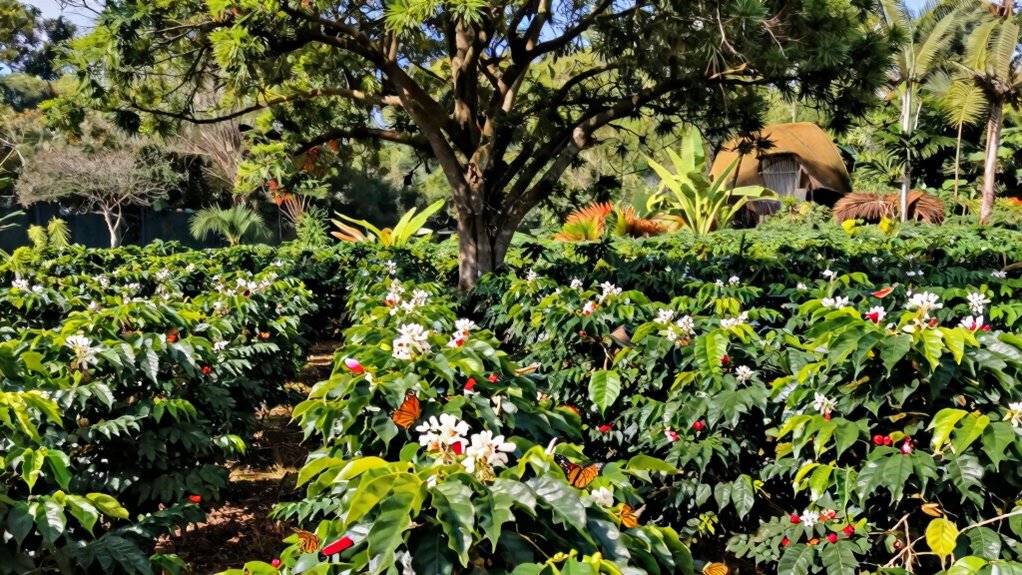

Biodiversity corridors on coffee farms are more important now because they help you connect fragmented habitats, allowing wildlife to move freely and thrive. They support natural pest control by giving predators access to pests, reducing your need for chemicals. Corridors also boost ecological balance, climate resilience, and overall farm health. By maintaining diverse ecosystems, you can protect wildlife, improve crop yields, and ensure your farm’s long-term sustainability—exploring further reveals how these benefits work together.

Get coffee and tea gear delivered free with Prime
- Fast, free delivery on millions of items
- Prime Video, Amazon Music and more included
- Member-only deals all year
Key Takeaways
- Biodiversity corridors reconnect fragmented habitats, ensuring wildlife movement and genetic diversity amid increasing land-use pressures.
- They support ecological balance, helping ecosystems recover and adapt to climate change impacts on coffee farms.
- Corridors enable natural pest control by allowing beneficial predators like birds and insects to access crops.
- They enhance farm resilience by providing refuges during droughts, pests, and environmental disturbances.
- Promoting biodiversity corridors contributes to sustainable coffee production and overall environmental health.
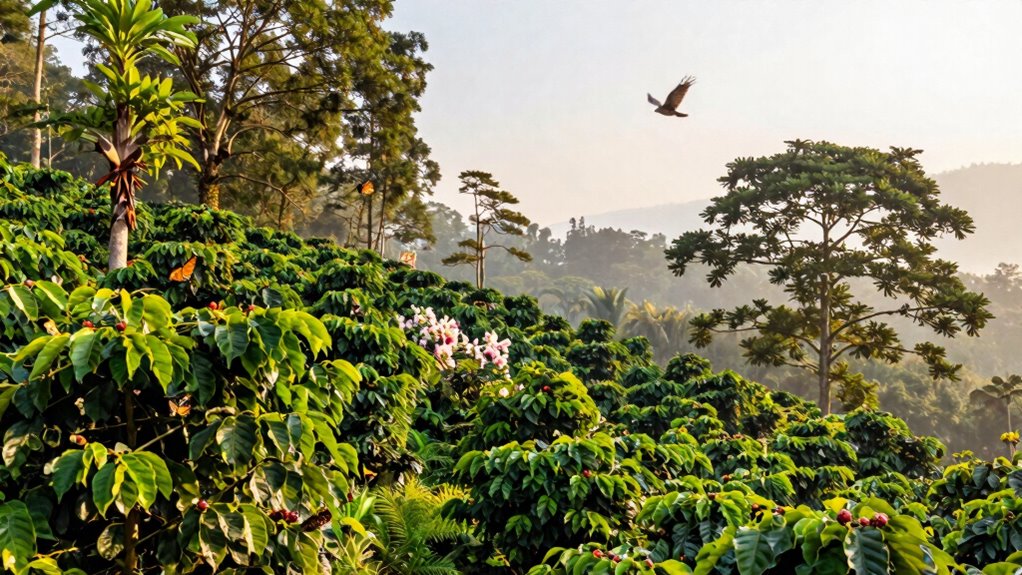
Biodiversity corridors are essential features on coffee farms that help connect fragmented habitats and promote ecological balance. These corridors create safe pathways for wildlife migration, allowing animals to move freely between different parts of their habitat. When animals can migrate safely, it benefits the entire ecosystem, ensuring species survival and maintaining healthy populations. You might notice birds, insects, or small mammals using these corridors as routes to find food, mates, or new territories. This movement is fundamental for genetic diversity and resilience of local wildlife populations, especially as habitat fragmentation continues to threaten many species. Additionally, preserving these corridors supports habitat connectivity, which is vital for maintaining diverse and resilient ecosystems.
Beyond supporting wildlife migration, biodiversity corridors also play a crucial role in natural pest control. When predators such as birds, bats, or beneficial insects can access different areas of your farm more easily, they help keep pest populations in check without relying heavily on chemical pesticides. For example, birds that nest in these corridors can hunt pests like coffee bollworms or aphids, reducing the need for intervention and lowering chemical use. This natural pest management keeps your coffee plants healthier and reduces the environmental impact of farming. Maintaining intact ecosystems through corridors encourages a balanced food chain, where pests are naturally regulated by their predators, leading to more sustainable coffee production. The presence of these ecological connections also enhances biodiversity on your farm, contributing to overall environmental health. Integrating biodiversity corridors into your farm management can also help mitigate the effects of climate change by providing refuges for species facing changing conditions.
Biodiversity corridors enable natural pest control by allowing predators like birds and beneficial insects to access farm areas.
Implementing biodiversity corridors on your farm isn’t just about protecting wildlife—it’s about creating a resilient agricultural ecosystem. When you preserve natural habitats and connect them via corridors, you foster a self-sustaining environment that can adapt to changing conditions. During droughts or pest outbreaks, these corridors provide refuge and resources for animals, helping them survive and continue their ecological roles. This resilience is supported by ecological processes that are maintained through habitat connectivity, ensuring long-term sustainability. This resilience translates into healthier coffee plants, better yields, and a more sustainable farm overall. You’re actively contributing to the conservation of local biodiversity while also benefiting from the ecological services that nature offers.
biodiversity corridor kits for coffee farms
As an affiliate, we earn on qualifying purchases.
As an affiliate, we earn on qualifying purchases.
Frequently Asked Questions
How Do Biodiversity Corridors Affect Coffee Crop Yields Long-Term?
Biodiversity corridors boost your coffee crop yields long-term by strengthening ecosystem resilience and enhancing pest control. These corridors promote diverse habitats, attracting beneficial insects that naturally manage pests. As a result, your farm becomes more resilient to environmental stresses, reducing crop loss. Over time, this sustainable approach leads to healthier plants, fewer chemical inputs, and consistent yields, ensuring your coffee farm remains productive and environmentally balanced.
Can Small-Scale Farmers Implement Biodiversity Corridors Effectively?
Implementing biodiversity corridors is like planting seeds for future success—you can do it effectively. As a small-scale farmer, you can start by native plantings to create habitats and attract beneficial wildlife. Regular wildlife monitoring helps you understand how these corridors support local ecosystems. With careful planning and commitment, even small farms can enhance biodiversity, boost resilience, and contribute to sustainable coffee production.
What Are the Costs Associated With Establishing These Corridors?
You’ll face several costs when establishing biodiversity corridors, including land preparation, planting native species, and ongoing maintenance. A thorough cost assessment helps you estimate expenses, but funding challenges may arise, making it hard to secure consistent support. You might need to explore diverse funding sources, like grants or community initiatives, to cover these costs. Being aware of these financial factors guarantees you plan effectively and sustain your corridor over time.
How Do Corridors Impact Local Community Livelihoods?
You see that corridors positively impact local livelihoods by fostering community engagement, which encourages residents to participate in conservation efforts. These corridors influence land use by promoting sustainable practices, creating opportunities for eco-tourism, and preserving natural resources. As a result, communities can diversify income sources, strengthen social ties, and enjoy improved environmental health. This interconnected approach benefits both the community and the surrounding ecosystem, ensuring long-term resilience and prosperity.
Are Biodiversity Corridors Suitable for All Coffee-Growing Regions?
Biodiversity corridors aren’t suitable for every coffee-growing region. You need to assess local wildlife habitat and ecosystem services first. If the landscape supports diverse species and benefits from natural pollination or pest control, corridors can boost sustainability. However, in areas with limited natural habitats or high land-use conflicts, implementing corridors might be challenging or less effective. Always tailor conservation strategies to your region’s unique ecological and social conditions.
Conclusion
By creating biodiversity corridors on your coffee farm, you play an essential role in preserving ecosystems and supporting wildlife. These natural passages help maintain healthy soils, pollinate crops, and combat pests naturally. Remember, a chain is only as strong as its weakest link — so nurturing these corridors strengthens the entire farm. Embrace this sustainable practice, knowing that small actions today can lead to a healthier, more resilient environment tomorrow.
Halloween Picks
halloween
As an affiliate, we earn on qualifying purchases.