

Your coffee grinder’s burr shape directly impacts grind consistency and, ultimately, flavor. Well-designed burrs produce uniform grounds, ensuring even extraction and balanced flavors. They also generate less heat, preserving aromatic compounds. The shape influences how grounds flow into your brewing device and controls fines and chunks, which affect bitterness and sourness. By choosing the right burr geometry, you can enhance flavor clarity and achieve better extraction—you’re about to discover how these tiny differences matter even more in your cup.

Get coffee and tea gear delivered free with Prime
- Fast, free delivery on millions of items
- Prime Video, Amazon Music and more included
- Member-only deals all year
Key Takeaways
- Burr shape influences grind uniformity, affecting water extraction and the resulting flavor clarity.
- Proper geometry reduces heat buildup during grinding, preserving aromatic compounds and flavor integrity.
- Burr design controls fines and chunks, optimizing extraction and balancing bitterness and sourness.
- Consistent grind flow from shaped burrs ensures repeatable brewing results and nuanced flavor profiles.
- The shape impacts how evenly coffee grounds are processed, directly shaping the cup’s overall flavor perception.
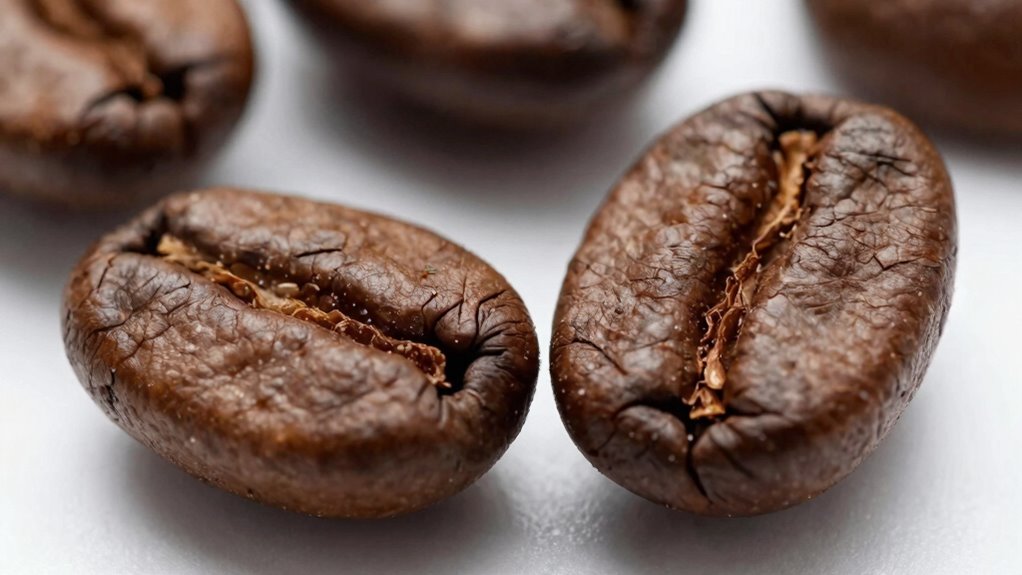
The shape and design of a coffee burr considerably influence how you perceive its flavor. When you grind your coffee beans, the burr’s geometry determines the size and uniformity of the coffee grounds, which directly impacts coffee extraction. Consistent particle size ensures that water interacts evenly with the grounds, leading to a balanced extraction that highlights the coffee’s nuanced flavors. If the burr shape produces uneven grounds, some particles will extract more quickly than others, resulting in a muddled or overly bitter cup. Conversely, a well-designed burr maintains uniformity, allowing you to enjoy a more predictable and refined flavor profile.
The way a burr is shaped affects how it crushes the beans during grinding. For instance, conical burrs tend to produce a more consistent grind size with less heat buildup, preserving delicate aromatic compounds. Flat burrs, on the other hand, often offer tighter control over particle size distribution, which is essential for achieving flavor consistency. When your grind is uniform, you don’t have to worry about over- or under-extraction, making your brewing process more reliable and your coffee more flavorful. The burr’s shape also influences how evenly the beans are processed, affecting how the grounds fall into your filter or brewing device. This consistent flow of grounds helps you maintain the same flavor profile from cup to cup, especially if you’re aiming for precision in specialty coffee brewing. Additionally, the burr geometry impacts how heat is generated during grinding, which can affect the preservation of aromatic compounds and overall flavor quality. A precise burr design can also reduce the amount of heat produced during grinding, helping to maintain the integrity of delicate flavors. Moreover, the grind consistency is crucial for achieving optimal extraction and flavor clarity.
Furthermore, the geometry of the burr affects the overall coffee extraction process. A more efficient design minimizes the amount of fines—small particles that can over-extract and cause bitterness—and large chunks that might under-extract, leaving sour or weak flavors. By controlling the grind size through its shape, the burr helps you fine-tune your brewing parameters to extract the perfect balance of flavors. This is especially important if you’re experimenting with different brewing methods or trying to replicate a specific flavor profile. The more consistent your grind size, the more control you have over how your coffee develops in the cup, leading to a more satisfying sensory experience. Understanding how burr shape influences grind uniformity can help you select the right equipment to enhance your brewing process.
coffee burr grinder with conical burrs
As an affiliate, we earn on qualifying purchases.
As an affiliate, we earn on qualifying purchases.
Frequently Asked Questions
How Does Burr Shape Influence Coffee Extraction Speed?
Your burr shape directly affects coffee extraction speed by influencing grind uniformity. A well-designed burr creates consistent grind sizes, which helps control the extraction rate. If the burr shape produces uneven grounds, extraction becomes inconsistent, leading to under- or over-extraction. By choosing the right burr shape, you guarantee a more uniform grind, allowing for a predictable extraction rate that enhances flavor and overall brew quality.
Are Certain Burr Geometries Better for Specific Coffee Beans?
Like a tailor-made suit, certain burr geometries suit specific beans perfectly. You’ll find that burr aesthetics and ergonomic design influence how well a grinder handles different coffee types. For delicate, nuanced beans, conical burrs preserve subtle flavors, while flat burrs excel with bold, hearty beans. Choosing the right shape enhances extraction and flavor, making your brew more tailored and satisfying.
Can Burr Shape Affect the Consistency of Grind Size?
Yes, burr shape can affect the consistency of grind size. Different burr shapes, like conical or flat, influence how evenly the beans are ground. A well-designed burr shape promotes better grind uniformity, ensuring each particle is similar in size. This consistency improves extraction, flavor, and overall brewing quality. So, choosing the right burr shape is essential for achieving a uniform grind, especially if you want a precise and consistent coffee experience.
Do Different Burr Shapes Impact the Aroma Release During Brewing?
Think of your coffee like a symphony—different burr shapes act as conductors, guiding aroma diffusion. You’ll notice that some burrs, like conical ones, release aroma more quickly, revealing delicate flavor nuances early. Others, such as flat burrs, offer a steadier aroma release, enhancing complexity. So, yes, the shape impacts aroma release during brewing, shaping the overall flavor perception and making each cup uniquely expressive.
How Does Burr Geometry Influence Cleaning and Maintenance?
Burr geometry greatly influences cleaning ease and maintenance frequency. If your burrs have complex shapes or tight crevices, you’ll find cleaning more challenging, needing more frequent maintenance to prevent buildup. Conversely, simpler, open designs make it easier to remove coffee grounds and oils, reducing cleaning time. Regularly maintaining your burrs guarantees they stay sharp and perform efficiently, ultimately extending their lifespan and improving your brewing experience.
Conclusion
So, next time you sip that seemingly perfect brew, remember—it’s not just the beans or grind. It’s the shape of the burr, subtly whispering its influence on flavor, turning your morning ritual into a geometric gamble. Ironically, while you focus on tasting, it’s the unassuming curves beneath the surface that truly shape your experience. Who knew that a simple shape could wield such quiet power over every sip you take?
Columbus Day / Indigenous Peoples' Day Picks
long weekend sales
As an affiliate, we earn on qualifying purchases.