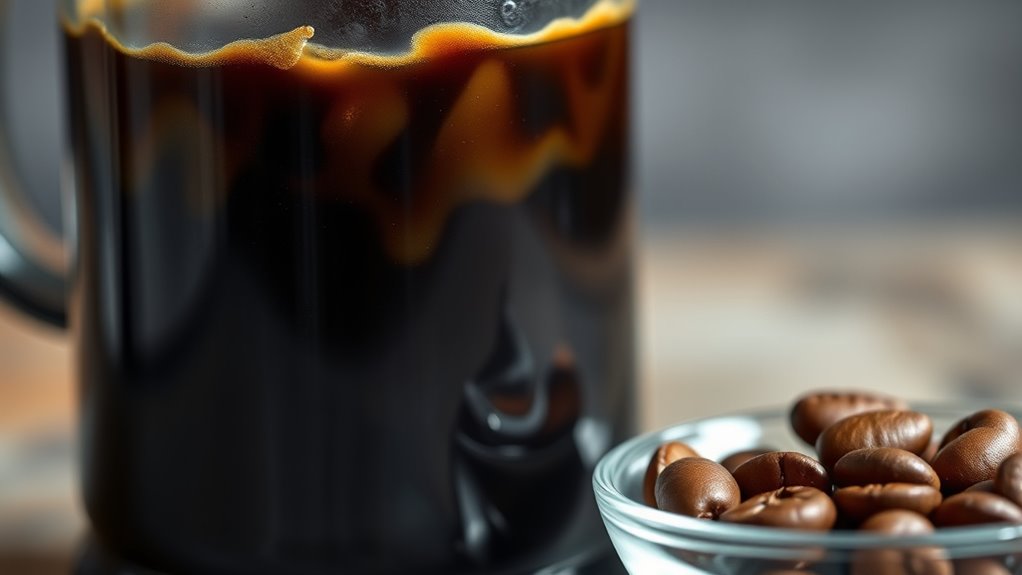

Using a French press means more cafestol, a compound found in coffee oils, stays in your brew because it isn’t filtered out. Cafestol can raise your LDL cholesterol by stimulating your liver to produce more. If you’re concerned about your cholesterol levels, choosing filtered brewing methods or limiting unfiltered coffee might help. To find out more about how your coffee choices impact health, keep exploring the details behind cafestol and your diet.
Key Takeaways
- French press coffee retains more oils, including cafestol, because it doesn’t use paper filters.
- Cafestol can raise LDL (“bad”) cholesterol levels by increasing liver production.
- Regular consumption of unfiltered French press coffee may impact cholesterol, especially for at-risk individuals.
- Using filtered brewing methods or decaffeinated options can reduce cafestol intake.
- Balancing coffee choice with a heart-healthy diet helps mitigate potential cholesterol increases.
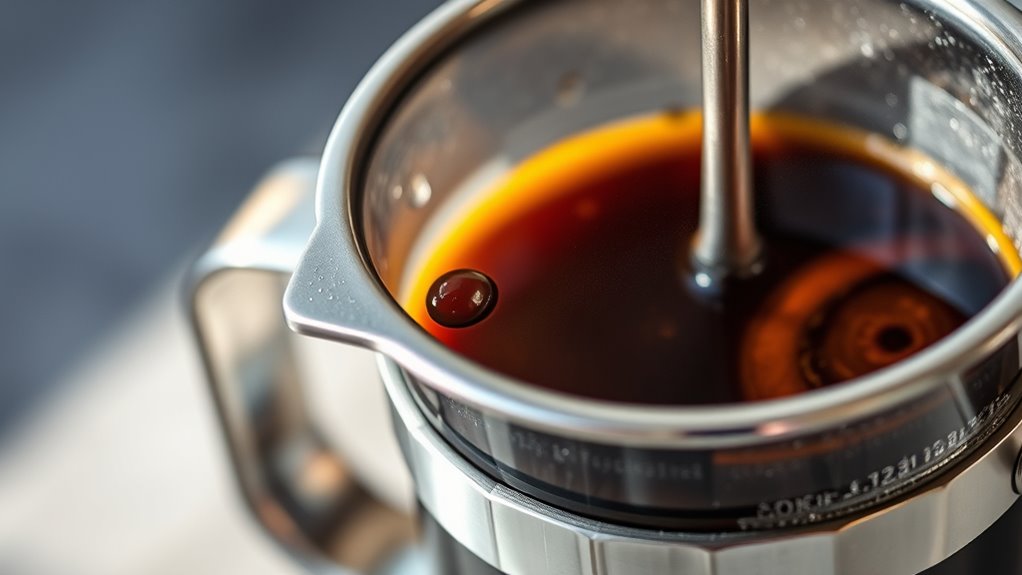
Many people enjoy their morning coffee brewed with a French press, but there’s often concern about how it might affect cholesterol levels. Coffee brewing methods can influence the amount of certain compounds in your cup, especially those like cafestol and kahweol. These substances, naturally occurring in coffee oils, can have a significant dietary impact, particularly on cholesterol. When you use a French press, you’re fundamentally allowing more of these oily compounds to end up in your beverage because the process involves steeping coffee grounds directly in hot water without paper filters that can trap oils. As a result, the amount of cafestol in your brewed coffee tends to be higher compared to methods like drip brewing or using paper filters.
Understanding the dietary impact of coffee brewing is vital if you’re monitoring your cholesterol levels. Cafestol has been shown to raise low-density lipoprotein (LDL) cholesterol, often called “bad” cholesterol, by increasing its production in your liver. This effect can be significant if you consume large quantities of unfiltered coffee regularly. The increased intake of cafestol from French press coffee might contribute to elevated cholesterol levels over time, especially if you have a family history of heart disease or other risk factors. While moderate consumption may not cause noticeable issues for most people, those with existing cholesterol concerns should be mindful of how their brewing choices influence their diet.
If you’re worried about the dietary impact of cafestol, there are ways to mitigate its effects while still enjoying your French press coffee. One option is to limit your intake or switch to brewing methods that use paper filters, which trap much of the oily compounds. Alternatively, you can opt for coffee blends specifically low in cafestol, or use decaffeinated options, which tend to have less of these compounds. It’s also beneficial to complement your coffee routine with a heart-healthy diet rich in fiber, fruits, and vegetables, which can help counteract any potential increases in cholesterol caused by coffee oils.
Frequently Asked Questions
Does the Type of Coffee Bean Affect Cafestol Levels?
Yes, the type of coffee bean variety affects cafestol levels. Arabica beans generally contain less cafestol than Robusta beans. Additionally, roasting levels influence cafestol content; darker roasts tend to have lower cafestol because the compound breaks down during roasting. So, if you’re concerned about cafestol, choose Arabica beans and opt for darker roasts to reduce your intake.
Can Brewing Methods Reduce Cafestol Content in Coffee?
Yes, brewing methods like using filter paper or making cold brew can reduce cafestol content. When you use filter paper, it traps the oils that contain cafestol, lowering its levels in your coffee. Cold brew also has less cafestol because the cold extraction process doesn’t dissolve as many oils compared to hot brewing methods. So, if you’re concerned about cafestol, try these brewing techniques for a healthier cup.
Is Decaffeinated French Press Coffee Safer for Cholesterol Levels?
Think of decaffeination as a gentle gardener pruning a lush tree. It reduces cafestol, the harmful compound, making decaf French press coffee safer for your cholesterol. The decaffeination process helps preserve coffee antioxidants, which support your health. So, choosing decaf can lower your risk while still enjoying rich flavors. It’s a smarter sip that balances pleasure with well-being, turning your coffee routine into a healthful ritual.
How Does Cafestol Impact LDL Cholesterol Over Time?
Cafestol can raise your LDL cholesterol levels over time, impacting your cholesterol management efforts. When you regularly consume French press coffee, especially unfiltered types, cafestol enters your bloodstream and may increase your risk of heart disease. To protect your health, consider moderating your coffee consumption or choosing filtered options. Being mindful of cafestol’s effects helps you maintain better cholesterol levels and overall cardiovascular wellness.
Are There Alternative Brewing Options With Less Cafestol?
Your quest for healthier coffee options is vital, as cafestol can markedly impact your cholesterol. You can try alternative brewing methods like paper filters or drip coffee, which trap cafestol more effectively. These filter options drastically reduce cafestol levels, almost like a superhero sweeping away health risks. Switching to these methods helps you enjoy coffee without worrying about cholesterol spikes, making your mornings both delicious and heart-smart.
Conclusion
So, when you brew your coffee with a French press, remember it’s like opening Pandora’s box of cafestol. Yes, it can raise your cholesterol, but moderation is key. Think of it as walking a tightrope—balance keeps you steady. Enjoy your coffee, but don’t let cafestol’s charm deceive you into neglecting your health. After all, a little knowledge is the compass that guides us safely through the caffeinated sea of choices.