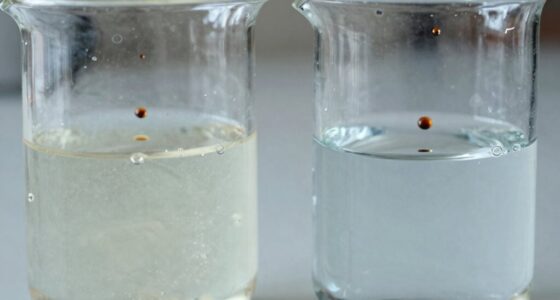
The mineral content in your water, including hardness and alkalinity, greatly affects your coffee’s flavor. Hard water, high in calcium and magnesium, can over-extract beans, making your brew bitter, while soft water might result in weak, dull-tasting coffee. Alkalinity influences acidity and balance, shaping overall taste and clarity. Adjusting these levels guarantees smooth extraction and vibrant flavors. Keep exploring to discover how fine-tuning water chemistry can elevate your coffee experience.

Get coffee and tea gear delivered free with Prime
- Fast, free delivery on millions of items
- Prime Video, Amazon Music and more included
- Member-only deals all year
Key Takeaways
- Water hardness, caused by calcium and magnesium, influences coffee extraction and can enhance or hinder flavor clarity.
- High alkalinity can neutralize acids in coffee, affecting brightness and overall taste profile.
- Soft water may result in weak, flat coffee due to under-extraction of flavors.
- Proper mineral balance in water ensures optimal flavor extraction and prevents bitterness or dullness.
- Adjusting mineral levels and alkalinity helps tailor water chemistry for consistent, high-quality coffee.
Have you ever wondered how the quality of water impacts your coffee’s flavor? It’s more than just the amount of water you use; the quality of that water makes a significant difference. When brewing your favorite cup, water filtration plays a vital role. Filtering your water removes impurities, such as chlorine and sediments, that can introduce off-flavors and obscure the true taste of your coffee. Using well-filtered water ensures that nothing interferes with the delicate balance of flavors and aromas you aim to achieve. It’s a simple step that can elevate your brewing process, making your coffee taste cleaner, brighter, and more nuanced.
Beyond filtration, the mineral content of your water heavily influences the final flavor. Minerals like calcium and magnesium are essential because they help extract flavors from coffee grounds, enhancing body and mouthfeel. They also contribute to the balance of acidity and bitterness, giving your coffee a well-rounded profile. However, too many minerals, especially if the water is hard, can lead to over-extraction, resulting in bitter or flat-tasting coffee. Conversely, water that’s too soft, with low mineral content, might produce a weak or underwhelming brew, lacking depth and complexity. Striking the right balance in mineral content is key; it’s about finding water that’s neither too hard nor too soft, but just right to bring out the best in your coffee beans.
The concept of water filtration isn’t just about removing unwanted substances but also about adjusting mineral content to ideal levels. There are specialized filters and water treatment systems designed specifically for coffee enthusiasts. These systems can add or reduce minerals, tailoring water to suit different beans and brewing methods. By controlling mineral content through filtration, you can consistently produce coffee with the ideal extraction and flavor profile. This precision allows you to experiment and refine your brewing process, knowing that your water chemistry supports the specific characteristics you desire in your coffee.
As an affiliate, we earn on qualifying purchases.
Frequently Asked Questions
How Does Water Temperature Affect Coffee Extraction and Flavor?
You’ll notice that water temperature critically impacts coffee extraction and flavor. With proper temperature control, you guarantee ideal flavor extraction, revealing the coffee’s nuanced notes. Too hot, and you risk over-extraction, making your coffee bitter; too cold, and under-extraction results in a weak, flat taste. Maintaining the right temperature helps balance these factors, allowing you to enjoy a richer, more flavorful cup every time.
What Are the Best Water Filtration Methods for Optimal Coffee Taste?
Want to unseal the purest coffee flavor? Start with the right filtration techniques. You should consider activated charcoal filters for removing chlorine and organic compounds, or reverse osmosis systems for unmatched water purity. These methods eliminate impurities that can distort taste and aroma. By choosing the best filtration technique, you’re ensuring every cup delivers the clean, crisp flavor you crave—making every sip an unforgettable experience.
Can Mineral Buildup in Coffee Machines Alter Water Quality Over Time?
Mineral deposits can profoundly alter water quality over time, affecting your coffee’s taste and machine performance. As mineral buildup accumulates, it can clog components and reduce efficiency. Regular machine maintenance, including descaling and cleaning, helps prevent mineral deposits from forming. By staying on top of maintenance, you guarantee your coffee machine continues to produce high-quality water, preserving flavor and extending its lifespan.
How Does Water Ph Influence Coffee Acidity and Balance?
Perfect pH plays a pivotal part in producing a pleasing flavor profile. When your water’s pH level is too high or low, it can distort acidity and balance, making your coffee either overly sour or flat. You sense this subtle shift in flavor, so aim for a pH around 6.5 to 7.5. This balance guarantees your brew’s brightness and richness harmonize, creating a delightful and delicious cup every time.
Are There Specific Water Profiles Recommended for Different Coffee Brewing Methods?
For different coffee brewing methods, you should tailor water composition to optimize flavor and brewing consistency. For pour-over, use water with balanced mineral content to highlight delicate notes. Espresso benefits from water with specific hardness levels to enhance extraction. French press works well with slightly higher alkalinity to improve body. Adjusting water profiles guarantees consistent results and brings out the best in your coffee, no matter the brewing method.
Conclusion
Now that you know how hardness, alkalinity, and taste influence your coffee, you hold the secret to brewing perfection. Adjusting your water isn’t just a small tweak—it’s like wielding a magic wand that transforms every cup into a masterpiece. So, don’t settle for bland brews when you can discover the full potential of your coffee with the right water. Explore these tips, and let every sip be an explosion of flavor that blows your mind!
Halloween Picks
halloween
As an affiliate, we earn on qualifying purchases.