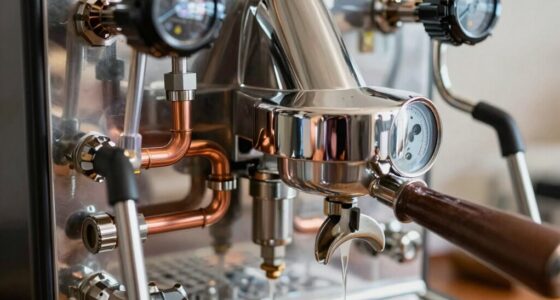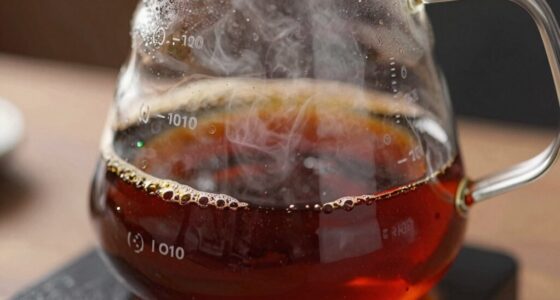

Pre-infusion, or blooming, improves extraction by releasing trapped carbon dioxide in your coffee grounds, which helps prevent flavor dullness and guarantees even water absorption. Using the right water temperature and grind size boosts gas release and promotes better flavor extraction. This process creates a more vibrant, balanced cup by enhancing aromatic oils and promoting thorough brewing. Keep exploring how controlling these factors can make your coffee taste even better.
Key Takeaways
- Blooming releases trapped carbon dioxide, enhancing flavor extraction and preventing dullness in the brewed coffee.
- Proper water temperature (195-205°F) optimizes gas release and aromatic oil activation during blooming.
- Medium grind size ensures even water absorption and effective gas escape, improving extraction quality.
- Blooming promotes better flavor clarity by releasing aromatic oils and reducing gas-related dullness.
- Combining correct temperature, grind size, and pour technique ensures thorough gas release and balanced extraction.
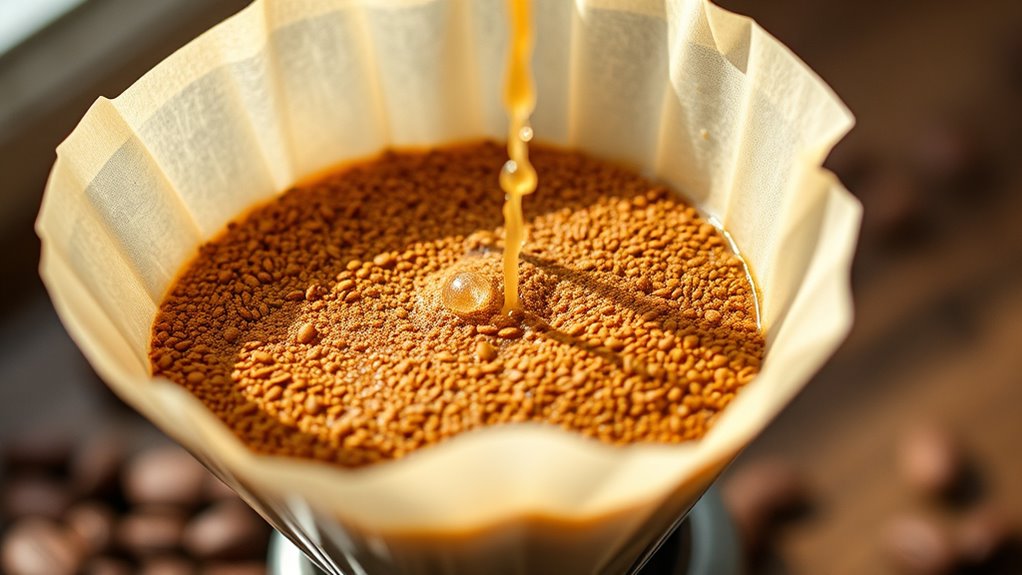
Before brewing your coffee, taking a moment to bloom the grounds can make a significant difference in flavor extraction. Blooming involves pouring a small amount of hot water over your coffee grind and letting it sit briefly before adding the rest of the water. This simple step helps release carbon dioxide trapped within the coffee, which, if left untouched, can hinder proper extraction and dull the final flavor. To get the most out of this process, pay attention to your water temperature. Ideally, you want water heated to about 195-205°F (90-96°C). Too hot, and you risk over-extracting bitter compounds; too cool, and you won’t fully activate the coffee’s aromatic oils. When you combine the right water temperature with a consistent coffee grind, you set the stage for essential blooming.
The coffee grind itself plays a vital role in this process. A medium grind, similar to sea salt, is generally perfect for most brewing methods, but adjusting the grind size can influence how well the bloom develops. A finer grind increases surface area, which can lead to more vigorous blooming, but it also risks over-extraction if not controlled. Conversely, a coarser grind may need a longer bloom time to achieve the same flavor release. When you pour water over your coffee, the grind’s size and texture determine how evenly the gases escape and how uniformly the grounds absorb water. This is why controlling the grind and water temperature together guarantees a thorough bloom, leading to better extraction overall.

Breville Barista Express Espresso Machine BES870XL, Brushed Stainless Steel
The Breville Barista Express delivers third wave specialty coffee at home using the 4 keys formula and is...
As an affiliate, we earn on qualifying purchases.
Frequently Asked Questions
How Long Should I Bloom Coffee for Optimal Results?
You should bloom coffee for about 30 to 45 seconds to get ideal results. Use freshly ground coffee to maximize flavor, as grind size affects how it blooms and extracts. If your coffee is very fresh, it may need a slightly longer bloom to release gases. Keep an eye on the bubbles; once they subside, it’s a good sign that bloom has completed, leading to better extraction and a richer cup.
Does Blooming Affect Espresso Versus Drip Brewing Differently?
Blooming is like waking up your coffee’s flavors, and it affects espresso and drip brewing differently. For espresso, blooming helps release gases, leading to better extraction quality and richer crema. With drip brewing, it allows flavors to unfurl more evenly, enhancing overall taste. You’ll notice that blooming improves extraction quality in both methods, but the impact is often more immediate and pronounced in espresso due to its pressure-based extraction process.
Can Blooming Be Skipped Without Impacting Flavor?
Yes, you can skip blooming, but it may diminish the benefits of pre-infusion, such as improved extraction and bloom consistency. Blooming helps release carbon dioxide and enhances flavor clarity, so skipping it might result in a less balanced and vibrant espresso. While it’s not mandatory, incorporating blooming ensures more consistent results and better flavor extraction, especially for those aiming for a premium espresso experience.
Is Blooming Necessary for All Types of Coffee Beans?
Blooming isn’t necessary for all coffee beans, but it can enhance extraction, especially if your beans are fresh or have a finer grind size. When beans are fresh, they release more gases, making blooming beneficial for even extraction. If your beans are older or coarser, skipping blooming might not impact flavor considerably. However, adjusting your grind size and considering bean freshness helps you achieve the best flavor regardless.
How Does Water Temperature Influence Blooming Effectiveness?
Water temperature plays a vital role in blooming efficiency. If the water is too hot, it can cause over-extraction, while cooler water may slow down the process, reducing effectiveness. Ideally, you should use water around 200°F (93°C) to optimize blooming. This temperature helps release gases from the coffee grounds evenly, enhancing flavor extraction and ensuring a more balanced, flavorful brew. Adjusting water temperature accordingly can greatly improve your blooming results.

CASABREWS 5418 PRO Espresso Machine 20 Bar, Upgraded Espresso Maker with Powerful Steam Milk Frother, Stainless Steel Coffee Machine with Fast Heating System for Cappuccino, Latte, Silver
Espresso Machine with Flashheat Technology: CASABREWS 5418 PRO espresso maker delivers professional-grade speed for enthusiasts. Its innovative heating...
As an affiliate, we earn on qualifying purchases.
Conclusion
So, next time you think pouring hot water is enough, remember that a simple bloom can actually do the heavy lifting. It’s funny how a tiny pre-infusion step might seem trivial, yet it’s the secret to a richer, more balanced brew. Ironically, it’s the patience for that brief wait that transforms your coffee from mediocre to memorable. So, don’t skip the bloom — sometimes, the smallest step makes the biggest difference.

Electactic Espresso Machine 20 Bar, Super Compact Espresso Maker Stainless Steel with Touch Screen, Professional Coffee Machine, Automatic Milk Frother for Cappuccino
𝐖𝐡𝐲 𝐂𝐡𝐨𝐨𝐬𝐞 𝐎𝐮𝐫 𝐄𝐬𝐩𝐫𝐞𝐬𝐬𝐨 𝐌𝐚𝐜𝐡𝐢𝐧𝐞? Our advanced Thermo Block Heating System ensures your machine is ready to brew...
As an affiliate, we earn on qualifying purchases.

ANYCOLD Espresso Machine 20 Bar, Compact Espresso Maker, Stainless Steel Expresso Coffee Machines with Steam Milk Frother & 34oz Removable Water Tank for Cappuccino, Latte, Home Office Use, Silver
Professional 20 Bar Pump: A 20-bar pressure system and 1450W motor deliver a stable 9-10 bar extraction pressure—the...
As an affiliate, we earn on qualifying purchases.