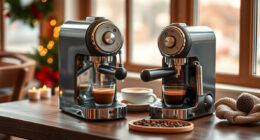
If your espresso shot pulls too quickly, your grind is likely too coarse, resulting in weak, watery coffee with little crema. Conversely, if it takes too long and the shot tastes bitter or harsh, your grind is too fine, causing over-extraction. You’ll also notice excessive resistance or difficulty due to improper grind size. Recognizing these signs helps you fine-tune your grinder for perfect extraction. Keep exploring to learn how small adjustments can improve your brewing results.

Get coffee and tea gear delivered free with Prime
- Fast, free delivery on millions of items
- Prime Video, Amazon Music and more included
- Member-only deals all year
Key Takeaways
- A shot that pulls too quickly with a pale, weak crema indicates a grind that’s too coarse.
- Excessively slow extraction with bitter flavors suggests the grind is too fine.
- Watch for flow rate: fast flow means coarse, slow flow means fine grind.
- Inconsistent results or difficulty tamping can signal improper grind fineness.
- Adjust grind settings gradually to achieve balanced extraction and optimal flavor.
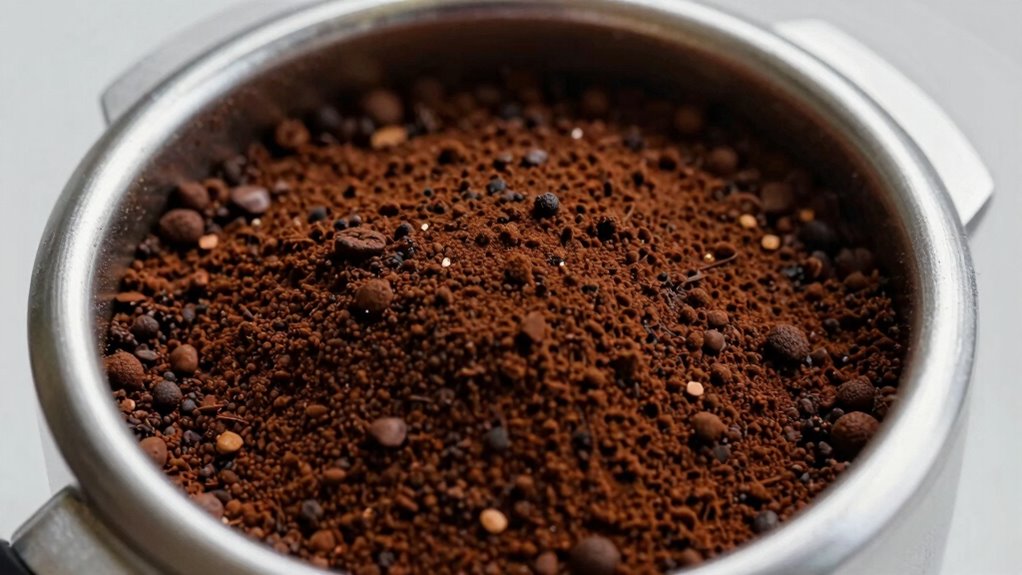
Choosing the right grind fineness is essential for brewing a perfect espresso. When your grind isn’t dialed in correctly, your shot can turn out underwhelming or overextracted, ruining the flavor and texture you’re aiming for. One of the biggest challenges is maintaining brewing consistency, which relies heavily on proper grinder calibration. If your grinder isn’t calibrated properly, it can produce inconsistent particle sizes that lead to uneven extraction. That’s why regular calibration is key—you want to make sure your grinder consistently produces the same grind size, so every shot is reliably delicious.
Proper grinder calibration ensures consistent grind size and perfect espresso extraction every time.
If your espresso shot pulls too quickly, it’s a clear sign your grind is too coarse. When the grind isn’t fine enough, water flows through the coffee bed too easily, resulting in a weak, watery shot that lacks body and richness. You might notice the espresso’s color is pale, and the crema is thin or disappears quickly. This indicates that the coffee particles aren’t fine enough to create enough resistance during extraction. To fix this, you should adjust your grinder to a finer setting, ensuring the particles are small enough to slow down water flow and extract more flavor from the coffee. Keep in mind, though, that over-tightening the grind can cause clogging or excessive pressure, so calibration adjustments should be made gradually.
On the other hand, if your espresso takes too long to extract, or if the shot drips out in a slow, thin stream, your grind is probably too fine. A grind that’s too fine creates too much resistance, causing the water to struggle to pass through the coffee bed. You might see over-extraction signs like a bitter taste, harshness, or a dark, almost burnt flavor. The crema might be dark and thick, but the overall balance will be off. To remedy this, dial the grinder a bit coarser—this allows water to flow more freely, reducing extraction time and improving flavor clarity. Again, calibration is crucial here; small adjustments make a big difference in achieving that perfect balance.
Lastly, keep an eye on your equipment and your technique. Consistent tamping pressure and ensuring your machine’s pressure and temperature are stable help achieve consistent brewing results. Regularly calibrating your grinder ensures that your grind size remains precise, preventing fluctuations that can throw off your shot. Additionally, considering the contrast ratio of your equipment can help you fine-tune the visual quality of your espresso, especially in different lighting conditions. This practice, combined with attentive observation of extraction signs, helps you fine-tune your process and consistently produce espresso that’s flavorful, balanced, and satisfying.
Frequently Asked Questions
How Does Grind Size Affect Espresso Extraction Time?
Grind size directly impacts your espresso’s brew time and extraction rate. If your grind is too fine, the water struggles to pass through, increasing brew time and over-extracting, which can lead to bitter flavors. Conversely, a coarse grind allows water to flow too quickly, shortening brew time and under-extracting, resulting in weak, sour shots. Adjusting your grind guarantees ideal extraction and balanced flavor.
Can Grind Fineness Impact the Flavor Profile of Espresso?
Your grind fineness is like the brushstroke on a flavor canvas, shaping every nuance in your espresso. When you tweak the grind, you alter the brewing balance, which directly impacts flavor nuances. A too-fine grind can cause bitterness, while too coarse might make your shot weak. Finding the right fineness unravels complex, balanced flavors, turning each cup into a harmonious masterpiece that delights your palate.
What Tools Help Measure Grind Consistency Accurately?
You can use tools like a coffee scale with a built-in timer to measure grind consistency accurately, ensuring uniform particle size for your brew method. A sieve or grind size analyzer also helps you check for consistency by separating fines from larger particles. Consistent grind size improves extraction, flavor, and overall espresso quality, so investing in these tools helps you maintain ideal grind consistency for your preferred brew method.
How Often Should I Adjust My Grind for Different Beans?
You should adjust your grind whenever you change beans or notice a decline in shot quality. Follow a consistent grind adjustment routine, starting with small tweaks, especially considering bean freshness. Fresh beans may need a slightly coarser grind, while older beans might require a finer setting. Regularly tasting and observing extraction times helps you dial in the perfect grind, ensuring ideal flavor and crema every time.
Does Altitude Influence Ideal Grind Fineness for Espresso?
Yes, altitude influences your ideal grind fineness for espresso. At higher altitudes, the air pressure affects extraction, so you may need to make altitude adjustments by tweaking your grind fineness. You’ll notice grind fineness variations are necessary to maintain maximum flavor, as the lower boiling point and pressure differences impact extraction time. Experimenting with finer or coarser settings helps you adapt to altitude changes and achieve consistent espresso quality.
Conclusion
If your espresso tastes bitter or sour, your grind might be off. Remember, about 70% of extraction issues stem from grind size. When you get it just right—neither too fine nor too coarse—you’ll enjoy rich, balanced shots every time. Think of it like tuning a guitar; a tiny adjustment makes a world of difference. Mastering grind fineness transforms your mornings, turning coffee from an ordinary ritual into a daily masterpiece you can truly savor.
Halloween Picks
halloween
As an affiliate, we earn on qualifying purchases.