To avoid bitter dark roast espresso shots without weakening their bold profile, focus on controlling your brewing temperature—keep it between 195°F and 205°F—to prevent scorched flavors. Adjust your grind size to fine but not too fine, and make certain of consistent tamping for even extraction. Monitoring extraction time ensures you don’t over-extract, reducing bitterness. Fine-tuning these variables helps you keep your espresso flavorful but smooth—if you want to master this, there’s more to explore.

Get coffee and tea gear delivered free with Prime
- Fast, free delivery on millions of items
- Prime Video, Amazon Music and more included
- Member-only deals all year
Key Takeaways
- Use water within the optimal brewing temperature range (195°F–205°F) to prevent scorching and bitterness.
- Adjust grind size to a slightly coarser setting to reduce over-extraction and bitterness.
- Ensure even tamping pressure for consistent extraction and to avoid channeling that causes bitterness.
- Monitor extraction time, aiming for 25-30 seconds, to prevent over-extraction of bitter compounds.
- Consider bean origin and density; denser beans like Sumatra may need tailored temperature and extraction adjustments.

Have you ever wondered what makes dark roast espresso stand out from other coffee varieties? The answer lies partly in the bean origin and the way you brew it. Dark roasted beans are typically sourced from regions known for their bold, robust flavors—places like Brazil, Sumatra, or Guatemala. These origins contribute to the deep, smoky profiles that define dark roast espresso. When beans are roasted dark, their natural acidity diminishes, and the flavors become more concentrated and intense. But to truly enjoy a well-balanced shot without bitterness, you need to pay close attention to your brewing temperature.
Dark roast espresso’s bold flavor comes from regional beans and careful brewing temperature control.
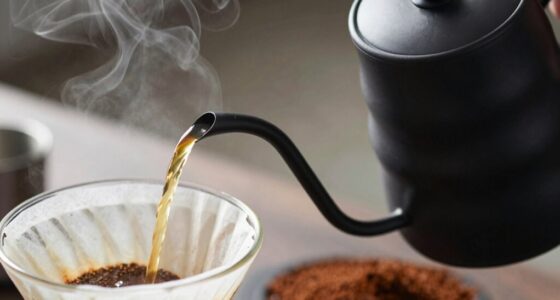
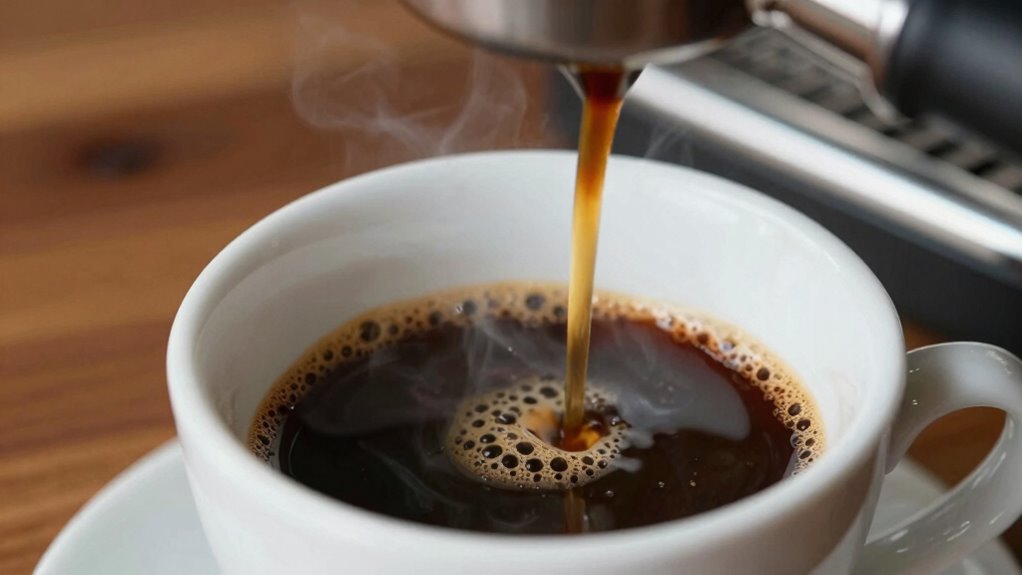
Brewing temperature plays a vital role in extracting the right flavors from dark roasted beans. If the water’s too hot, it can scorch the beans, releasing bitter compounds and resulting in a harsh, unpleasant shot. Conversely, if it’s too cool, you won’t extract enough of the desirable oils and flavors, leaving your espresso weak and flat. Ideally, you want your brewing temperature to be within the range of 195°F to 205°F. Staying within this window ensures you extract the rich, caramelized sugars and oils that give dark roast espresso its characteristic taste without tipping into bitterness. Using a thermometer or a brewer with precise temperature control can help you maintain consistent results.
You also need to consider how the bean origin influences brewing. Beans from different regions can have varying density and moisture content, which affects how they respond to heat. For example, Sumatran beans tend to be denser and may require slightly longer extraction times or more precise temperature control to avoid over-extraction and bitterness. On the other hand, beans from Latin America often have brighter, more balanced flavors that can be emphasized with careful brewing temperature adjustments. By understanding where your beans come from, you can tweak your method to maximize flavor and minimize bitterness.
Another tip is to grind your beans appropriately. A finer grind increases extraction speed, which can lead to bitterness if not monitored. Adjusting your grind size based on bean origin and roasting level helps you control how quickly flavors are extracted. Pairing this with precise brewing temperature ensures you get a full-bodied shot that’s rich and smooth, not bitter or weak. Remember, the goal is to maximize the natural sweetness and complexity of the dark roast without overdoing it. Additionally, proper tamping helps ensure even extraction and prevents channeling that could lead to bitterness or weak flavor.
Products Worth Considering

Breville Bambino Espresso Machine, Brushed Stainless Steel

De'Longhi Stilosa Compact Manual Espresso Machine with Milk Frother

Breville Smart Grinder Pro Conical Burr Coffee Grinder, Brushed Stainless Steel
As an affiliate, we earn on qualifying purchases.
Frequently Asked Questions
Can Adding Milk Reduce Bitterness in Dark Roast Espresso?
Yes, adding milk can reduce bitterness in dark roast espresso. Milk addition helps with flavor balancing by mellowing out the bitter notes, creating a smoother, more enjoyable drink. The fats and proteins in milk bind to bitter compounds, softening their taste without weakening the espresso’s richness. Experiment with the amount of milk to find your perfect balance, ensuring your dark roast remains bold but less bitter.
What Brewing Methods Minimize Bitterness in Dark Roast Shots?
To minimize bitterness in dark roast shots, focus on optimizing brew time and extraction balance. Shorten your brew time slightly to prevent over-extraction, which causes bitterness. Adjust your grind size to ensure even extraction, avoiding overly fine grounds. Experiment with pressure and water temperature to find the ideal balance, preventing over-extraction. These adjustments help you achieve a smoother, less bitter shot without sacrificing strength or flavor.
Does Water Temperature Affect Espresso Bitterness?
When it comes to water temperature, it’s a fine line that can make or break your espresso. Too hot, and you risk extracting bitter compounds, throwing off your extraction balance. Conversely, using water that’s too cool can under-extract, leading to sour or flat shots. By paying attention to water chemistry and maintaining a consistent temperature—around 195-205°F—you keep the shot balanced and flavorful, avoiding bitterness while preserving strength.
Are There Specific Beans Better for Avoiding Bitterness?
You should choose beans with a lighter roast if you want to avoid bitterness, as darker roasts tend to bring out bitter flavors. Opt for high-quality, fresh beans with a balanced bean selection that aren’t overly aged or stored too long. Lighter roasting levels preserve more of the beans’ natural sweetness and acidity, helping you achieve a smoother, less bitter shot without sacrificing the richness you desire in your espresso.
How Does Grind Size Influence Bitterness in Dark Roasts?
You’ll notice that grind size and consistency directly impact bitterness in dark roasts. If your grind is too fine or inconsistent, it causes over-extraction, leading to bitter flavors. To prevent this, aim for uniform particle size with a consistent grind. This ensures proper extraction, balancing the espresso’s richness without bitterness. Adjust your grinder to achieve a steady grind size, and you’ll enjoy smoother, more flavorful shots.
Conclusion
To keep your dark roast espresso smooth and full-bodied, think of it as tending a delicate garden—you must nurture its boldness without letting bitterness take root. Adjust your grind size, tame the heat, and master your extraction timing like a seasoned gardener pruning just right. With patience and finesse, you’ll craft shots that dance on your palate, rich yet balanced, like a symphony that resonates deep within, leaving behind a trail of warmth and satisfaction.