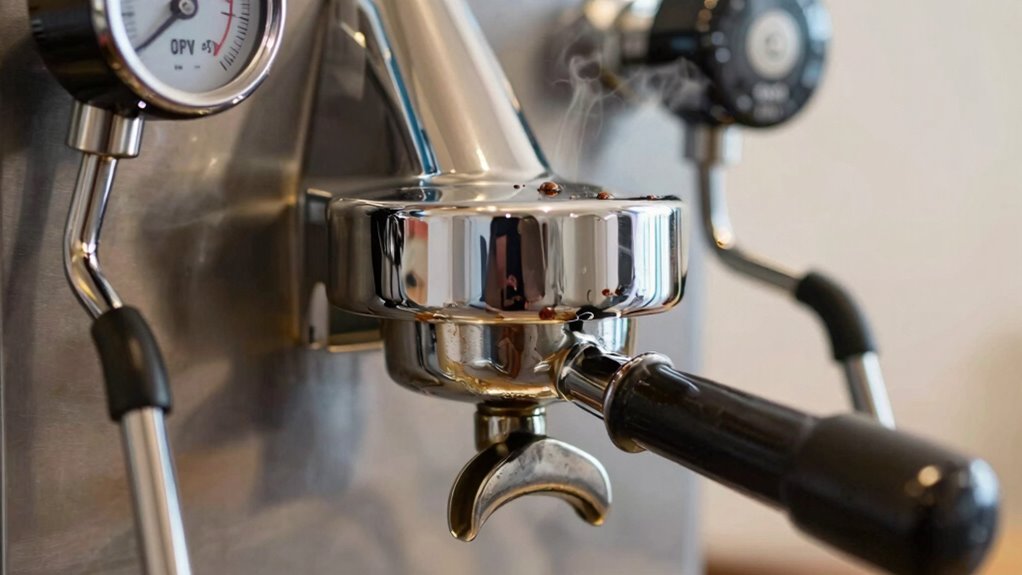
Many espresso enthusiasts overlook the importance of adjusting the OPV and brew pressure, but these settings are key to consistent, high-quality shots. Properly calibrating the OPV helps you control pressure during extraction, preventing fluctuations that can ruin flavor and body. The right pressure ensures your grind size and timing work together smoothly, leading to better results. Keep exploring these variables, and you’ll gain even more control over your espresso’s quality.
Key Takeaways
- Proper OPV and brew pressure control ensure consistent extraction and flavor quality in espresso shots.
- Adjusting OPV prevents pressure fluctuations that cause over- or under-extraction.
- Fine-tuning pressure stabilizes extraction, leading to more consistent and balanced espresso.
- Neglecting pressure adjustments can cause shot inconsistencies and machine stress over time.
- Small pressure tweaks significantly improve overall espresso flavor, body, and satisfaction.
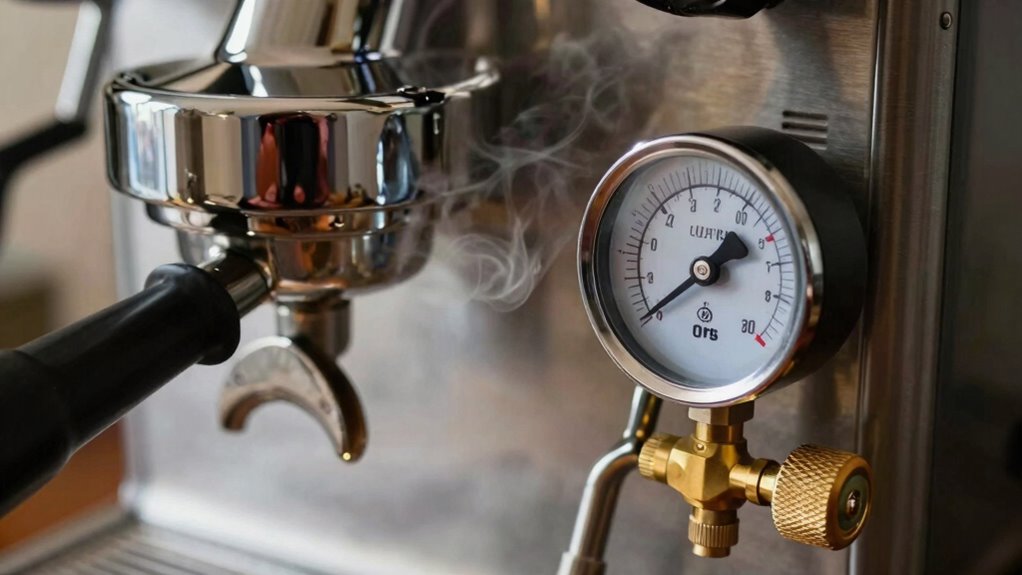
Have you ever wondered how to fine-tune your espresso machine for the perfect shot? One often overlooked aspect is understanding how the OPV, or overpressure valve, and brew pressure adjustments influence your espresso. These elements control the pressure during extraction, affecting the flavor, body, and overall quality of your coffee. Many baristas and home brewers focus solely on coffee grind size and extraction timing, but neglecting the OPV can lead to inconsistent results and missed opportunities for better espresso.
Your coffee grind plays an essential role in extraction, but it’s not the only factor. The brew pressure you set and maintain determines how water interacts with the coffee grounds. If the pressure is too high, you risk over-extraction, resulting in bitter, harsh flavors. Too low, and your espresso may be under-extracted, weak, and sour. The OPV acts as a safety and control valve, releasing excess pressure to keep it within ideal ranges. This is especially important if your machine’s pump pushes water at a higher pressure than necessary, which can make it challenging to achieve a balanced shot. Adjusting the OPV properly can also prevent pressure fluctuations that undermine consistency. Understanding how to calibrate the pressure regulator is key to maintaining optimal extraction conditions.
Proper brew pressure and OPV adjustment ensure balanced extraction and consistent, flavorful espresso.
Adjusting the brew pressure properly ensures you get a good extraction timing—typically around 25 to 30 seconds for a standard shot. This is where the interplay between coffee grind and pressure becomes critical. A finer grind increases resistance, requiring a slightly lower pressure or longer extraction time. Conversely, a coarser grind needs higher pressure or a shorter brew time. If your OPV isn’t set correctly, you might find yourself fighting against inconsistent pressure, making it difficult to dial in your grind size and extraction time properly. Proper pressure regulation can help stabilize the extraction process, leading to more consistent results. Additionally, understanding how the pressure settings interact with your machine’s components can help you troubleshoot and optimize your brewing process more effectively. A thorough understanding of pressure control can also help prevent damage to your machine over time.
Many people overlook that fine-tuning the OPV can greatly improve shot consistency. When you understand how to adjust it, you can set your machine to maintain a steady, ideal pressure throughout extraction. This control helps you avoid under or over-extraction caused by fluctuations in pressure. By doing so, you can better focus on dialing in your coffee grind and extraction timing, knowing that your machine is providing a stable environment. This stability allows you to fine-tune your technique, ultimately leading to richer flavors and a more satisfying espresso shot.
In essence, understanding and adjusting your OPV and brew pressure should be part of your espresso routine. It’s a small adjustment that can make a big difference, giving you more control over your brew and helping you craft a consistently excellent shot. Don’t ignore this fundamental aspect—your taste buds will thank you.

Generic Compatible With Gaggia Classic PRO Mod Parts OPV Mod 9 Bar OPV Spring 2pc, silver
Replacement for the original spring in Gaggia Classic 2015EU/ 2018/2019/2020/Pro OPV to 9 bar for industry standard espresso…
As an affiliate, we earn on qualifying purchases.
As an affiliate, we earn on qualifying purchases.
Frequently Asked Questions
How Often Should I Adjust My OPV for Optimal Espresso?
You should adjust your OPV when you notice inconsistencies in brew pressure or if your espresso shots are over- or under-extracted. Regular OPV maintenance helps maintain brew pressure consistency, ensuring ideal extraction. Check your machine’s pressure gauge regularly, and make small adjustments as needed—typically every few months or if you change beans or grind size. Consistent monitoring keeps your espresso shots balanced and flavorful.
Can Improper OPV Adjustment Damage My Espresso Machine?
Yes, improper OPV calibration can damage your espresso machine. If the pressure relief isn’t correctly set, it can cause excessive pressure buildup, risking component damage or leaks. Over time, this affects your machine’s longevity by stressing internal parts. Regularly checking and adjusting your OPV guarantees safe pressure levels, protecting your investment and maintaining peak performance. Proper calibration is essential for both machine safety and consistent espresso quality.
What’s the Ideal Brew Pressure for Different Coffee Beans?
You should aim for around 9 bars of pressure for most coffee beans, but this varies. Denser beans and lighter roast profiles often need slightly higher pressure to extract flavors fully. Conversely, softer beans or darker roasts may require less. A 10% variation can considerably affect taste. Adjust based on bean density and roast profile, tasting as you go, to find the perfect brew pressure for each coffee type.
Does Water Temperature Affect the OPV and Pressure?
Yes, water temperature affects the OPV and pressure stability. When water heats up, it expands, which can influence the pressure in your espresso machine. Higher temperatures may cause pressure fluctuations, impacting brew consistency. Maintaining a consistent water temperature helps keep the pressure stable, ensuring each shot is perfect. So, paying attention to water temperature is essential for ideal pressure control and a better espresso experience.
Are There Signs Indicating My OPV Needs Recalibration?
You’ll know your OPV needs recalibration if your espresso shots show inconsistent pressure or if you notice over- or under-extraction. Uneven flow or fluctuating pressure readings are signs your OPV calibration might be off. Regularly checking pressure consistency helps maintain ideal coffee quality. If you see these signs, recalibrating the OPV ensures even pressure, improves shot quality, and keeps your espresso machine running smoothly.

AlloverPower E61 Group Head Pressure Pump Gauge for Espresso Coffee Machine Brew Accesories
A MUST HAVE PRESSURE GAUGE: Special design for coffee machine with E-61 grouphead, help you monitor the extraction…
As an affiliate, we earn on qualifying purchases.
As an affiliate, we earn on qualifying purchases.
Conclusion
Just as Da Vinci understood the importance of fine-tuning his masterpieces, mastering your OPV and brew pressure guarantees your espresso reaches perfection. Ignoring these adjustments is like leaving the brush untouched—missed opportunities for greatness. So, don’t be the artist who overlooks the subtle strokes; instead, embrace the details, tweak with confidence, and craft each shot as if it were a work of art. Your perfect espresso awaits, just like a masterpiece in the making.

Membrane Pressure Regulator of Pump for Jura/AEG/Siemens/Krups 59504, 71768 Fix Jura FILL SYSTEM ERROR
【Precision Pressure Control】Effectively reduces water pulsation from coffee machine's electromagnetic pump, mitigates pipeline vibrations, and counteracts any adverse…
As an affiliate, we earn on qualifying purchases.
As an affiliate, we earn on qualifying purchases.

YUNGOO 51mm Espresso Accessories Kit – Includes Spring-Loaded Espresso Tamper, WDT Tool with Magnetic Stand, Dosing Funnel & Tamping Mat | Professional Espresso Tool for Home Baristas
🔧Complete 4-Piece Espresso Kit Fits Delonghi 51mm Portafilters :Unlock café-quality espresso at home with YUNGOO's premium espresso accessories…
As an affiliate, we earn on qualifying purchases.
As an affiliate, we earn on qualifying purchases.