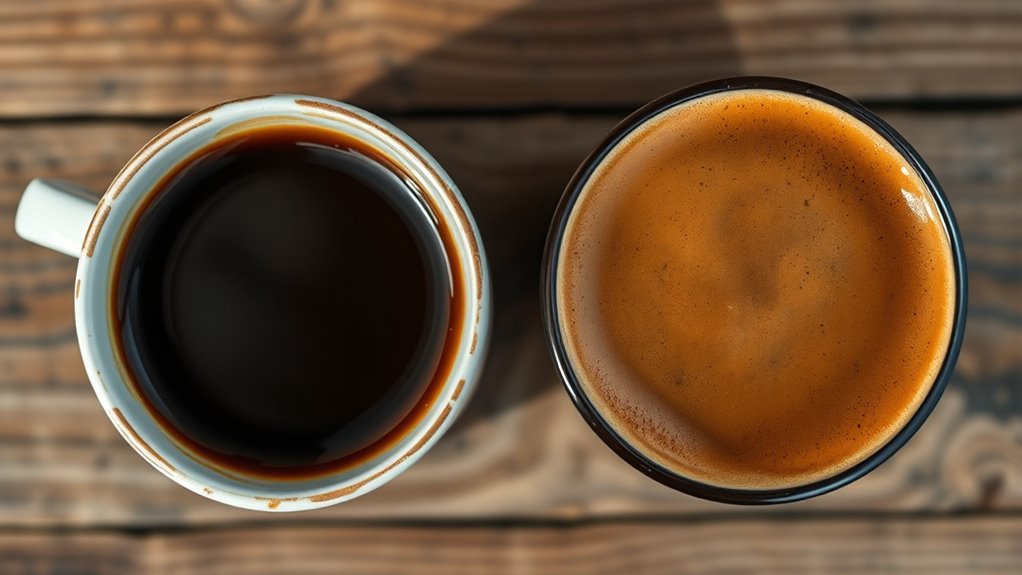

If you’re choosing between single-origin and blended coffees, think about what flavor experience you want. Single-origin coffees highlight regional tastes and offer transparency, perfect for discovering unique flavors from specific farms. Blends focus on consistency and balanced flavor, making them reliable for everyday drinking. Your preference depends on whether you value distinct regional profiles or a smooth, familiar taste. Keep exploring to uncover more differences and what might suit your palate best.
Key Takeaways
- Single-origin coffees come from a specific region or farm, highlighting unique regional flavors, while blends combine beans from multiple sources for balance.
- Single origin offers complex, nuanced flavor profiles rooted in terroir; blends aim for harmonized, approachable taste.
- Single origin emphasizes transparency and traceability to specific farms, whereas blends are less focused on regional provenance.
- Single origin appeals to enthusiasts exploring regional distinctions; blends cater to consumers seeking consistency and familiarity.
- Specialty markets favor single origin for quality and storytelling; commercial settings prefer blends for reliability across batches.

When choosing between single-origin and blended coffees, understanding their differences can enhance your coffee experience. Single origin coffees come from a specific region, farm, or lot, allowing you to taste the distinct characteristics rooted in the terroir. This focus on a single source means that each batch highlights regional flavors and unique flavor notes that reflect the environmental factors—soil, climate, altitude—that influence the coffee beans.
Single-origin coffees highlight regional flavors rooted in terroir and environmental factors.
As a result, single origin coffees often boast a complex and nuanced flavor profile, appealing to coffee enthusiasts who want to explore the intricate taste variations from different parts of the world.
On the other hand, coffee blends combine beans from multiple regions or farms to create a consistent, balanced flavor profile. Coffee roasters craft these blends intentionally, aiming to achieve harmony among flavor notes and ensure predictability across batches. This reliability makes blends popular in commercial settings, where uniformity is essential for customer satisfaction.
Because blends are designed for stability, they tend to have a more straightforward, approachable flavor that appeals to everyday drinkers seeking a reliable cup of coffee.
Traceability is another key aspect distinguishing single-origin coffees. When you buy a single origin, you often gain insight into the specific farm or region where the coffee beans were grown, as well as the processing practices involved. This transparency allows you to connect more deeply with the coffee’s story and origin, often associated with specialty coffee markets that emphasize quality and provenance.
Coffee roasters dedicated to specialty coffee tend to highlight single-origin offerings because of their ability to showcase regional flavors and the meticulous attention to detail in sourcing.
In contrast, coffee blends are usually less focused on traceability, as the goal is to create a harmonious flavor balance rather than emphasize a particular region’s profile. While blends may incorporate high-quality beans, their primary purpose is consistency rather than showcasing regional or terroir-specific nuances.
This makes blends ideal for cafes and consumers who prioritize a familiar, well-rounded flavor over exploring regional distinctions.
As an affiliate, we earn on qualifying purchases.
Frequently Asked Questions
Is Single Origin Coffee Better Than Blends?
You might wonder if single origin coffee is better than blends. It really depends on what you’re after.
If you love unique, complex flavors that showcase a specific region, single origin is your best bet. But if you prefer a consistent, rich taste that balances different beans, then blends suit you better.
Ultimately, neither is inherently better—they just cater to different preferences and experiences.
What Is the Difference Between Single and Blend Coffee?
When you ask about the difference between single and blend coffee, you’re comparing how they’re made and what flavors they offer.
Single-origin coffee comes from one specific region or farm, highlighting unique regional flavors.
Blended coffee combines beans from different areas to create a balanced, consistent taste.
What Is the Difference Between Blended and Non Blended Coffee?
When choosing between blended and non-blended coffee, you’re deciding whether you want a consistent flavor or unique regional notes.
Blended coffee combines beans from different regions to create a balanced, reliable taste, perfect if you want familiarity.
Non-blended, or single-origin, highlights the distinct flavors of a specific farm or region, offering a more nuanced experience.
Your choice depends on whether you prefer consistency or exploring regional nuances.
What Are the Advantages of Blended Coffee?
Blended coffee offers you consistency, so you get the same great taste every time. It balances acidity, body, and flavor notes, creating a smooth, rich cup tailored to your preferences.
Blends can mask imperfections in beans, giving you a reliable experience. Plus, they often produce a more complex flavor profile and are perfect for making well-rounded espresso shots, especially if you enjoy milk-based drinks.
Conclusion
Whether you prefer single-origin or blended coffees depends on what you value most. If you love unique, distinctive flavors that showcase a specific region, go for single-origin. But if you enjoy a balanced, complex cup with multiple flavor notes, blended coffees are your best bet. Try both to discover what truly excites your palate. Ultimately, your perfect cup is the one that brings you the most satisfaction, so explore and enjoy every sip.