
TL;DR

Get coffee and tea gear delivered free with Prime
- Fast, free delivery on millions of items
- Prime Video, Amazon Music and more included
- Member-only deals all year
The Kitchn food writer Melissa Gaman says a light coating of buttermilk helped her chicken breasts brown and stay juicy when seared, then finished in the oven. The method uses two tablespoons of buttermilk for 1½ pounds of chicken; it is a cooking tip, not a reported scientific test or a new food-safety finding.
The Kitchn food writer Melissa Gaman reports that a light coating of buttermilk helped her chicken breasts brown while keeping them juicy during a skillet-and-oven cooking method. Her technique uses two tablespoons of buttermilk for 1½ pounds of boneless, skinless chicken, offering cooks a way to use leftover buttermilk without making a full marinade.
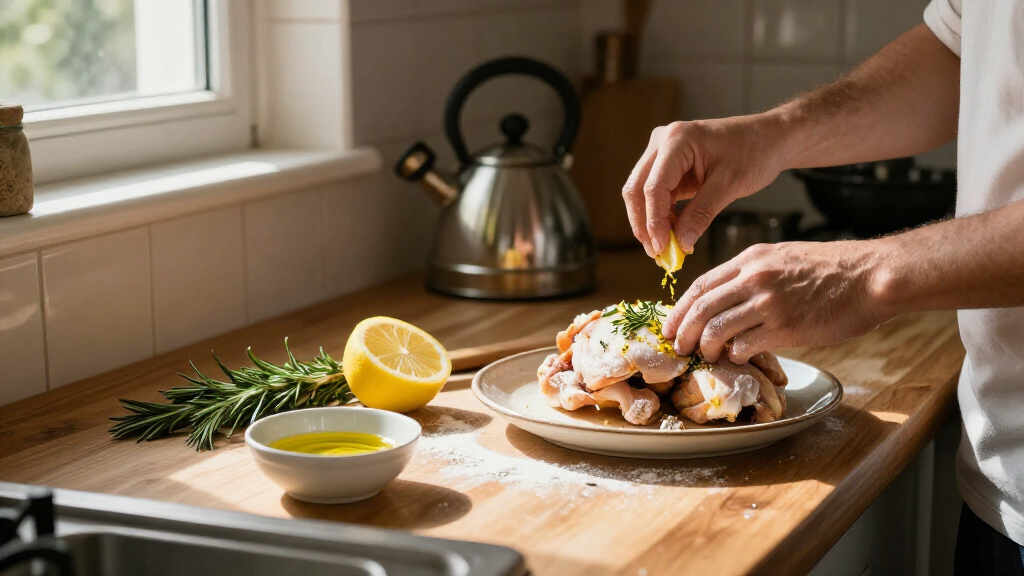
Gaman describes trying the method while preparing dinner after realizing she had almost run out of cooking oil. She normally tosses boneless, skinless chicken breasts with spices and oil before cooking. Instead, she stirred a small amount of buttermilk through the seasoned chicken, using it to distribute the spices and coat the meat before searing.
For the recipe, she pats 1½ pounds of chicken breasts dry, seasons both sides with kosher salt, pepper and dry spices, then adds two tablespoons of shaken buttermilk. The chicken is tossed until coated, with no excess liquid pooling in the bowl. She heats two tablespoons of olive oil in an oven-proof skillet over medium heat, sears the chicken until golden on both sides for about eight to 10 minutes, then transfers the skillet to a 400°F oven.
Gaman’s instructions say to roast the chicken for another 10 to 15 minutes, until its thickest part reaches 165°F. She recommends garlic powder, paprika and dried oregano, while saying the mild buttermilk coating can pair with other dry seasonings. Both whole-milk and low-fat cultured buttermilk can be used, though she says thicker whole-milk buttermilk may require a little more to coat the chicken evenly.
A Small Use for Leftover Buttermilk
The tip addresses a familiar kitchen problem: buttermilk is often sold in a larger quantity than a single recipe needs. Gaman says she frequently has some left after making biscuits and wanted a quick way to use it rather than storing it in the freezer. Her chicken method calls for only two tablespoons, so it can use a small amount left in a container.
It also gives home cooks an alternative to coating chicken with oil before it goes into the pan. In Gaman’s account, the buttermilk is not intended to replace the oil used for searing; the skillet still contains olive oil. The coating instead carries seasoning onto the surface and, she says, helps the meat brown without the exterior becoming tough. The report is a practical cooking recommendation based on her experience, not a controlled comparison showing how it performs against other methods.
Products Worth Considering

Ninja French Door Premier Air Fry Oven, 10-in-1, 20.3 Qt, Stainless Steel, FO101

Cuisinart Air Fryer Toaster Oven TOA-70NAS, 1800W, 8-in-1 with Air Fry, Convection, Broil & Grill, 0.6 Cu Ft, Stainless Steel

Instant Pot 10‑Qt 7-in-1 Air Fryer with EvenCrisp Technology – Stainless Steel
As an affiliate, we earn on qualifying purchases.
From Marinade to Quick Coating
Buttermilk is commonly used in chicken marinades. Gaman explains that its acidity can affect proteins as the meat sits, while its thick consistency clings to the chicken and carries flavor. Her approach differs because the meat receives only a brief coating before cooking, rather than resting in a marinade.
She attributes the browning partly to lactose, the natural sugar in buttermilk, which can caramelize as the chicken cooks. She also says the coating creates a barrier between the meat and the hot pan. In her account, the buttermilk’s tang is not prominent after cooking; instead, it contributes to the surface’s color and flavor. These explanations are presented in the source article alongside her cooking experience, not as results from a cited laboratory test.
“I’ve found my new go-to method.”
— Melissa Gaman, The Kitchn food writer
What the Cooking Report Does Not Test
The source is a first-person cooking report and recipe, not a head-to-head test. It does not provide measurements comparing the buttermilk-coated chicken with chicken prepared using oil alone, nor does it report results across different pans, stove settings or breast sizes. Gaman’s descriptions of juiciness and browning are her observations; the article does not quantify either outcome.
The method’s timing is an estimate, while the stated endpoint is a temperature of 165°F in the thickest part. The source does not specify how much the cooking time may vary with chicken thickness or equipment. It also gives no storage guidance for leftover buttermilk or a make-ahead schedule for this particular technique.
Cook to the Stated Temperature
The report offers no announced follow-up test or scheduled update. For readers trying the method, Gaman’s recipe calls for searing the coated, seasoned chicken in olive oil, then finishing it in a 400°F oven. Use a food thermometer to check the thickest part and cook until it reaches 165°F; the recipe’s 10-to-15-minute oven estimate should not replace checking temperature. Keep raw chicken and its utensils separate from ready-to-eat food, and refrigerate perishable ingredients promptly.
Gaman’s practical advice is to shake off excess buttermilk before placing the chicken in hot oil, since drips can splatter. She says to season the meat separately and notes that either low-fat or whole-milk cultured buttermilk can work. Whether the technique suits a particular cook’s preferred texture or seasoning remains a matter for individual kitchen testing.
Key Questions
How much buttermilk does the chicken method use?
Gaman uses two tablespoons of shaken buttermilk to lightly coat 1½ pounds of boneless, skinless chicken breasts. She advises against leaving excess liquid pooled in the bowl.
Does the recipe replace the oil in the skillet?
No. The chicken is coated with buttermilk before cooking, but the recipe still heats two tablespoons of olive oil in the skillet for searing.
What temperature should the chicken reach?
The recipe says to finish the chicken in the oven until its thickest part reaches 165°F. Use a food thermometer rather than relying only on the suggested cooking time.
Can low-fat buttermilk be used?
Yes. Gaman says both low-fat and whole-milk cultured buttermilk work. Because whole-milk buttermilk is thicker, she notes that a little more may be needed for an even coating.
Source: thekitchn.com