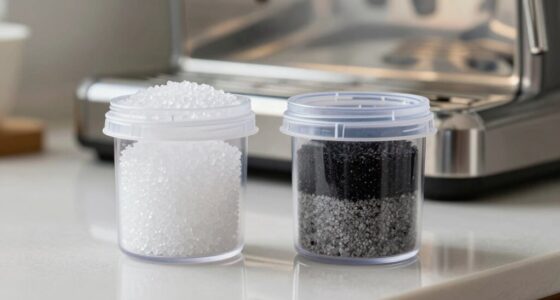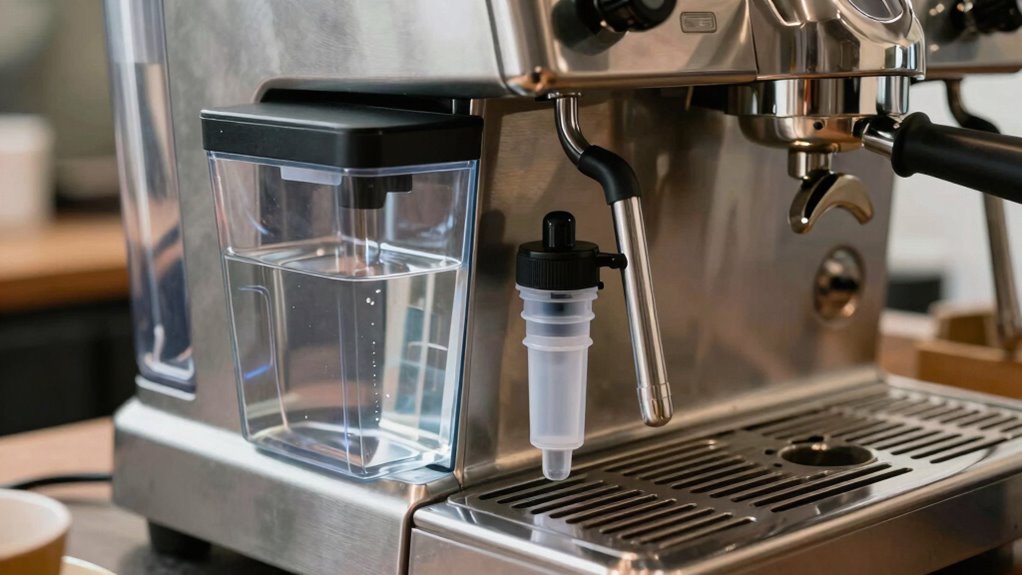

Inline water softeners for espresso help by reducing minerals like calcium and magnesium that cause hard water, preventing scale inside your machine and keeping it cleaner. However, they don’t fix existing scale buildup or remove contaminants like bacteria or organic matter. They mainly prevent new deposits but won’t address all water quality issues. To get the best results and keep your machine in top shape, learn what else you might need.

Get coffee and tea gear delivered free with Prime
- Fast, free delivery on millions of items
- Prime Video, Amazon Music and more included
- Member-only deals all year
Key Takeaways
- Inline water softeners reduce calcium and magnesium minerals, preventing new scale formation in espresso machines.
- They do not remove existing mineral deposits or scale buildup already present inside the equipment.
- Softeners do not address other water issues like bacteria, sediments, or organic contaminants.
- Effectiveness depends on local water chemistry; they may need to be combined with additional filtration.
- Proper maintenance, including descaling, is necessary for optimal machine performance alongside softener use.
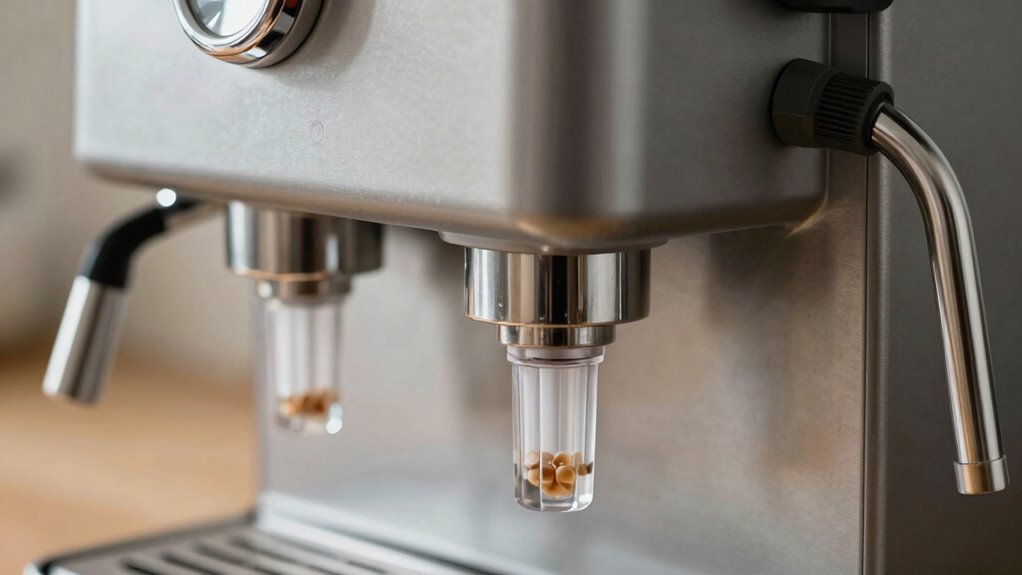
Have you ever noticed how hard water can negatively impact your espresso machine’s performance and the taste of your coffee? One common issue is mineral buildup inside the machine’s components, which can lead to blockages, decreased efficiency, and even costly repairs. This is where inline water softeners come into play. They’re designed to help with scale prevention by reducing the minerals that cause hard water problems. As water flows through the softener, it exchanges calcium and magnesium ions—main culprits of mineral buildup—for sodium or potassium ions, which don’t cause scale. This process helps keep your machine cleaner and running smoothly, ensuring you get consistent, high-quality espresso shot after shot.
However, it’s important to understand what inline water softeners do and don’t fix. They effectively prevent new scale formation by targeting the minerals responsible for hard water. This means you’re less likely to see white, chalky deposits forming inside your machine’s boiler, pipes, or filters. By controlling these minerals, the softener prolongs the lifespan of your equipment and reduces maintenance needs. But, it’s not a magic fix for existing mineral buildup or other water-related issues. If your machine already has significant deposits, installing an inline softener won’t instantly clear the existing scale. You’ll need to perform descaling or cleaning cycles to remove accumulated deposits before the softener can maintain a clean system.
Moreover, inline water softeners don’t address other water quality concerns like bacteria, chlorine, or sediments. If your tap water contains chlorine or organic contaminants, these can still affect the taste and safety of your water, regardless of the softener. Additionally, some softeners add sodium to the water, which might not be suitable for those on low-sodium diets or with health concerns. It’s essential to consider the water chemistry in your area and whether a softener is the right choice. Sometimes, combining a water filtration system with a softener offers broader protection, improving both taste and machine longevity. It’s also helpful to understand the water chemistry of your area to make an informed decision about which treatment options are best. Being aware of local water quality can help you choose the most effective solution for your needs.
inline water softener for espresso machine
As an affiliate, we earn on qualifying purchases.
As an affiliate, we earn on qualifying purchases.
Frequently Asked Questions
Do Inline Water Softeners Affect Espresso Flavor?
Inline water softeners can positively affect your espresso flavor by removing minerals that cause off-flavors or bitterness. This flavor enhancement allows the true taste of your coffee beans to shine through. However, if your water is already soft or lacks minerals, an inline softener might not make a noticeable difference. Ultimately, mineral removal from your water can help you achieve a cleaner, more consistent espresso experience.
How Often Should I Replace the Softener Cartridge?
Did you know that most cartridge lifespan estimates range from 3 to 6 months? You should replace your softener cartridge every 3 to 6 months, depending on your water usage and hardness levels. Regular replacement guarantees the best softening performance and prevents buildup. Keep an eye on your cartridge’s condition and follow the manufacturer’s recommended replacement frequency for the best espresso flavor and equipment longevity.
Can Water Softeners Remove All Minerals From Water?
Water softeners mainly remove minerals like calcium and magnesium, but they don’t eliminate all minerals or impurities. They improve water purity by targeting specific hardness minerals, which helps prevent scale buildup. However, some minerals, such as iron or certain contaminants, may pass through. So, while softeners enhance water quality, they don’t achieve complete mineral removal or total water purity. For thorough purification, consider additional filtration methods.
Are Inline Softeners Necessary for High-End Espresso Machines?
Think of your espresso machine as a delicate dance partner; inline softeners can help keep the rhythm smooth. If your water has high hardness, especially calcium, an inline softener is essential to eliminate calcium and prevent mineral buildup. For high-end machines, it’s a smart move, as it protects your investment and ensures consistent quality. Without it, minerals can interfere with taste and performance, like a misstep in a graceful dance.
Do Water Softeners Require Special Maintenance or Cleaning?
Yes, water softeners need regular maintenance. You’ll need to replenish the salt regularly to guarantee effective resin regeneration, which keeps the softener working properly. Over time, the resin can become fouled or exhausted, so cleaning or replacing it might be necessary. Staying on top of salt levels and performing resin regeneration as recommended helps prolong your softener’s lifespan and maintains the quality of your espresso.
Conclusion
Inline water softeners for espresso can improve your brew by reducing scale, enhancing flavor, and extending equipment life. But they don’t fix every issue—poor grind, stale beans, or machine malfunctions still matter. So, focus on what they do best: softening water. Maintain your machine, use fresh beans, and optimize your grind. Together, these steps create a perfect shot—because great espresso isn’t just about the water, it’s about the whole process.
Fall Picks
fall essentials
As an affiliate, we earn on qualifying purchases.