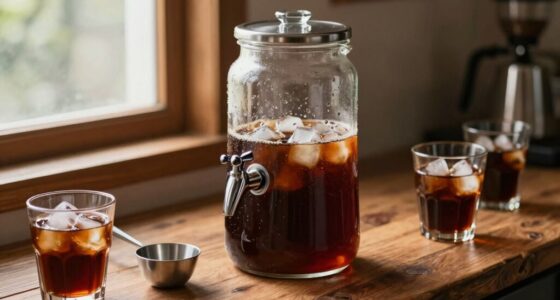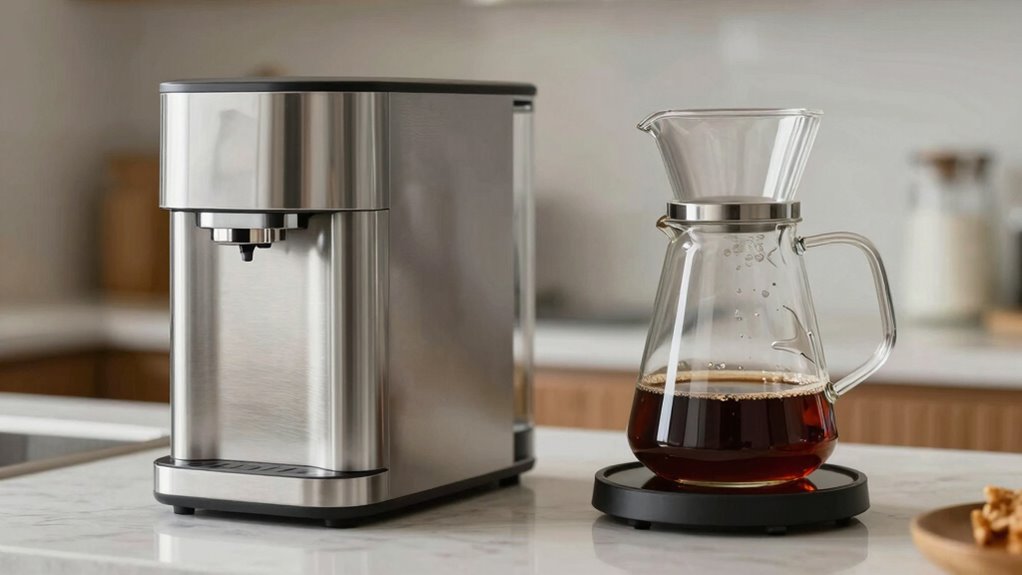

If you prioritize durability, minimal flavor transfer, and easy cleaning, stainless steel is a great fit, especially for active routines or frequent use. It keeps your cold brew at a stable temperature and resists damage, making it low effort in the long run. On the other hand, if you value pure flavor, aesthetic appeal, and the chance to watch the brewing process, glass may suit you better. Keep exploring to discover which option matches your daily needs best.

Get coffee and tea gear delivered free with Prime
- Fast, free delivery on millions of items
- Prime Video, Amazon Music and more included
- Member-only deals all year
Key Takeaways
- Stainless steel maintains consistent temperature and flavor, making it ideal for active routines and on-the-go use.
- Glass preserves pure, unaltered flavor and offers visual appeal, suited for home brewers who enjoy watching the process.
- Stainless steel is durable, scratch-resistant, and dishwasher safe, reducing maintenance for busy lifestyles.
- Glass is more delicate and requires careful handling, better for those prioritizing aesthetics and flavor fidelity.
- Choose stainless steel for durability and ease, or glass for flavor purity and traditional aesthetics, based on personal routine needs.
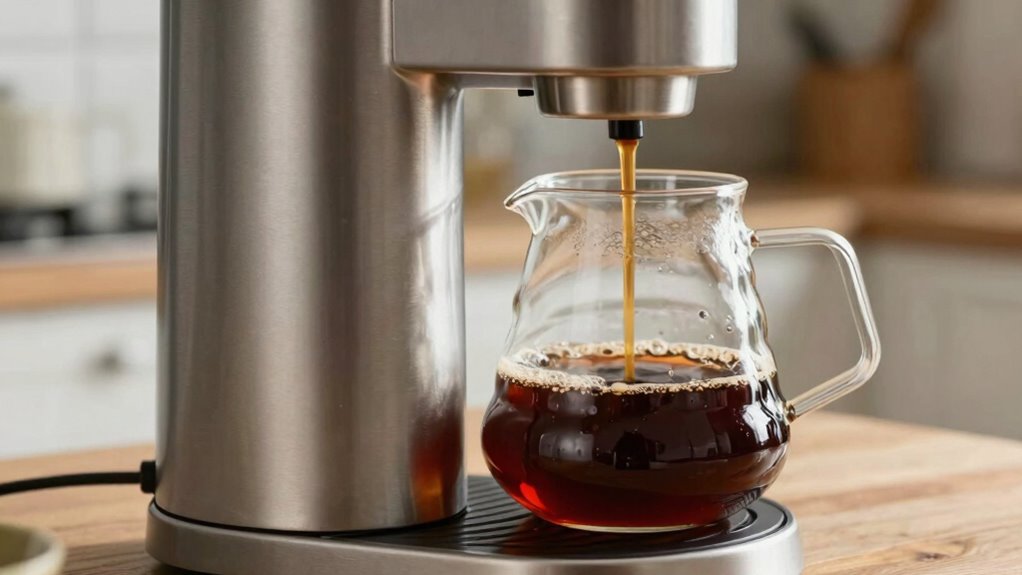
Have you ever wondered whether stainless steel or glass is the better material for your cold brew system? When choosing between the two, it’s essential to consider how each impacts flavor retention and cleaning ease, as these factors significantly influence your daily routine. Stainless steel containers often excel at preserving the flavor of your brew. Their insulating properties help maintain a consistent temperature, preventing rapid temperature changes that could alter the taste. Plus, stainless steel is less porous than glass, meaning it’s less likely to absorb flavors or odors from previous brews, keeping your coffee tasting fresh and pure every time. On the other hand, glass provides a neutral environment, so it doesn’t impart any flavors to your cold brew. If you’re particular about maintaining the original flavor profile of your beans, glass might appeal more to you because it won’t influence the taste in any way. Additionally, stainless steel’s porosity makes it less prone to flavor absorption compared to glass, which can help preserve the integrity of your brew over time. Properly understanding material properties can help you make a more informed choice based on your preferences. Recognizing the insulating qualities of each material can also guide you toward a system that aligns with your temperature preferences.
Furthermore, stainless steel’s temperature stability can be beneficial if you prefer your cold brew kept at a consistent, chilled temperature without fluctuations. This stability is often supported by the material’s insulating properties, which help maintain ideal serving conditions. When it comes to cleaning ease, both materials have their advantages, but stainless steel often comes out ahead for convenience. Stainless steel containers are typically more durable and resistant to scratches, dents, and breakage, making them easier to handle and clean regularly. They usually feature smooth surfaces that don’t harbor residues as easily as some glass surfaces. Additionally, many stainless steel systems are dishwasher safe, simplifying cleanup after long mornings or busy weekends. Glass, however, can be more delicate and prone to chipping or breaking if dropped, which might mean more careful handling and hand washing. While glass is generally easy to clean with soap and water, stubborn residues or mineral buildup from hard water can be more challenging to remove without proper cleaning tools.
Your routine and preferences will ultimately determine which material suits you best. If you value durability, minimal flavor transfer, and straightforward cleaning, stainless steel could be your ideal choice. It’s especially advantageous if you’re often on the go or need a system that withstands daily wear and tear. Conversely, if you prioritize maintaining the purest possible flavor and don’t mind handling a more fragile vessel, glass might be more appealing. It’s perfect for those who enjoy watching the brewing process or prefer an aesthetic that feels more traditional. Both options have their merits, but understanding how each material influences flavor retention and cleaning ease will help you make a choice that fits seamlessly into your routine.
stainless steel cold brew coffee maker
As an affiliate, we earn on qualifying purchases.
As an affiliate, we earn on qualifying purchases.
Frequently Asked Questions
Which Material Is More Eco-Friendly for Cold Brew Systems?
Glass is generally more eco-friendly than stainless steel for cold brew systems because it’s made from abundant natural materials and is fully recyclable without losing quality. While stainless steel offers greater durability, its production has a higher environmental impact due to energy use and raw materials. If you prioritize environmental impact and recyclability, glass is the better choice, but consider durability needs based on your routine.
Are Stainless or Glass Systems More Resistant to Staining?
Stainless steel systems are more resistant to staining because of their material durability, making them easier to clean and maintain over time. Glass systems, while visually appealing, can be more prone to staining from coffee oils and mineral deposits. If you want a cold brew setup that withstands staining and lasts longer, stainless steel is your best choice due to its superior staining resistance and durability.
How Do Maintenance Costs Compare Between Stainless and Glass?
Think of maintenance costs like a car’s upkeep—stainless systems often cost more upfront but need less frequent cleaning, saving you money long-term. Glass systems require frequent cleaning because stains show easily, increasing maintenance costs. Over time, durability comparison shows stainless steel endures daily use without damage, reducing replacement expenses. So, if you value lower long-term costs, stainless might be your best choice, despite the initial investment.
Can Both Systems Make Hot Coffee as Well?
Yes, both stainless and glass cold brew systems can make hot coffee, thanks to their hot brew versatility. They often include temperature control options, allowing you to switch easily from cold to hot brewing. With these features, you can enjoy a variety of coffee styles using the same system. Just make certain your model supports hot brewing, and you’ll have the flexibility to make hot coffee whenever you want.
Which System Is Safer for Children or Pets?
Remember, safety first. Glass cold brew systems are safer for children and pets because they don’t contain metal parts or potential chemical leaching. While stainless systems are durable, they may pose risks if broken or if small parts become accessible. For child and pet safety, opt for glass, keep all brewing equipment out of reach, and always supervise. It’s better to be cautious than sorry.
Conclusion
Whether you choose the sleek shine of stainless or the clear, inviting look of glass, your cold brew experience becomes a reflection of your routine. Picture the gentle drip, the rich aroma swirling in your favorite mug, and the satisfying pour that begins each day. Both materials offer unique charm—stainless with its modern resilience, glass with its delicate transparency. Whichever you pick, let it become part of your morning ritual, fueling your days with every invigorating sip.
Fall Picks
fall essentials
As an affiliate, we earn on qualifying purchases.