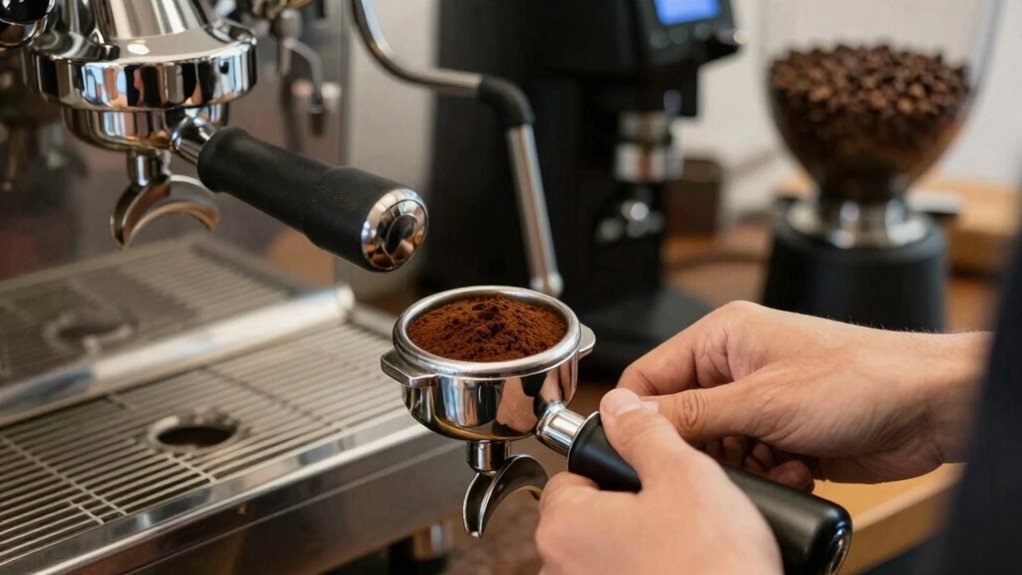
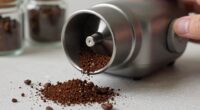
Choosing a hopper offers faster workflow and convenience, making it ideal for busy mornings or multiple drinks, but it can lead to uneven grind consistency and stale beans if not managed carefully. Single dose provides more control, ensuring fresher beans and precise dosing, though it may slow you down and require more effort. Each approach has trade-offs you might not realize at first—continue on, and you’ll uncover deeper insights into optimizing your setup.
Key Takeaways
- Hoppers enable faster grinding for busy environments but risk uneven beans and stale supply without regular maintenance.
- Single dose offers precise, consistent dosing ideal for flavor control, though it may slow workflow during peak times.
- Hopper use requires frequent cleaning to prevent residue buildup, while single dose simplifies cleaning with smaller quantities.
- Continuous bean supply in hoppers can compromise freshness if not monitored; single dose minimizes exposure to air and oils.
- Workflow preference depends on prioritizing speed and convenience versus control and consistency in grind quality.
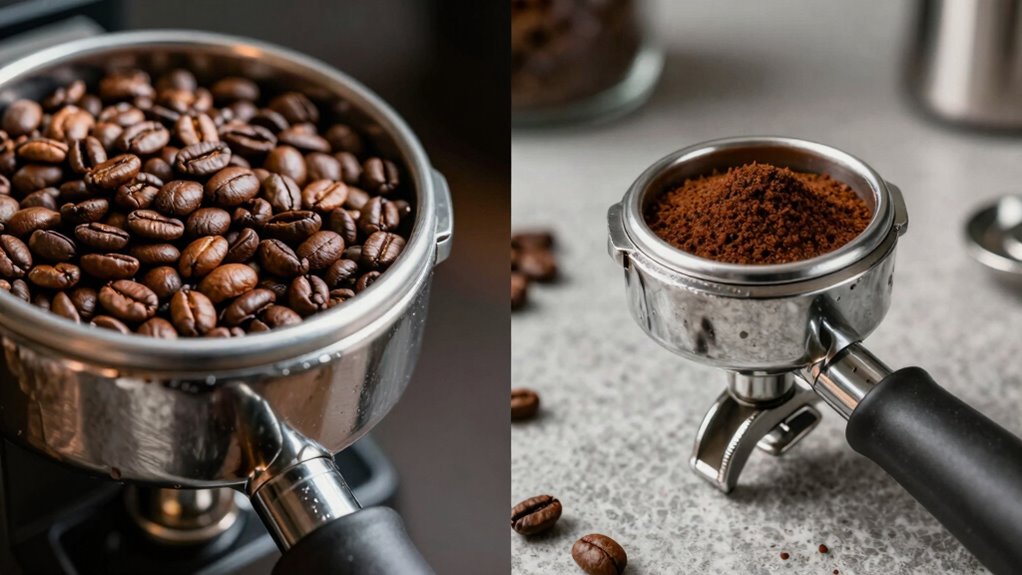
Are you trying to decide between using a hopper or a single dose for your coffee setup? Both options have their advantages, but understanding how they impact your workflow is key. With a hopper, you get a continuous supply of beans, which means you don’t have to stop grinding each time you want to brew. This can be a real time-saver, especially during busy mornings or when preparing multiple drinks. However, it also means you need to pay close attention to grind consistency. Over time, beans can settle or become unevenly distributed in the hopper, leading to inconsistent grind sizes. This inconsistency can affect extraction and flavor, so regular maintenance routines are essential. You’ll want to clean the hopper periodically, check for bean clumping, and ensure the beans aren’t stale or stuck in hard-to-reach corners. Proper maintenance keeps the grinder functioning smoothly and helps maintain consistent grind quality. Additionally, understanding the thermal behavior of your grinder can help prevent overheating and preserve bean freshness during extended use.
On the other hand, single dose setups give you more control over each grind. When you measure out a specific amount of beans for each shot, you minimize the risk of stale beans affecting your brew. This method encourages precise dosing, allowing you to dial in your grind size more accurately for each batch. Since you’re only grinding what you need, it’s easier to maintain grind consistency. Plus, cleaning becomes simpler because you’re handling smaller quantities of beans at a time. You can easily remove and clean the hopper or grinder chamber after each use, reducing the buildup of coffee oils or residue that can compromise flavor. Routine cleaning isn’t just about hygiene; it’s also about preserving the integrity of your grind and ensuring every shot tastes fresh.
Choosing between a hopper and single dose setup ultimately depends on your workflow preferences. If speed and convenience are your priorities, a hopper might be more appealing. Just keep in mind that you’ll need to stay vigilant with your maintenance routines to avoid grind inconsistencies. If you prefer precision, freshness, and easier cleaning, a single dose approach is likely better. It allows you to focus on grind consistency and flavor nuances without the worry of stale beans or uneven extraction. Whichever method you choose, staying consistent with your maintenance routines and paying attention to grind quality will ensure you get the best results from your coffee setup.
Frequently Asked Questions
How Does Grind Size Affect Hopper Vs Single Dose Brewing?
Grind size plays a vital role in hopper versus single dose brewing by affecting extraction consistency. When you use a finer grind, it can enhance extraction but may clog your machine more easily in hopper setups, leading to uneven results. Conversely, a coarser grind promotes smoother flow and consistency in single dose brewing, but risks under-extraction. Adjusting grind size based on your method guarantees peak flavor and reliable extraction every time.
What Maintenance Challenges Are Unique to Each Method?
Did you know hopper clutter occurs in nearly 60% of traditional setups? With a hopper, you’ll face unique maintenance challenges like cleaning out old coffee grounds regularly to prevent jams. In single dose brewing, calibration is critical; you must frequently check and adjust to guarantee consistency. Both methods demand attention—hoppers need frequent cleaning, while single doses require precise calibration to maintain quality.
Can Hopper Systems Improve Consistency Over Single Dose Methods?
Yes, hopper systems can improve consistency over single dose methods. They offer better storage stability by holding larger quantities, reducing variability caused by frequent refills. Although equipment complexity increases, the automated nature of hoppers minimizes human error, ensuring more reliable dosing. This leads to more uniform results, especially in high-volume settings, making hopper systems a valuable choice for maintaining consistent quality in your workflow.
How Do Workflow Speed Differences Impact Busy Cafes?
Imagine your busy cafe is a well-oiled machine, and workflow speed is the engine. Faster equipment like hoppers can shave seconds off each brew, helping staff serve more customers efficiently. However, staff training on new gear and higher equipment costs can slow things initially. These differences impact your cafe’s capacity to meet demand, so balancing speed with training and investment is key to keeping your workflow smooth during peak hours.
Is One Method More Eco-Friendly Than the Other?
Single dose methods are generally more eco-friendly because they reduce waste and have a lower eco footprint, promoting sustainability. By using only what you need, you minimize excess packaging and leftover coffee, which cuts down on waste disposal and resource use. Hopper systems might be less sustainable if they produce more waste or require more energy for maintenance. So, if sustainability is your priority, single dose approaches support a greener, more eco-conscious workflow.
Conclusion
Ultimately, choosing between hopper and single dose comes down to your workflow needs. While hoppers boost efficiency for large batches, single dose offers better control and freshness. Remember, “A stitch in time saves nine”—investing in the right setup now prevents headaches later. Consider your priorities, test both methods, and find what works best. After all, adapting to your unique rhythm ensures you get the best brew every time.