
Home roasting with a popcorn popper is an affordable and simple way to start, offering basic control over the process. As you get more experienced, you might consider a hot air popcorn popper or a dedicated drum roaster for better airflow, temperature control, and consistent results. Drum roasters provide even heating and allow larger batches. If you’re curious about mastering each method and refining your skills, there’s plenty more to uncover as you go.
Key Takeaways
- Popcorn poppers are accessible, simple tools ideal for beginners to start home coffee roasting.
- Hot air poppers circulate hot air, evenly roasting green beans, and can be used as DIY coffee roasters.
- Drum roasters offer precise temperature control and consistent heat distribution for advanced roasting.
- Monitoring sounds, aroma, and color changes during roasting helps determine the desired roast level.
- Equipment choice impacts batch size, control, and roast profile customization for optimal results.
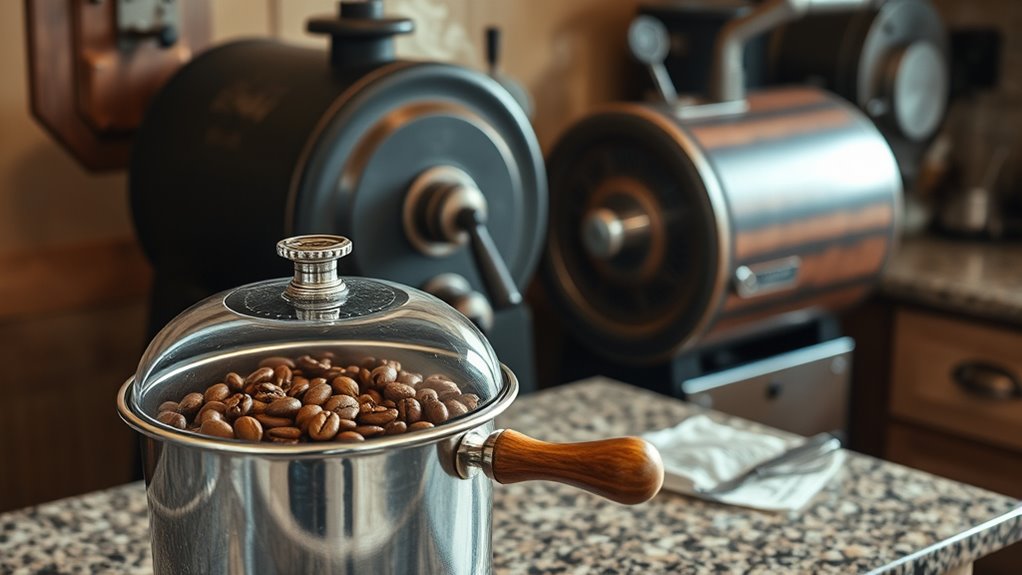
Home roasting allows coffee enthusiasts to enjoy fresh, customized beans right from their own kitchen. When you start roasting your own coffee, you gain control over the flavor profile and freshness that store-bought beans can’t match. The first step is understanding green coffee, the unroasted beans that are the foundation of your roasting process. Green coffee beans are raw and have a pale, grassy appearance, with a much longer shelf life than roasted beans. They come in a variety of origins, each offering unique flavor notes, which means you can experiment to find your preferred profiles. To begin, you’ll need some roasting equipment; luckily, there are options suitable for beginners and seasoned roasters alike.
Home roasting starts with green coffee beans—raw, flavorful, and long-lasting.
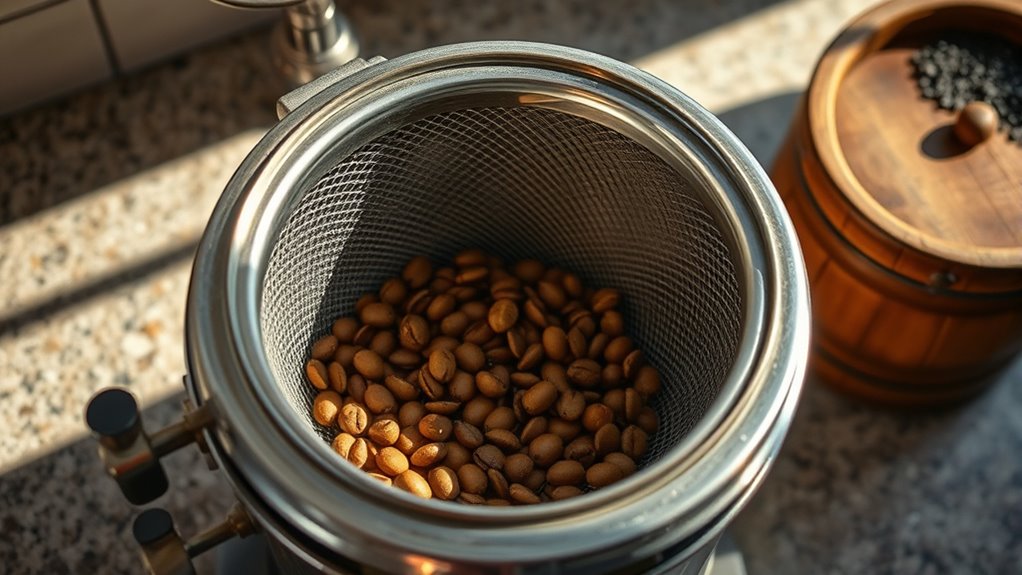
One of the simplest and most accessible methods is using a popcorn popper. Specifically, a hot air popcorn popper can double as a coffee roaster because it has a rapidly circulating hot air system that evenly heats the green coffee beans. This method is affordable, quick, and easy to set up. You simply add a small amount of green coffee into the popper, turn it on, and start roasting. You’ll notice the beans change color and emit a fragrant aroma as they progress through the roast. Monitoring the process is essential because over-roasting can lead to burnt flavors, while under-roasting leaves the beans too grassy. The key is paying close attention to the sound of the cracks—first crack signals a light roast, and second crack indicates a darker roast.
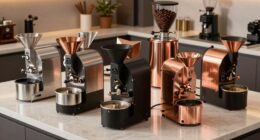
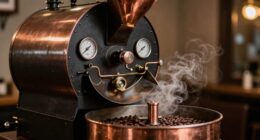
For more control and larger batches, some home roasters opt for drum roasters, which resemble commercial equipment but are scaled down. These roasters use rotating drums that tumble the green coffee evenly while applying heat. They provide more consistent results and allow you to dial in specific roast levels. Drum roasters require a bit more investment and setup, but they’re excellent for those serious about refining their craft. Whichever method you choose, it’s important to understand the characteristics of your roasting equipment, including temperature control and airflow, to guarantee a consistent roast. Additionally, understanding the artistic significance of coffee and its cultural history can deepen your appreciation as a home roaster.
As you gain experience, you’ll learn to recognize visual cues, aroma changes, and crack sounds that indicate the roast level. Ultimately, mastering home roasting with the right equipment and knowledge of green coffee transforms your coffee routine. You’ll appreciate the freshness and complexity of your roasted beans, and you can tailor each batch to your taste. Whether you start with a simple popcorn popper or invest in a dedicated drum roaster, understanding your green coffee and equipment will empower you to elevate your home brewing to new heights.
Frequently Asked Questions
What Types of Beans Are Best for Home Roasting?
You should choose beans based on their origin and your preferred roast level. For bright, fruity flavors, go for beans from Africa or Central America. If you want a richer, chocolatey taste, try beans from South America or Indonesia. Light roasts highlight origin characteristics, while dark roasts bring out bold flavors. Experiment with different beans and roast levels to find what suits your palate best.
How Do I Prevent My Popcorn Popper From Overheating?
You can prevent your popcorn popper from overheating by using effective cooling methods and heat regulation techniques. Regularly pause the roast to let it cool down, use a fan or air flow to dissipate heat, and monitor temperature levels closely. Adjust the heat source if possible, and avoid running the popper continuously for long periods. These steps help maintain ideal roasting temperatures and protect your equipment from damage.
Can I Roast Different Types of Nuts With This Method?
Yes, you can roast different nuts with this method, but be aware that nut oil extraction may occur, especially with oily nuts like almonds or cashews. This can lead to flavor profile changes or smoking. To prevent this, monitor roasting time closely, use moderate heat, and clean your popper afterward. Adjusting the process helps you achieve the desired flavor while avoiding excess oil release or potential damage.
How Do I Store Freshly Roasted Beans for Best Freshness?
Imagine finding a small moment of magic—storing your freshly roasted beans properly. To keep your coffee at its peak, use an airtight container, ideally one that’s opaque to block light. Store it in a cool, dark place to preserve bean freshness. Avoid the fridge or freezer, as moisture can harm flavor. Proper coffee storage guarantees your roasted beans stay flavorful longer, so you enjoy every brew just as fresh as when roasted.
What Safety Precautions Should I Take During Roasting?
You should prioritize fire safety by never leaving your roasting device unattended and keeping a fire extinguisher nearby. Guarantee proper ventilation to prevent smoke buildup and reduce fire hazards. Use heat-resistant gloves and avoid overfilling your roaster to prevent spills or accidents. Check your equipment regularly for damage, and keep a clear workspace. Following these precautions helps you roast safely while enjoying fresh coffee at home.
Conclusion
Now that you know the essentials, you’re ready to conquer the world of home roasting—your kitchen will transform into a coffee sanctuary! Whether you start with a popcorn popper or a drum roaster, your skills will grow faster than a rocket. Remember, every batch you roast brings you closer to that perfect cup, and trust me, once you taste your own freshly roasted beans, you’ll wonder how you ever bought coffee from a store. Happy roasting!